
This is one accessory I can’t live without while doing wildlife photography: my 1.4x teleconverter. It takes my already impressively long 180-600mm lens and gives me an extra 240mm of focal length. I can now shoot at 840mm!
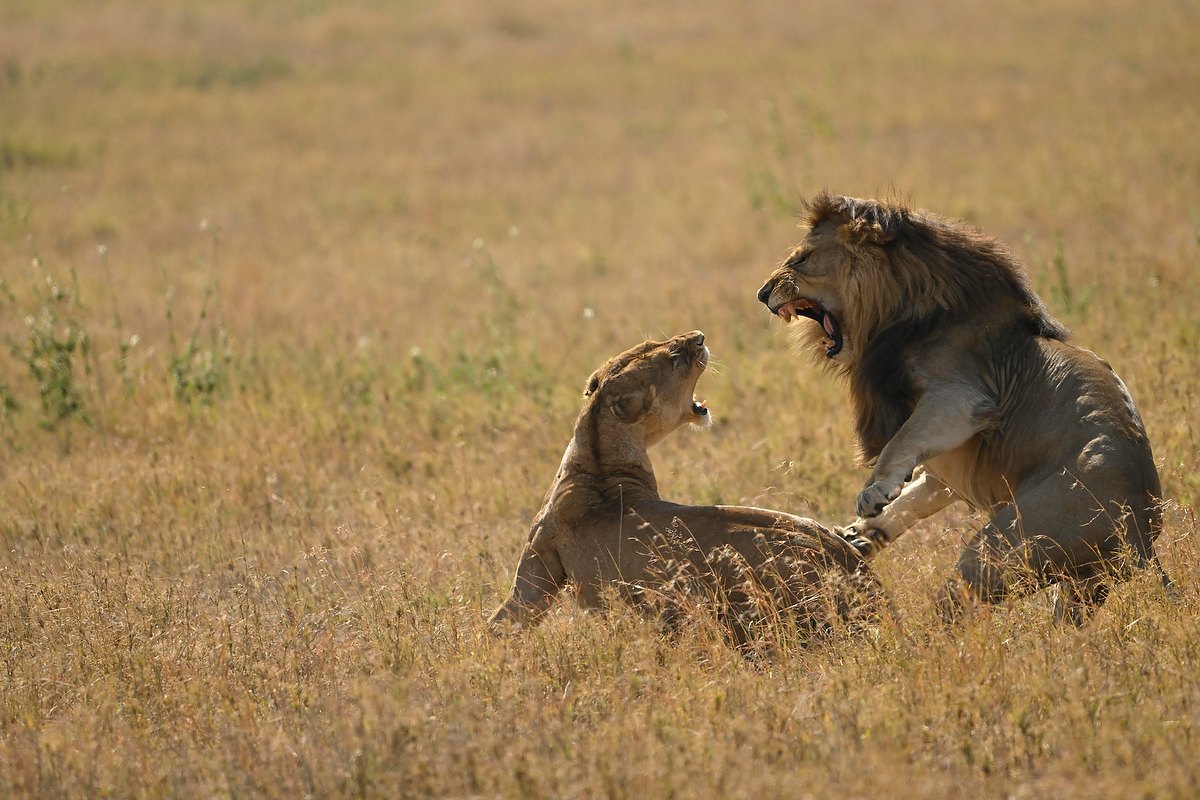
Here’s a great example of why that teleconverter has become so important to me. On the Serengeti safari I was leading in July, we came across a pair of lions “on honeymoon.” That meant they’d be mating over and over for a while (just like house cats). This is an uncropped image from the first time we had a good view of the action. Nikon Z 8, Manual exposure (with Auto ISO), Cloudy white balance, ISO 640, 1/1600 at f/6.3 in Matrix metering, 0.0 EV, Nikkor Z 180-600mm f/5.6-6.3 VR lens at 600mm.
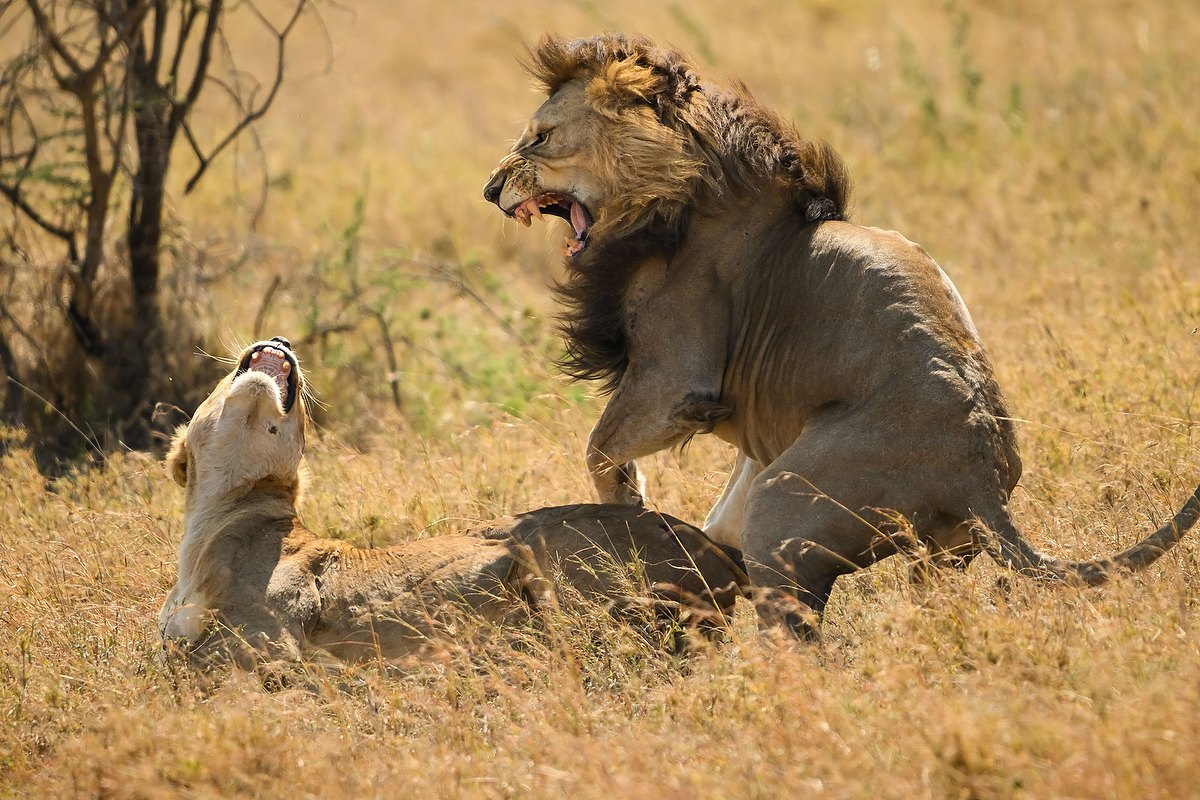
Since we were staying to see more, I then added my Nikon Z 1.4X teleconverter to the lens, now giving me a reach up to 840mm. And this is what I shot after the next mating, uncropped. The first image I’d need to crop in for impact, and thus lose some resolution. Not this one! Nikon Z 8, Manual exposure (with Auto ISO), Cloudy white balance, ISO 2000, 1/2000 at f/9 in Matrix metering, 0.0 EV, Nikkor Z 180-600mm f/5.6-6.3 VR lens with Nikkor Z TC-1.4x teleconverter added for 800mm.
In wildlife photography, you can’t always get as close as you’d like, so more lens is the only real answer to getting a closer image. When I got started in photography, a 300mm lens was a long telephoto. In time, 400mm, 500mm and even 600mm lenses became more available, but their cost was still more than most of us could afford. In the last fifteen years, though, lenses longer than 300mm became widely available at more reasonable prices. That included long zooms, now with good sharpness. For me, the first lens that achieved that was the Nikkor 200-500mm f/5.6 lens, introduced in 2015. And until pretty recently, that was my go-to wildlife lens. It went with me everywhere, from my backyard to Africa and Antarctica. Then in 2023, things changed once more with the release of the Nikkor Z 180-600mm f/5.6-6.3 lens, for around $2000. Even more range, with excellent sharpness.
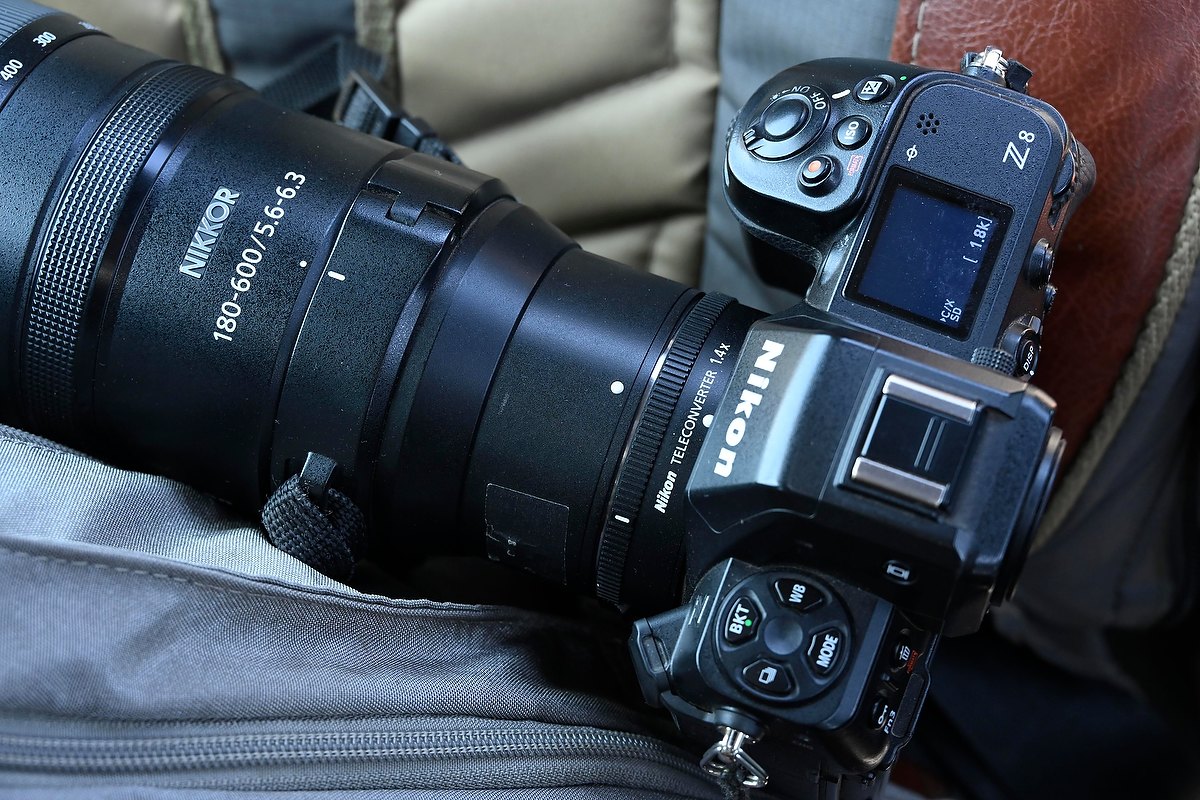
You can see how small the 1.4X teleconverter is (mounted between the lens and the body), which makes it an easy decision to bring along, even on international trips.
Replacing my 200-500mm lens, this now became my wildlife lens. Although not a “fast lens” (maximum aperture being f/5.6-6.3), shooting in daylight, I found that the relatively slow aperture wasn’t an issue. But adding a 1.4X teleconverter would mean I’d often be shooting at f/9 (maximum aperture once you’re zoomed out to 500mm), and that did worry me. So it was about a year before I even tried adding the Z 1.4X teleconverter, and immediately regretted not doing that earlier. The performance of that combo was excellent, even at high ISOs (my full-frame Nikon Z cameras keep noise to a minimum). And you need to be comfortable with higher ISOs if using this combination.
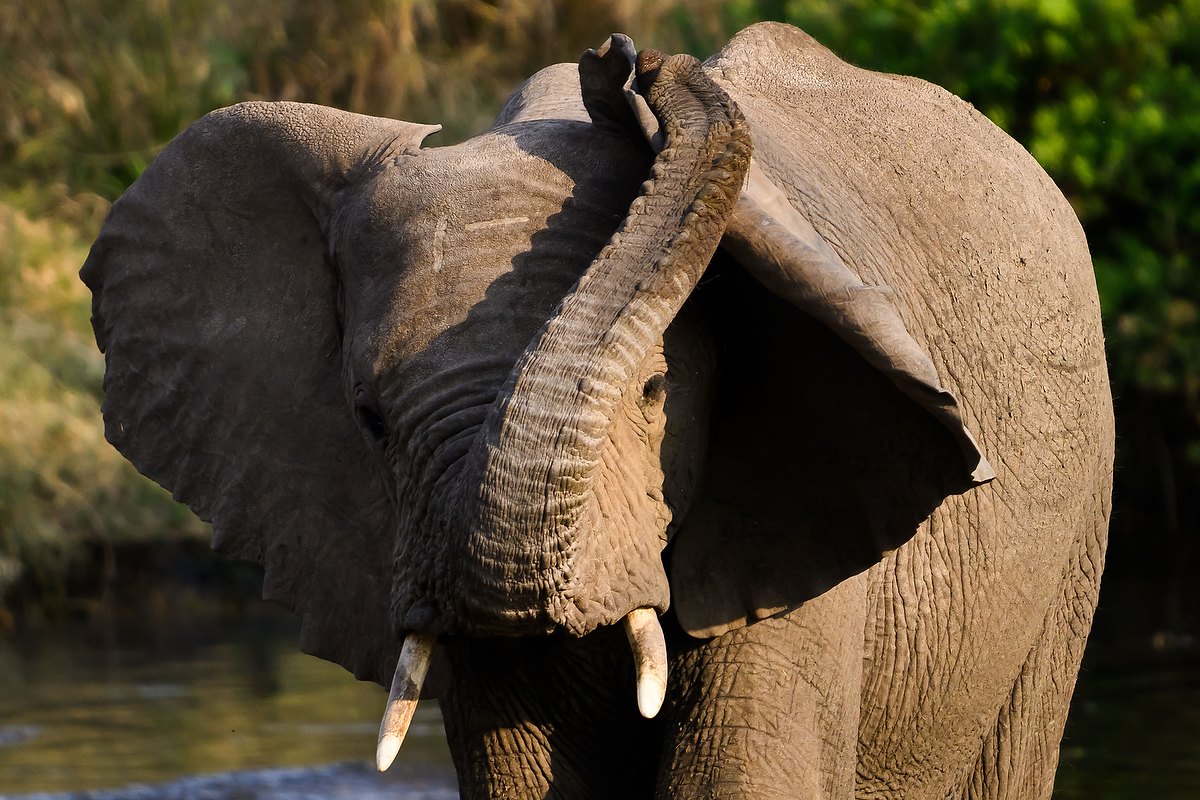
Since the maximum (widest) aperture of this combination is f/9, there are times, even in sunlight, where the ISO will need to go fairly high. In this case, it was getting near sunset, so the light had dropped in intensity. Nikon Z 8, Manual exposure (with Auto ISO), Cloudy white balance, ISO 1250, 1/800 at f/9 in Matrix metering, 0.0 EV, Nikkor Z 180-600mm f/5.6-6.3 VR Z with Nikkor Z TC-1.4x teleconverter for 840mm.
While doing wildlife photography, I regularly need higher shutter speeds than otherwise. And if I can’t open the aperture any wider, the only other option is to raise the ISO. For most action photography with a long telephoto, I start at 1/1600 shutter speed. However, if I’m photographing a static, or slow-moving subject, I’ll lower it, and for a faster-moving subject (like birds), I raise it. I also keep the lens at widest aperture most of the time, so when I do lower the shutter speed, I’m in effect lowering the ISO. That means for fast action, the ISO can climb quite a bit, often ranging from 1000 to 2000. But as long as the quality remains excellent, I have no problem with that.
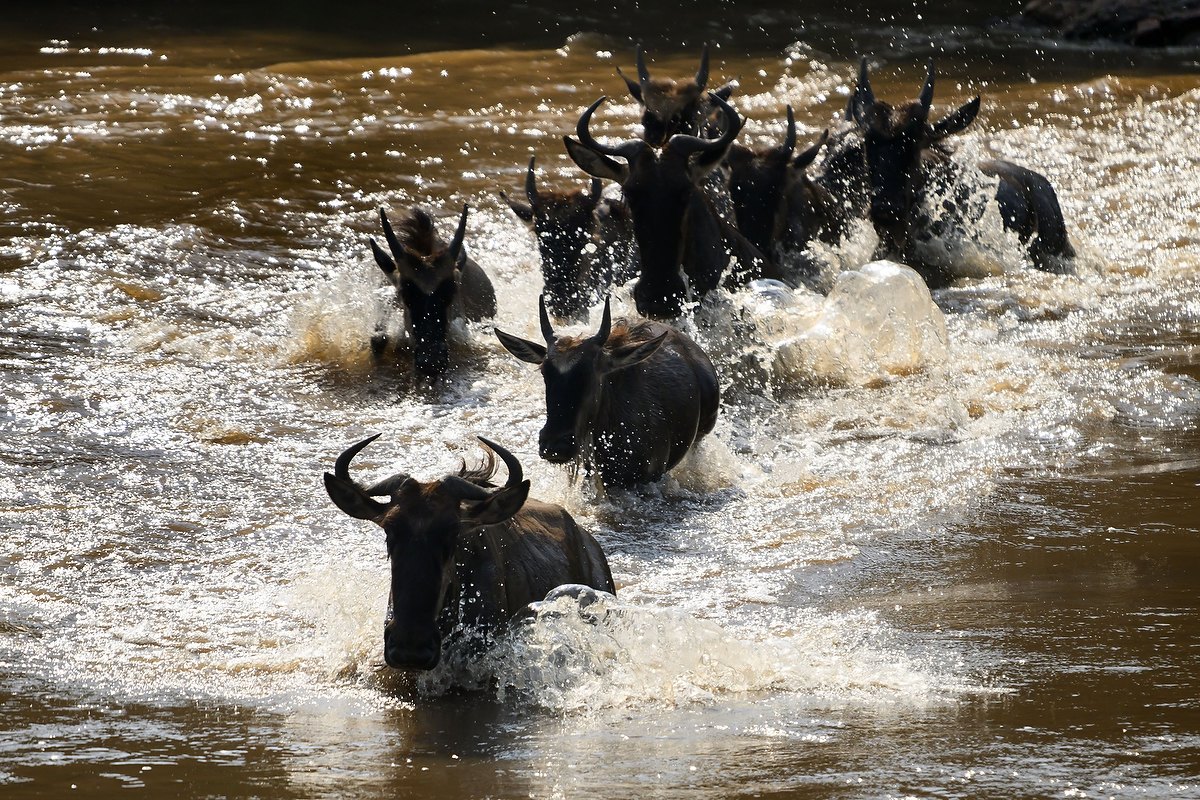
For wildebeest stampeding across the Mara River, that fast action meant I’d definitely need a fast shutter speed. Nikon Z 8, Manual (with Auto ISO), Sunny white balance, ISO 400, 1/1600 at f/9 in Matrix metering, -0.7 EV, Nikkor Z 180-600mm f/5.6-6.3 VR Z with Nikkor Z TC-1.4x teleconverter for 840mm.
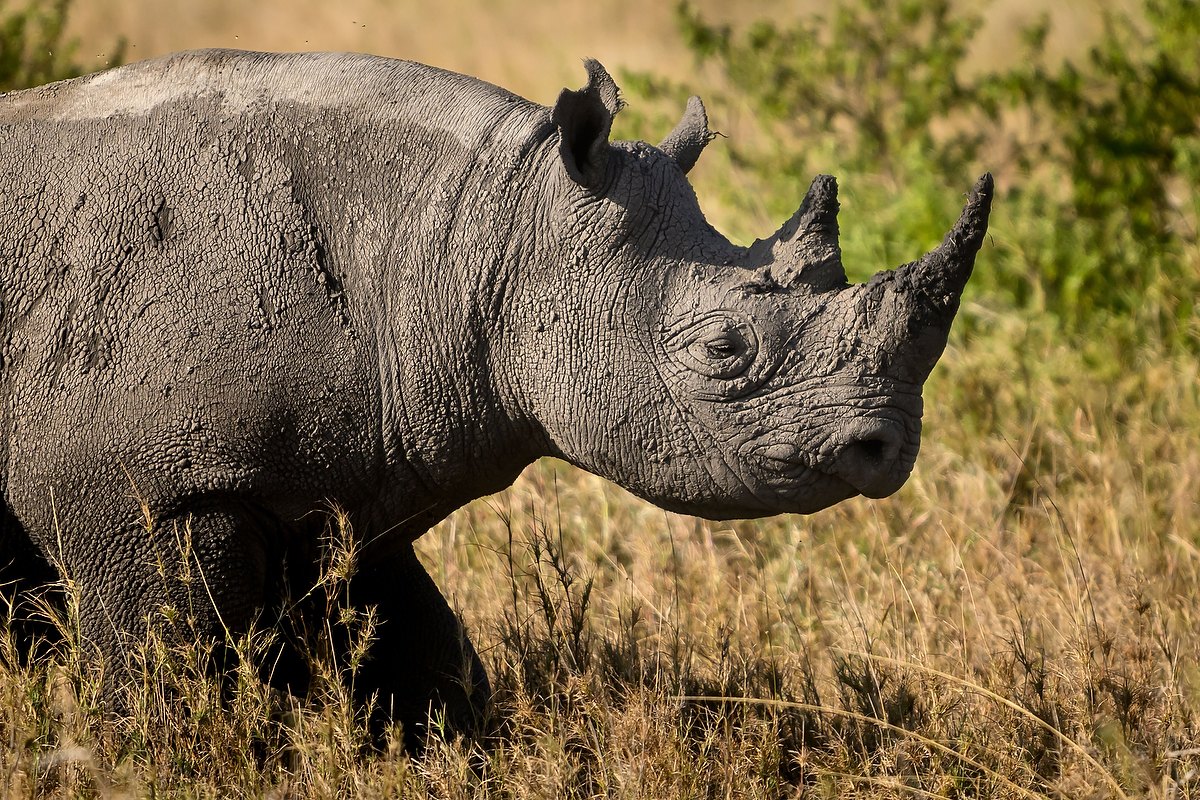
There are fewer than 30 rhinos left in the Serengeti, which encompasses 5000 square miles of land. Of the eleven trips I’ve led there now, this past time in July is the only time we’ve seen one close enough to make good pictures. And at 840mm, I could get a REALLY nice picture! But since it was just walking, I could get away with dropping my shutter speed, resulting in a lower ISO. Nikon Z 8, Manual exposure (with Auto ISO), Sunny white balance, ISO 800, 1/1000 at f/9 in Matrix metering, 0.0 EV, Nikkor Z 180-600mm f/5.6-6.3 VR lens with Z TC-1.4x teleconverter for 840mm.
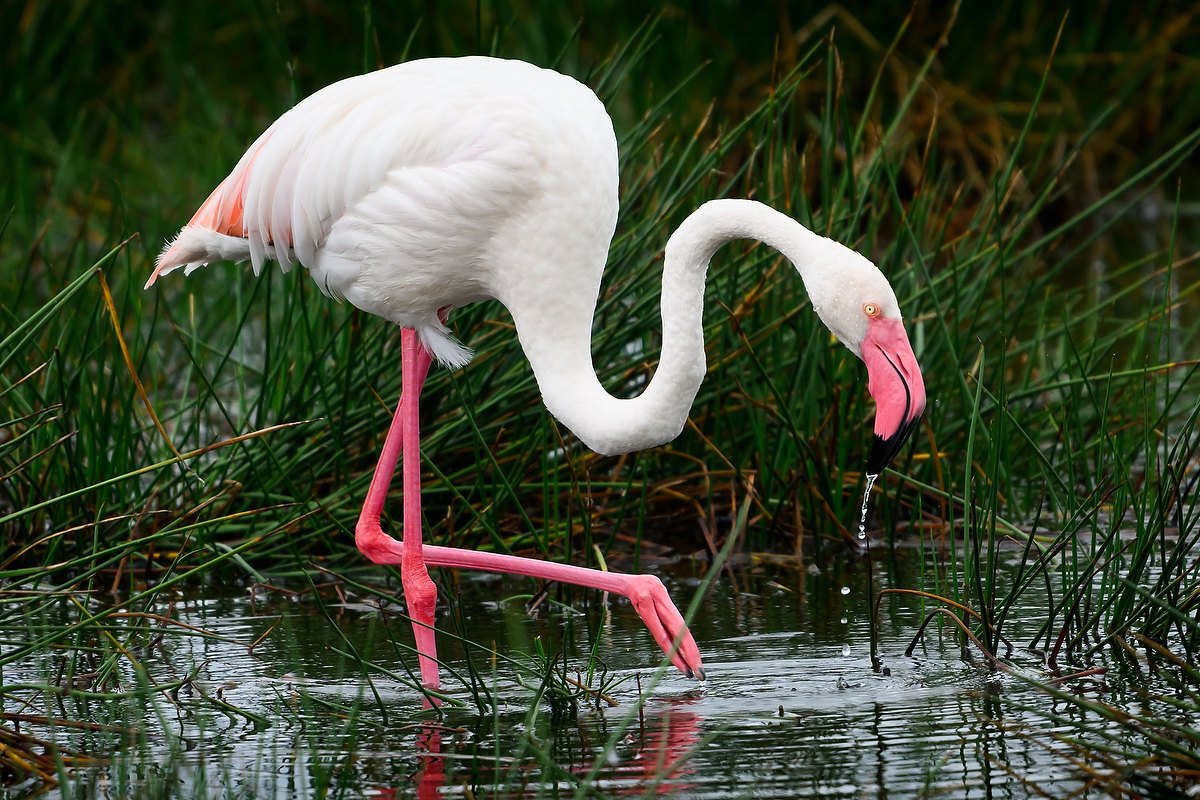
The flamingos feeding in Arusha National Park (in Tanzania) were pretty slow, so I could drop my shutter speed, allowing the ISO to drop as well. Nikon Z 8, Manual exposure (with Auto ISO), Sunny white balance, ISO 560, 1/500 at f/9 in Matrix metering, -0.3 EV, Nikkor Z 180-600mm f/5.6-6.3 VR lens with Z TC-1.4x teleconverter for 840mm.
It’s worth noting that there can be drawbacks to adding a teleconverter. More glass means less light making it to the sensor. That doesn’t just mean a smaller maximum aperture (as mentioned above), but can also slow down autofocus performance. And in the past, at least, I’ve found that sharpness often suffers when the subject is far away. It’s also important to know that most teleconverters can’t be used on all lenses. With Nikon, the Z teleconverters (just like the older F-mount) can only be used on specific, generally more expensive telephoto lenses. Which makes sense. If you’re going to add more optical elements to a lens (that’s what a teleconverter does), then the lens it’s being added to needs to be designed with that in mind. So what changed to make the Z teleconverters (I also have a 2X) even better than the earlier F-mount teleconverters? After all, I did try the Nikon F-mount 1.4X teleconverter with my 200-500, but the resulting photos weren’t as sharp as I wanted them to be. I believe it’s the Z lens mount.
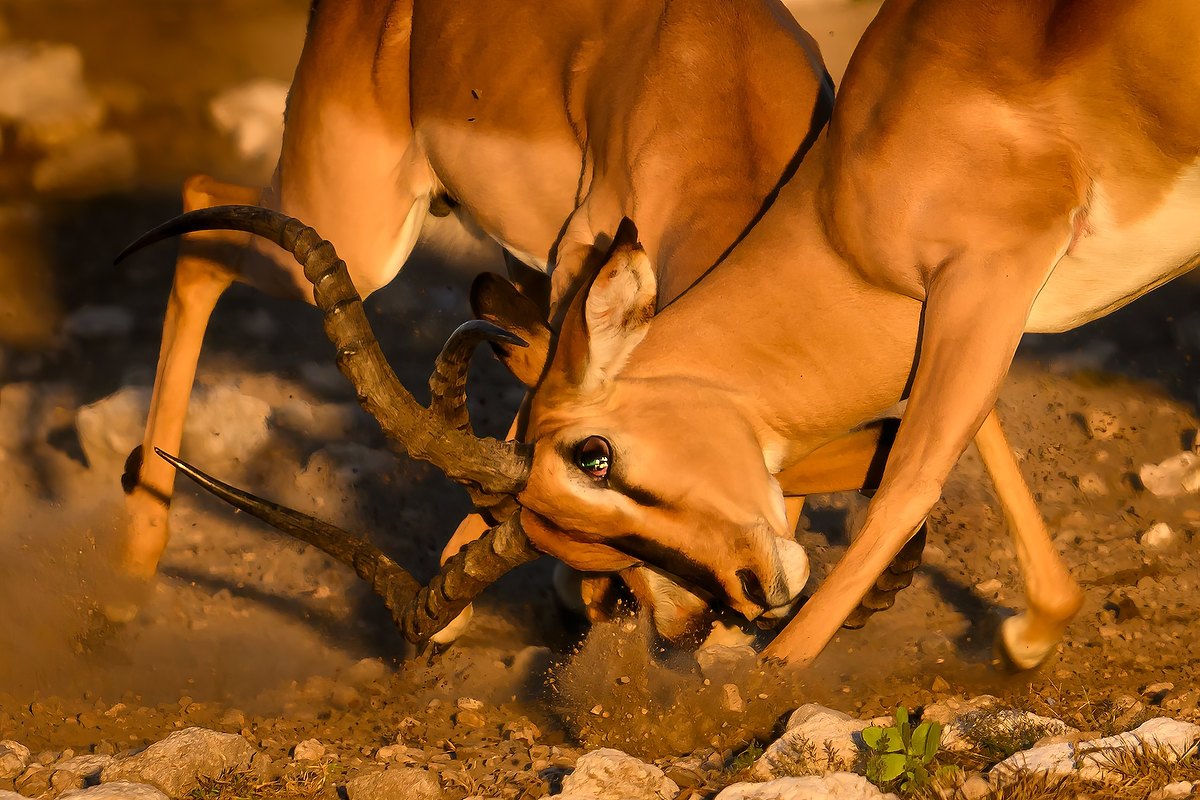
A pair of impala spar with each other at sunset near a watering hole in Etosha National Park, Namibia. As you can see, I have no issues with sharpness using this combination. Nikon Z 8, Manual exposure (with Auto ISO), Sunny white balance, ISO 500, 1/800 at f/9 in Matrix metering, -0.3 EV, Nikkor Z 180-600mm f/5.6-6.3 VR Z with Nikkor Z TC-1.4x teleconverter for 840mm.
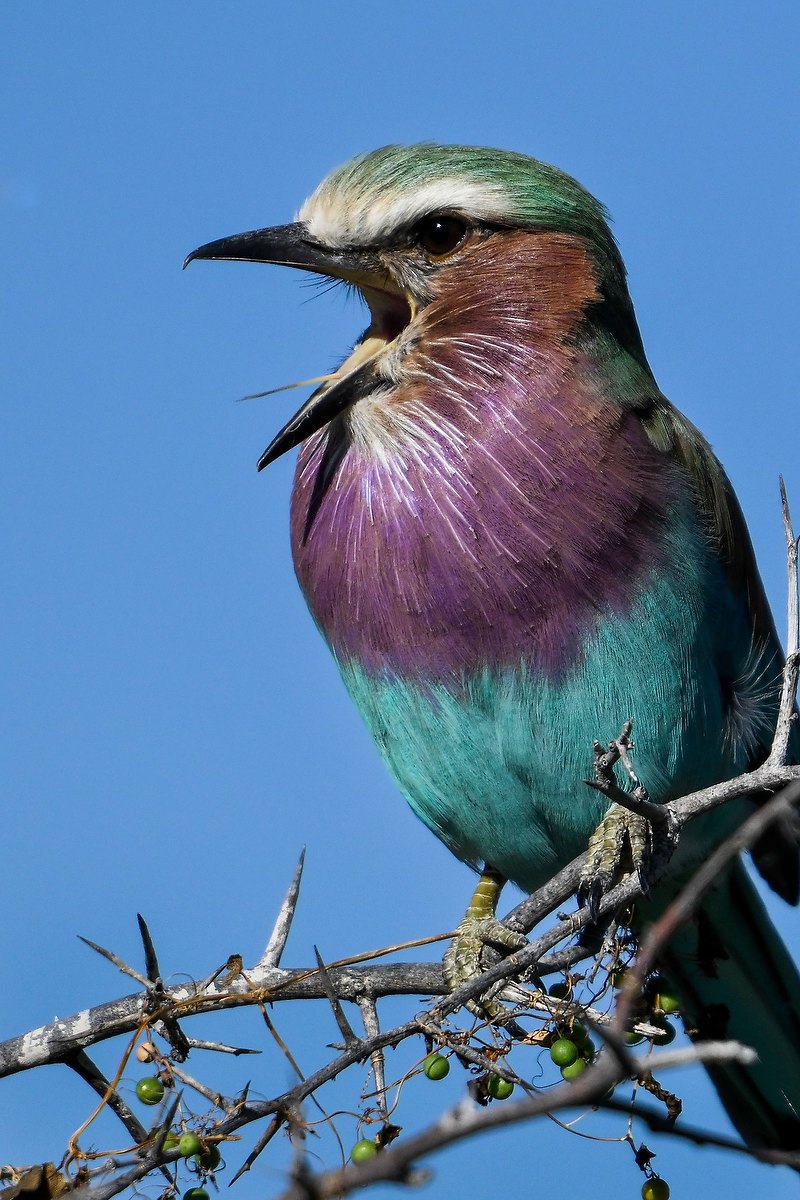
A lilac-breasted roller sings in morning light in Etosha National Park. I had the shutter speed high because I was waiting for it to fly, but zoomed in for a tight shot when it started to sing. Nikon Z 8, Manual exposure (with Auto ISO), Sunny white balance, ISO 720, 1/3200 at f/9 in Matrix metering, 0.0 EV, Nikkor Z 180-600mm f/5.6-6.3 VR Z with Nikkor Z TC-1.4x teleconverter for 780mm.
After the initial announcements about Nikon’s Z mirrorless cameras, most people quickly forgot one of the most important changes from F-mount to Z-mount– the size of the lens mount. In 35mm-style mirrorless cameras, Nikon now has the widest mount. And the size of that mount allows Nikon to do more optically with their Z lenses. That would also apply to their Z teleconverters. I believe that’s the main reason the Nikon Z lens + teleconverter combinations work so well. I’ve also been very happy using the 1.4X with my Nikon 70-200mm f/2.8 lens (making it a 98-280mm f/4 lens), and the 2X teleconverter with my Nikon 400mm f/2.8 lens (making it an 800mm f/5.6 lens).

I regularly use the Z 1.4X teleconverter with my Nikon Z 70-200mm f/2.8 lens while covering football, like this photo from January for the Associated Press. Nikon Z 9, Manual exposure (with Auto ISO), Sunny white balance, ISO 3200, 1/1600 at f/4 in Matrix metering, 0.0 EV, Nikkor Z 70-200mm f/2.8 VR lens Z with Nikkor Z TC-1.4x teleconverter for 260mm.
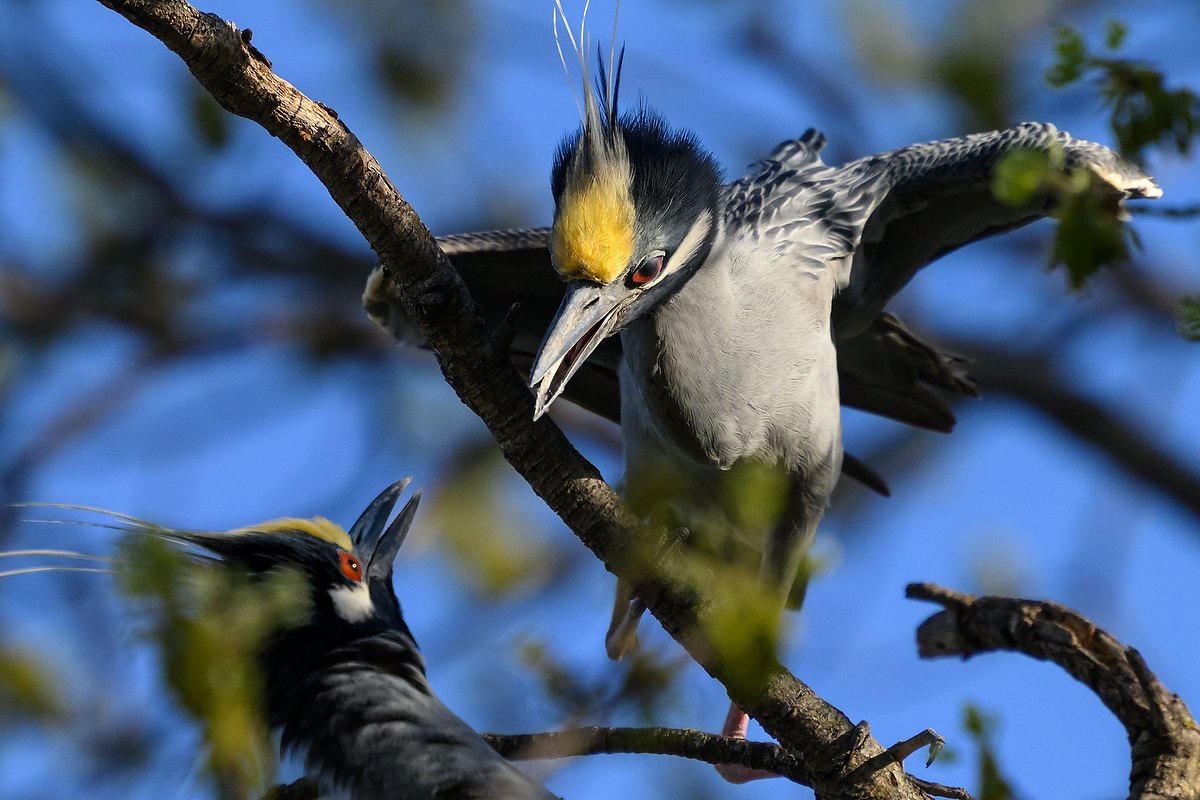
And for this photo of yellow-crowned herons in Topeka, KS, I paired the Nikkor Z 2X teleconverter with my Nikkor 400mm f/2.8 TC lens for 800mm. Nikon Z 9, Shutter Priority, Natural Auto white balance, ISO 2200, 1/5000 at f/5.6 in Matrix metering, -0.7 EV, Nikkor Z 400mm f/2.8 TC VR S lens with Nikkor Z TC-2.0X teleconverter for 800mm.
One downside that pops up once you start using super-telephoto lenses is atmospheric conditions that can degrade image quality. Things like dust, smoke, rain and heat waves all become a more pronounced problem when shooting at long distances, as the softness they create increases with distance to subject. That’s one reason I make sure we start early when doing wildlife photography in Africa, to get a jump start on the heat and the issues it can create. Because minus those conditions, that extra reach can mean extra special pictures.
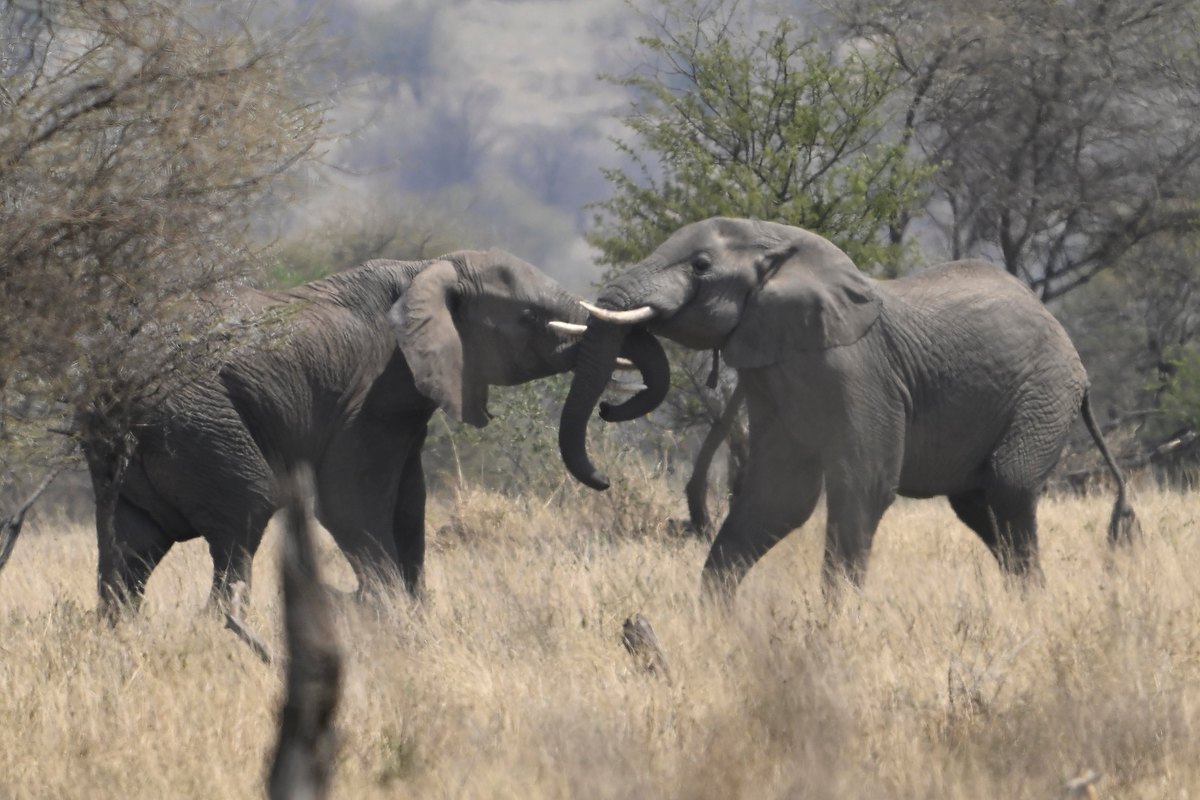
During the Serengeti trip in July we occasionally had moments like this, where heat waves distorted the sharpness of the scene we were photographing. Nikon Z 8, Manual exposure (with Auto ISO), Sunny white balance, ISO 800, 1/1000 at f/9 in Matrix metering, 0.0 EV, Nikkor Z 180-600mm f/5.6-6.3 VR lens with Z TC-1.4x teleconverter for 840mm.
So from now on, when I go out to do wildlife photography with my 180-600, you can be sure that 1.4X teleconverter will be in my bag. Because if I can get 840mm instead of 600mm, why not?
NOTE: I’ll be teaching an online Wildlife Photography class this January for the Creative Photo Academy. Message me if you’d like information about it.
(If you like this story, please share it with your friends and let them know about the links on photography that I post on my business Facebook page. I’m also on Instagram and Twitter, @reedhoffmann. And if you’re curious about the workshops I teach, you can find them here. Finally, you can subscribe to this blog on my home page.)