
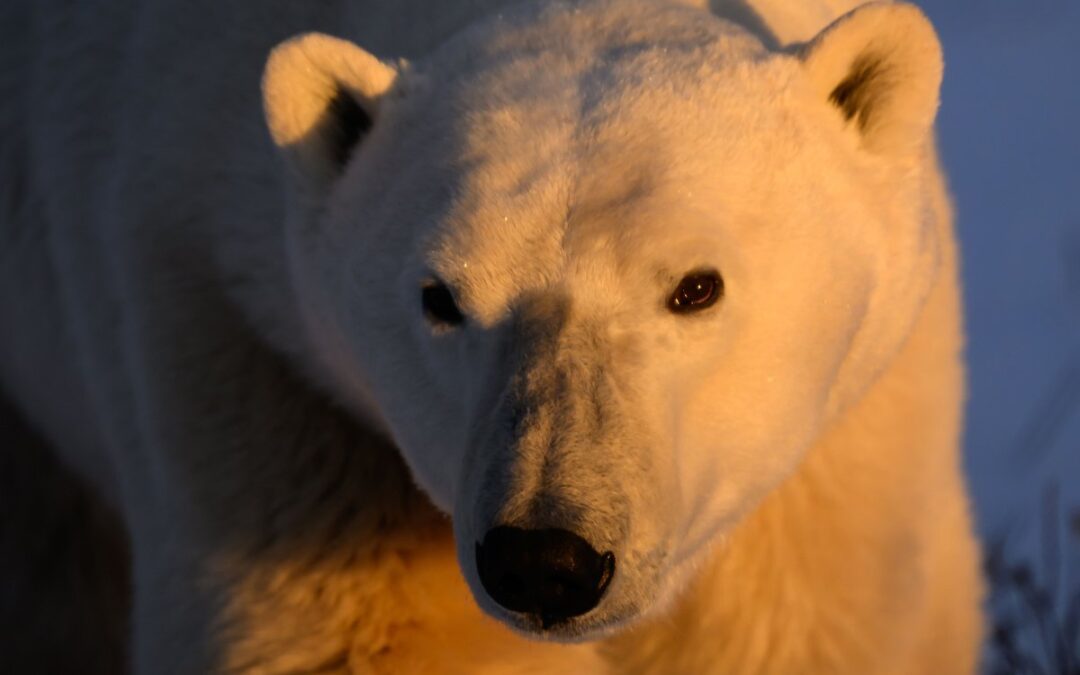
Did we really need to spend four days in tundra buggies, photographing polar bears outside Churchill, Manitoba, with temperatures in the 20s and windchills below zero? Well, as I often say: It depends.
In November, when I helped Mark Comon lead a Creative Photo Academy trip there, it’s almost always cloudy. But… on our first night, we were blessed with a clear sky and Northern Lights. On our second day, we got afternoon sunshine and a colorful sunset. On our third morning, we had beautiful, warm light for about thirty minutes after sunrise (and luckily, bears nearby). And on our final, fourth day, we photographed two bears sparring off and on for nearly two hours. When photographing wildlife, time equals opportunity.
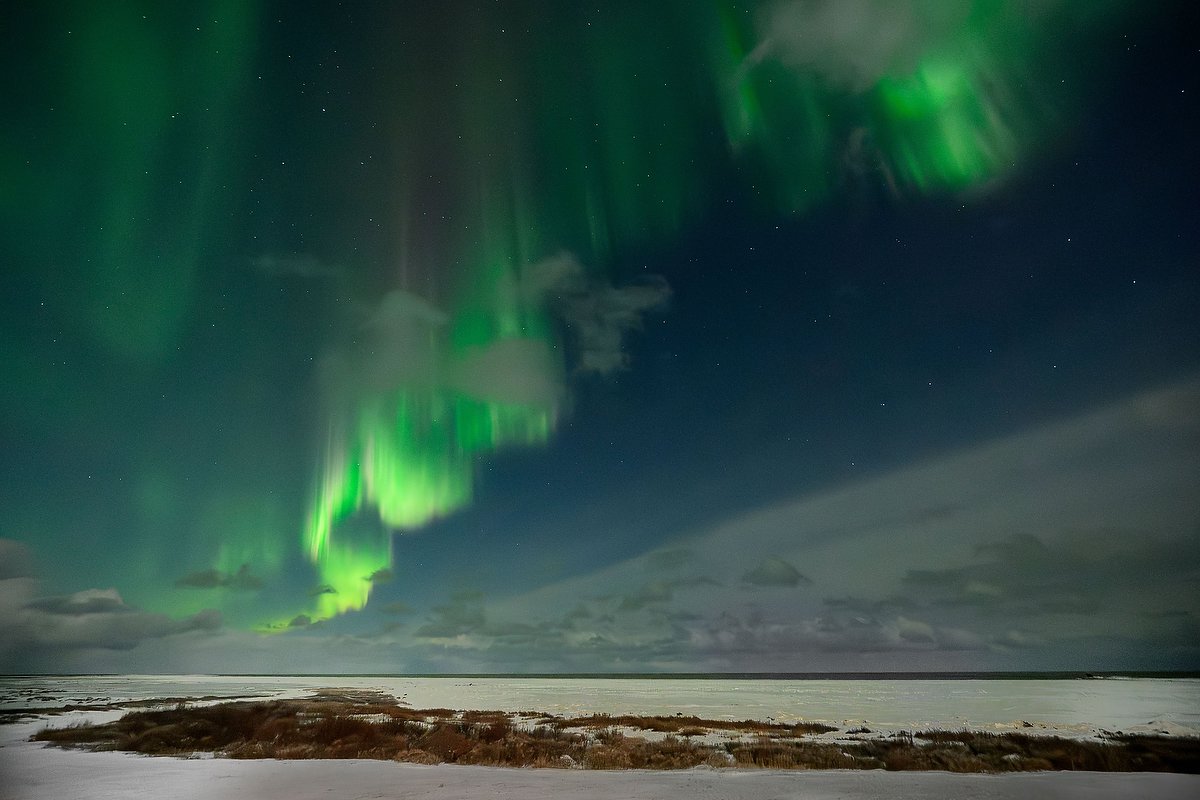
Over the course of four nights, only one was clear, giving us the opportunity to see the Northern Lights. Because of the wind adding some movement to the buggy, I shot this hand-held, kneeling, braced against the railing and the wall. Also, I shot a bunch of frames to get just one sharp image. Nikon Z6III, Manual exposure, Sunny white balance, ISO 20,000, 1/3-second at f/4, Nikkor Z 14-30mm f/4 S lens at 14mm.
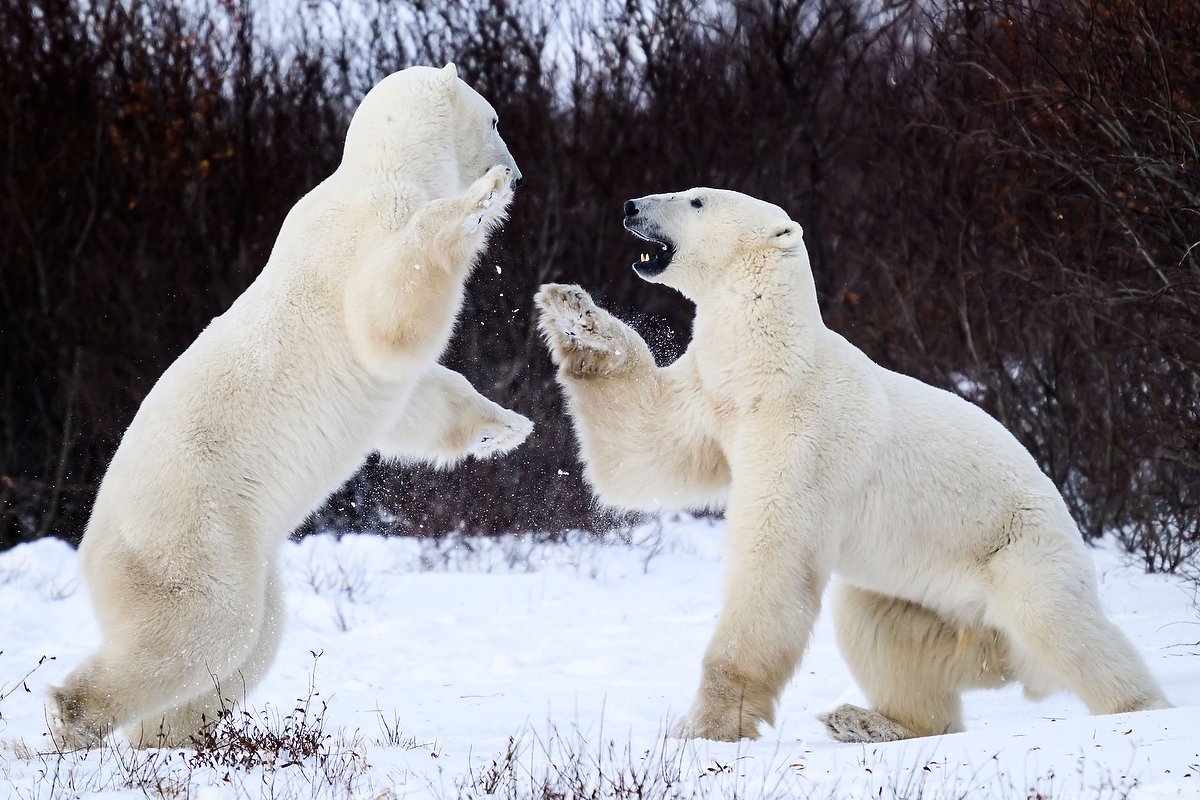
A pair of males sparring, on our second day in the tundra. Nikon Z8, Manual exposure with Auto ISO, Auto white balance, ISO 2200, 1/1600 at f/8 in Matrix metering, +0.3 EV, Nikkor Z 400mm f/2.8 TC lens for 560mm, with 2X teleconverter for a total of 1120mm.
For people who like to photograph wildlife, it’s hard to beat an African safari. With the right trip and right guide, you’ll make wonderful pictures of a wide variety of animals. It’s warm, and cloudy days are rare. That’s why I take people to Africa at least every couple of years (next one in 2027). But some animals are harder to find, like polar bears. Before this year, I’d been lucky enough to photograph them in the wild twice: once while teaching photography on a ship up in the Arctic and once while leading a trip to the coast of northern Alaska. But on this recent outing to Canada, I saw more polar bears than ever, sometimes up close.
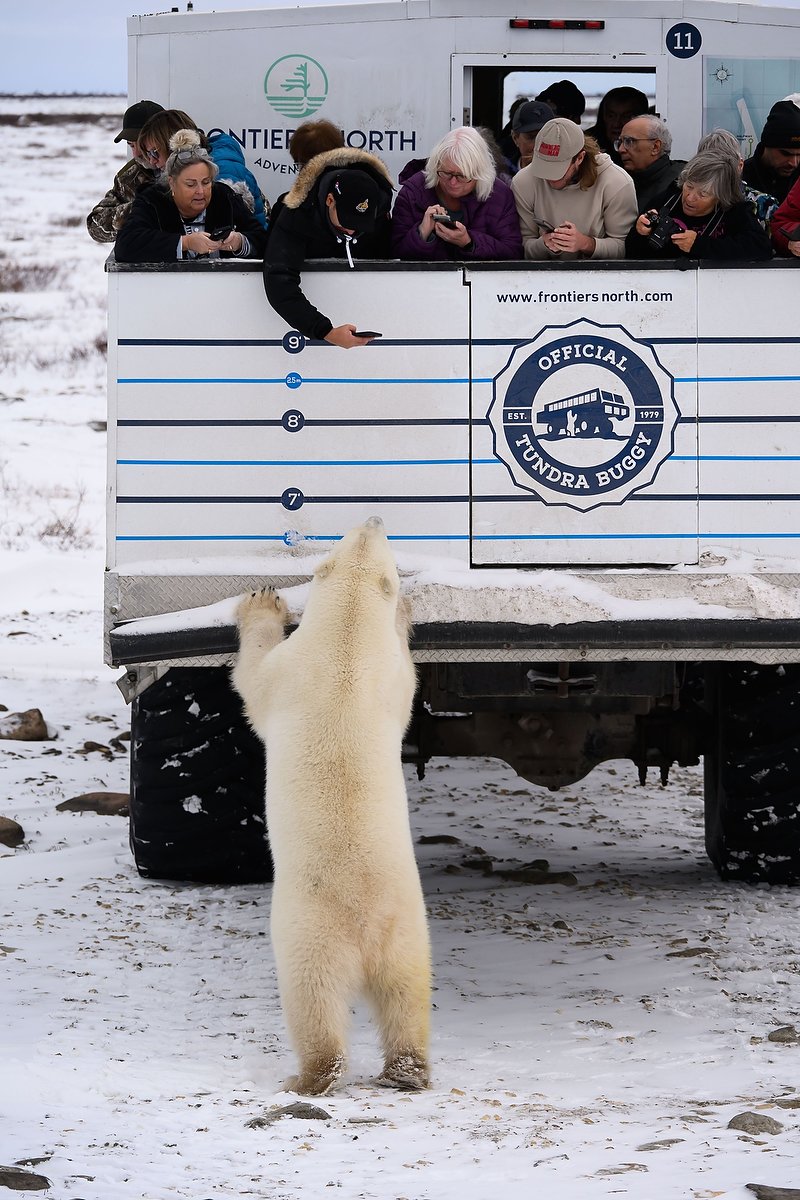
How close? We had a couple of bears approach our buggy, but none stood up like this one nearby. And that guy’s lucky this was a young bear. A fully grown one can reach that nine-foot mark! Nikon Z6III, Aperture Priority, Natural Auto white balance, ISO 500, 1/400 at f/7.6 in Matrix average metering, +0.7 EV, Nikkor Z 28-400mm f/4-8 VR lens at 160mm.
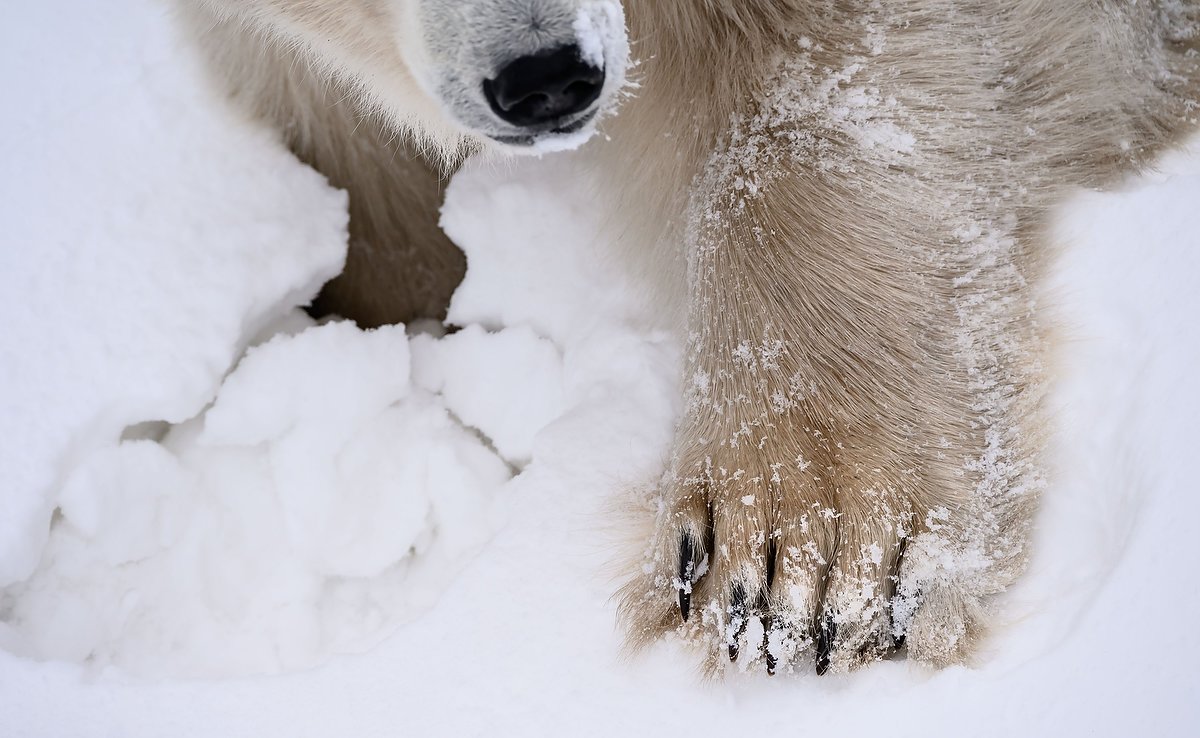
That same bear came over to check us out, so I took advantage of that closeness to show its paw and claws. Nikon Z6III, Aperture Priority, Natural Auto white balance, ISO 640, 1/500 at f/8 in Matrix metering, +1.0 EV, Nikkor Z 28-400mm f/4-8 VR lens at 250mm.
The west side of Hudson Bay, at the mouth of the Churchill River, is one of the first places in the region where ice begins to form in the fall. Polar bears subsist mainly on seal, which they can only hunt on the ice. They spend the summers in a state of “walking hibernation,” not sleeping, living off what they’ve eaten the previous winter. Come fall, as they sense the ice about to form, they gather around Churchill and wait.
There are a few different ways to visit Churchill and see polar bears. Our group used Frontiers North, the inventors of the “Tundra Buggy” nearly 50 years ago. Their trips start and end in Winnipeg, and range from one to six days, with prices from around $1,000 to over $13,000. All those trips include transportation from Winnipeg to Churchill, either by train or charter flight. While the fall trips all offer polar bear viewing, they do vary in what else you see and do while there. On our first afternoon after landing in Churchill, we toured the town and surrounding area. At dusk we transferred to a tundra buggy for the drive out to Polar Bear Point and the “Tundra Buggy Lodge.”
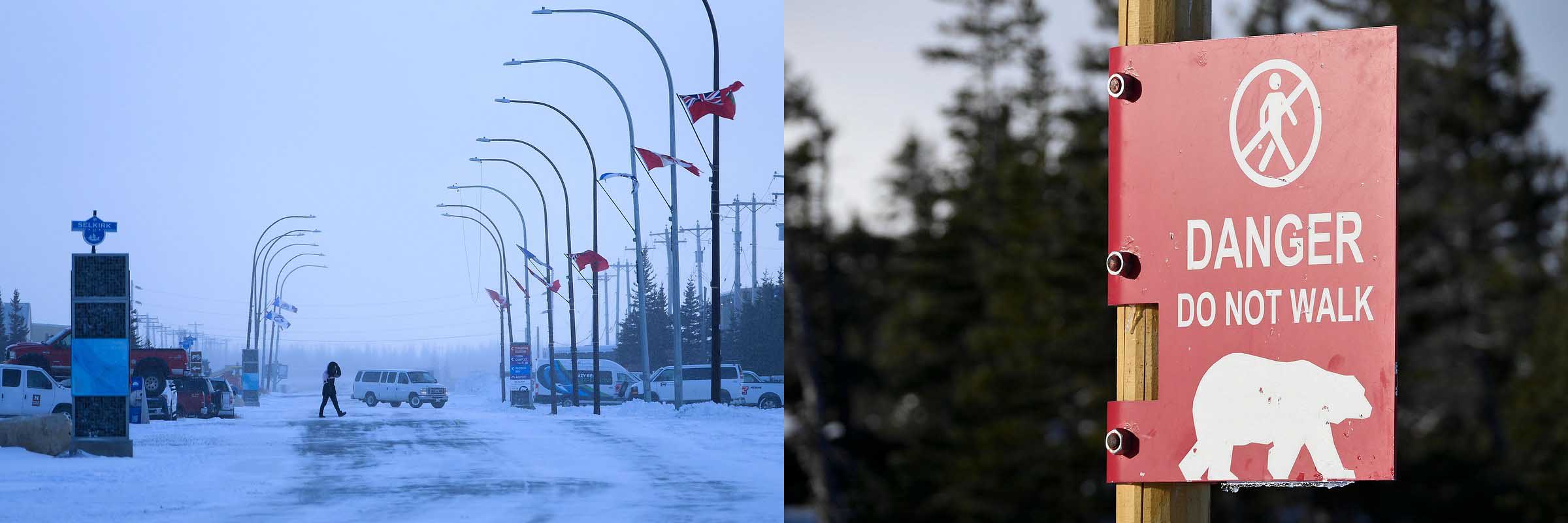
Churchill is a small town, and a challenging place to live. In addition to the severe winters, the bears are an ever-present danger to both residents and visitors. Whenever we stopped around town to get out and take pictures, our guide first had to carefully look for bears in the area, and we weren’t allowed to go near any brushy areas, where a bear might be hidden from view. Both photos with a Nikon Z8 and Nikkor 28-400mm lens.
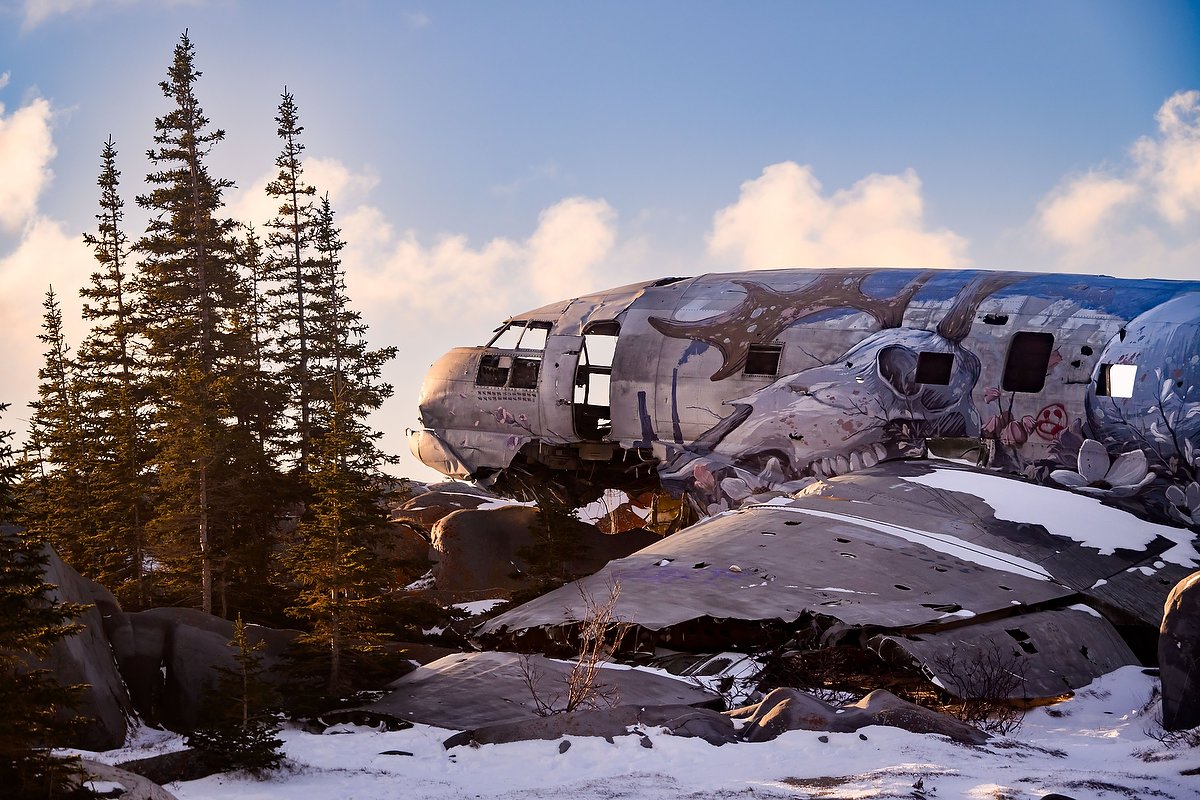
“Miss Piggy” is a C-46 that crashed near Churchill in 1979 (the crew all survived). On the outskirts of town, it makes for a nice subject. Nikon Z 8, Aperture Priority, Sunny white balance, ISO 200, 1/160 at f/8 in Matrix metering, -0.3 EV, Nikkor Z 28-400mm f/4-8 VR lens at 120mm.
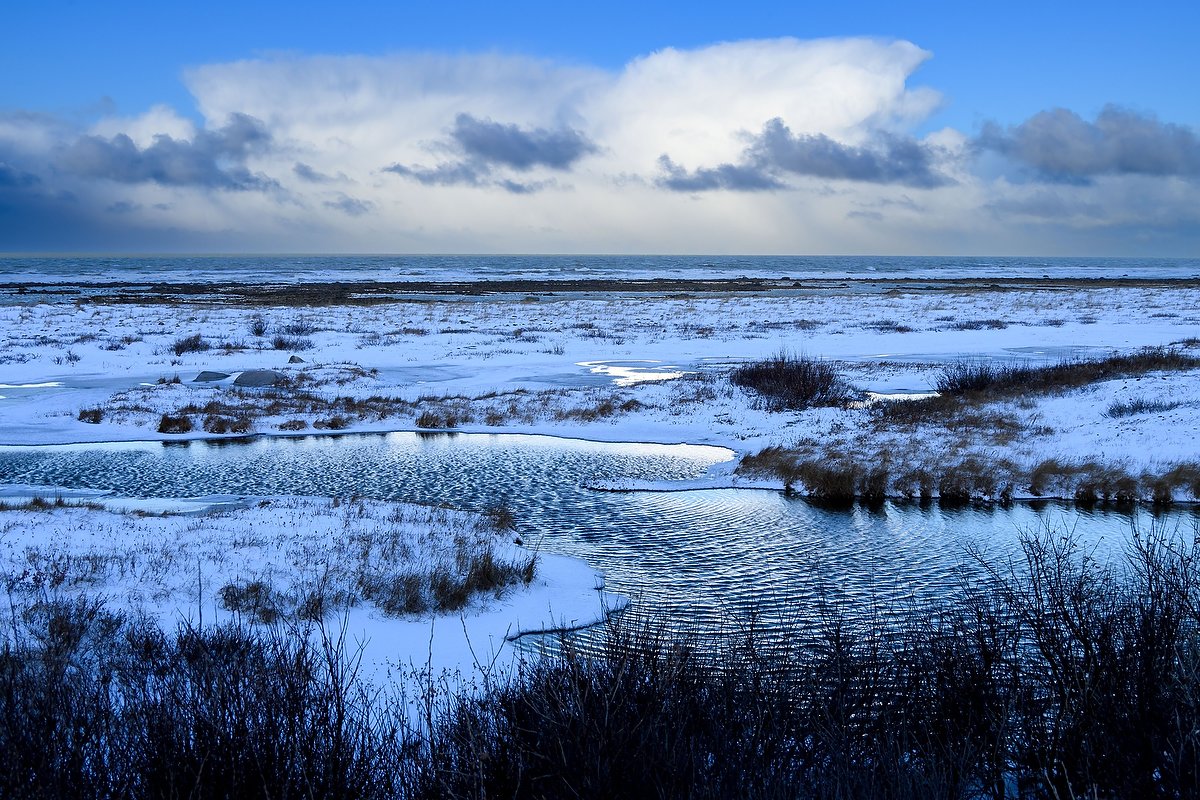
One of the best parts of having the afternoon to tour Churchill was that it allowed us to get out of the van and make photos at ground level, which we wouldn’t be able to once on the tundra (where we’d always be up high out of reach of ). Like this photo showing marshes on the shore of Hudson Bay. Nikon Z8, Aperture Priority, Sunny white balance, ISO 100, 1/200 at f/11 in Matrix metering, -1.3 EV, Nikkor Z 28-400mm f/4-8 VR lens at 43mm.
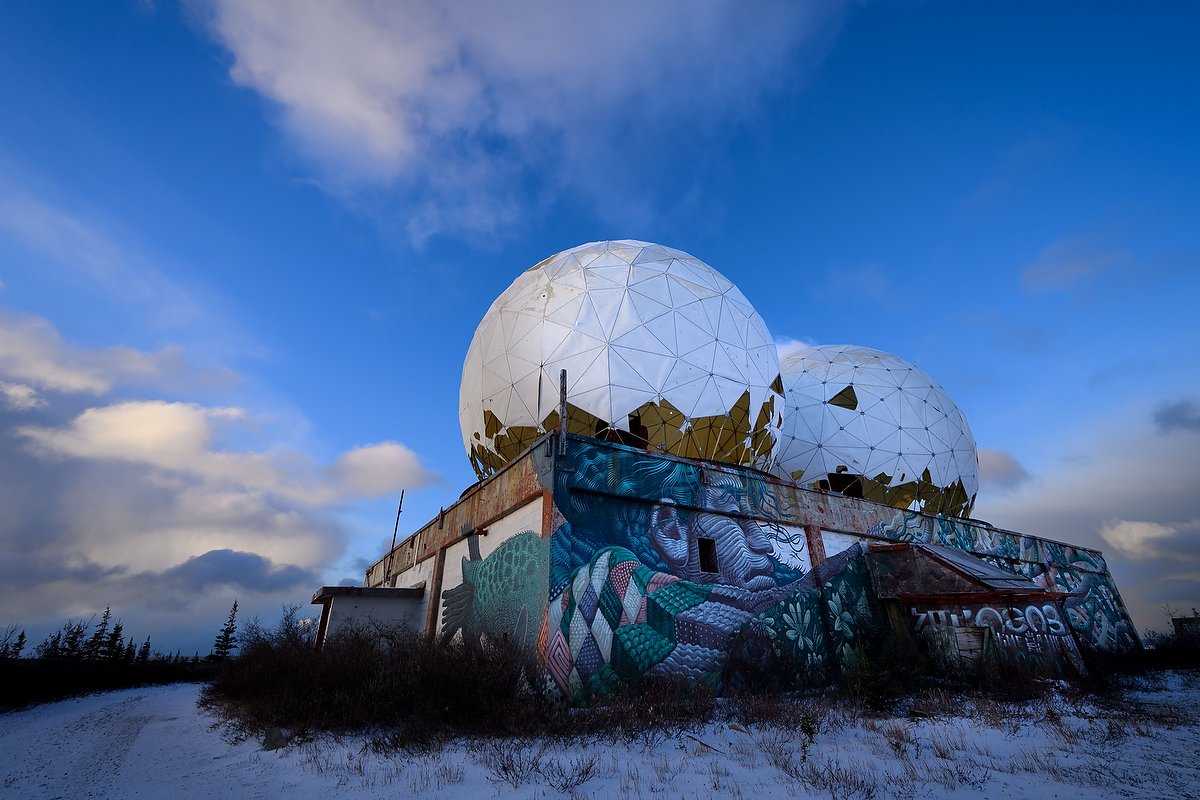
Just outside of Churchill is an old rocket launch area, now abandoned. These radar domes were part of the facility. Over the years, artists have visited Churchill to paint murals on many of the buildings. Nikon Z8, Aperture Priority, white balance, ISO 200, 1/100 at f/10 in Matrix metering, -0.3 EV, Nikkor Z 14-30mm f/4 S lens at 14mm.
The best description I heard of a tundra buggy was, “a cross between a train car and a monster truck.” Riding on enormous tires, it sits high above the ground and can navigate through and across almost anything. That height is important, because whether taking photos through an open window or from the back deck, you’re at least 10 feet above the ground – outside the reach of a polar bear. In fact, if you’re staying at the Tundra Buggy Lodge, your feet won’t touch the ground for days, until you return to Churchill. The lodge is essentially a bunch of tundra buggies without engines, connected like train cars. Two are designed as sleeping cars, one as a lounge and one as a dining car. There are a couple more for the kitchen, supplies and staff. The buggies you travel in dock to the lodge cars, so again, you’re always high above the bears.
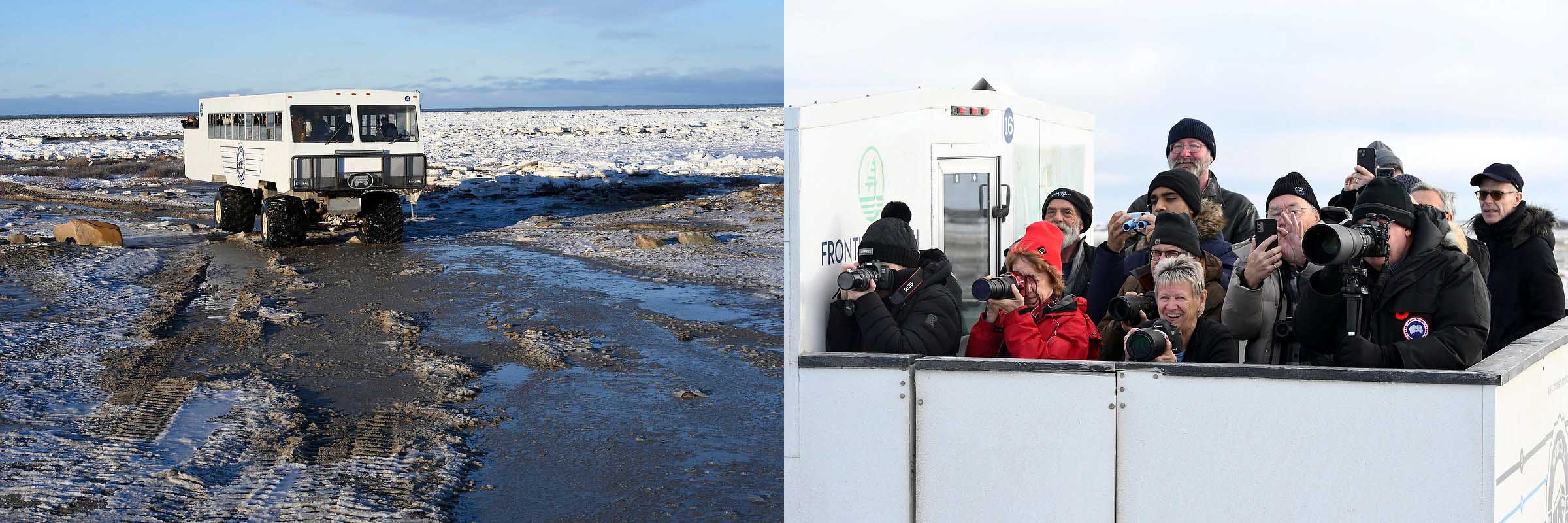
It quickly becomes apparent why you’d need a specialized vehicle to explore this area. The Frontiers North fleet has gone through many improvements over the decades, and now most of the buggies have been converted to electric. While you can shoot from the windows, the back deck allows for more freedom of movement, although it’s much colder out there.
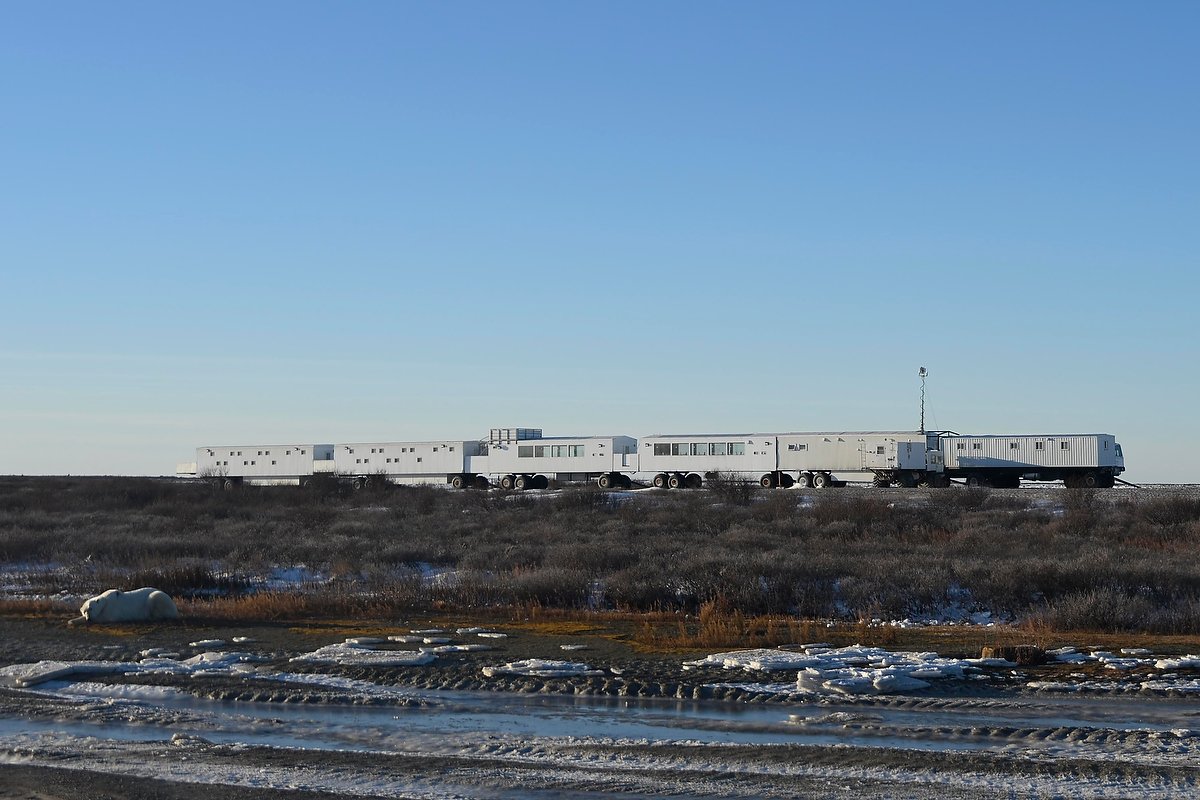
The Tundra Buggy Lodge. The two cars at far left are the sleeping cars, then the lounge car (with a small platform on top for viewing) and the dining car. At the end is staff quarters. Nikon Z6III, Aperture Priority, Auto white balance, ISO 125, 1/320 at f/7.1 in Matrix average metering, +0.7 EV, Nikkor Z 28-400mm f/4-8 VR lens at 41mm.
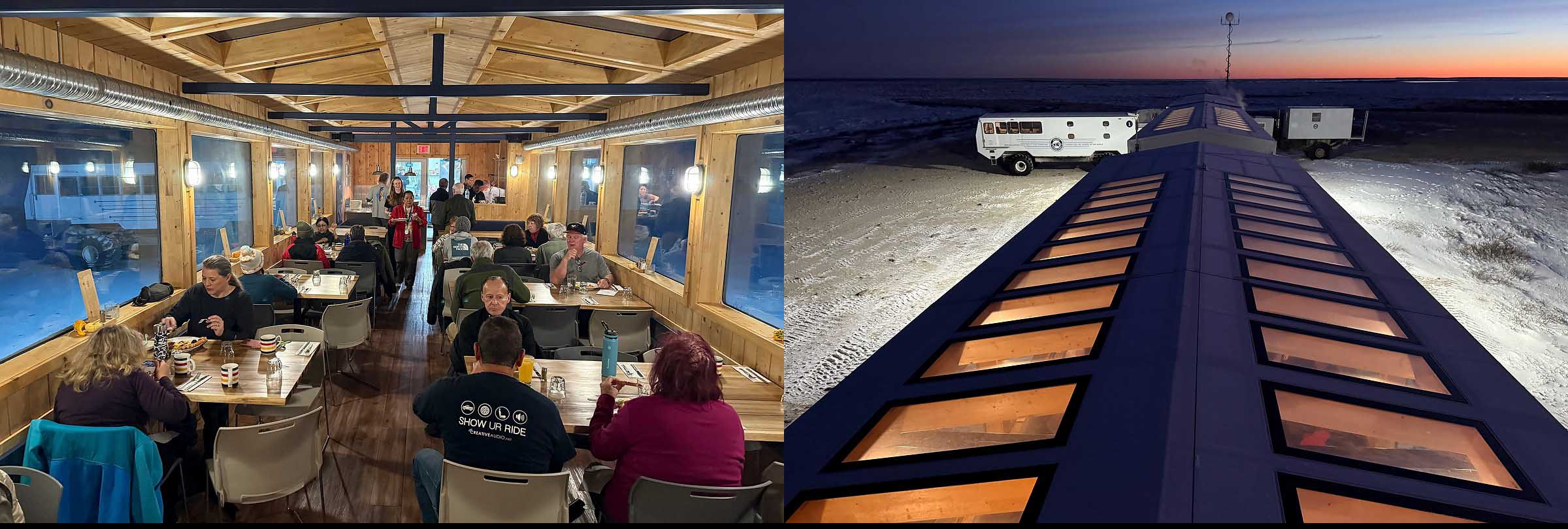
The photo at left shows the dining car, and the one at right is from on top of the viewing platform, with the lounge car’s skylights in the foreground. At back left, you can see how a tundra buggy docks to the lodge by backing in to connect its rear deck with the other car. iPhone photos.
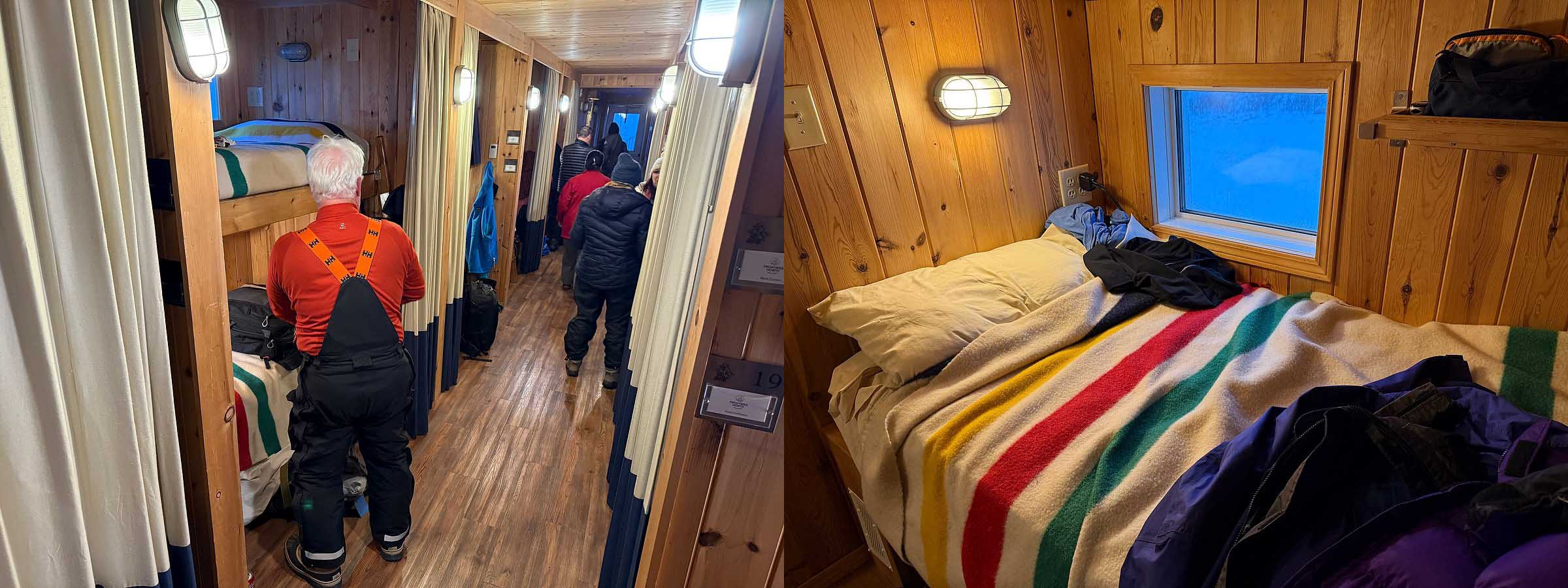
Two views of the sleeping car we used. There’s an aisle down the middle, with bunks to both sides. The photo at right shows my bunk, with light, power, window and shelf. iPhone photos.
After arriving at the lodge that second night (our arrival night was at a hotel in Winnipeg, included, with a welcome dinner), we unpacked, then listened to an introductory program in the lounge car. From there we moved to the dining car. They take great pride in the food they serve, and it was tasty! Afterwards, we could relax in the lounge car with hot drinks as we looked at photos from the day, watch polar bears wandering around outside or head on back to the sleeping cars. Each sleeping car has three bathrooms (two with showers), and each bunk has its own light, outlets and shelf. It’s a cozy arrangement.
The next morning began our first full day looking for polar bears, starting at 7 with breakfast. At 8, as the sun rose, we boarded our buggy and headed out onto the tundra. Our driver, “Buggy Bob,” has 24 years’ experience driving buggies there. We also had a guide with us full time, Mike, who runs a photo tour business in Jasper, Alberta. He comes east to lead groups for Frontiers North during polar bear season in the fall and then again in winter for Northern Lights (yes, they run tours for those as well). Bob knows where to expect the bears, then puts the buggy in the best position for photography. Staying at the lodge (instead of in town) keeps us in the heart of bear country, on the edge of Hudson Bay, avoiding the long drive to and from town each day. Another advantage we had was that Frontiers North holds 12 of the 18 permits for the Churchill Wildlife Management Area. That means only six other buggies have access to this prime polar bear habitat, which keeps crowds to a minimum.
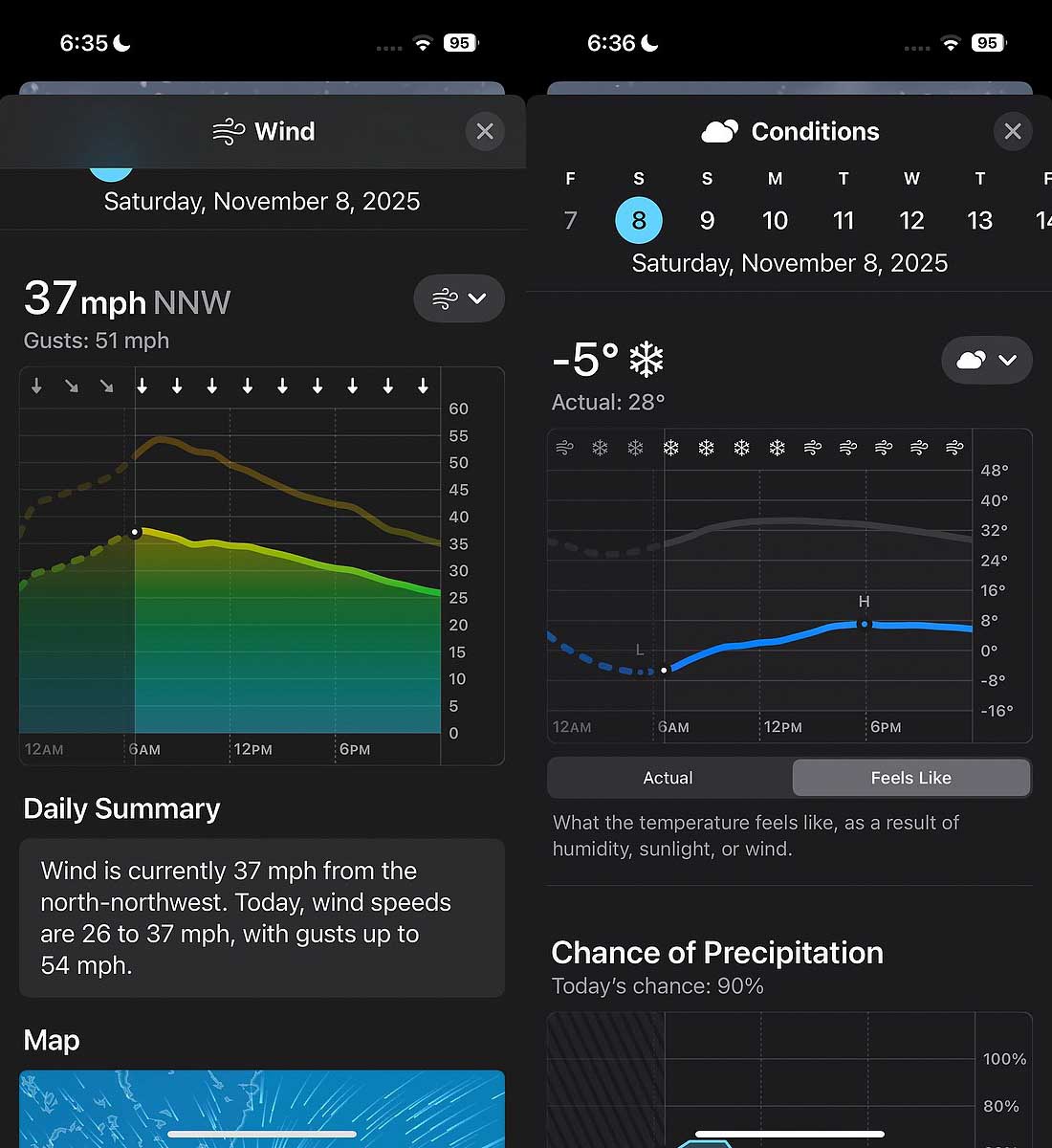
We had internet at the lodge, so I could see just how cold it was going to be on our first day there!
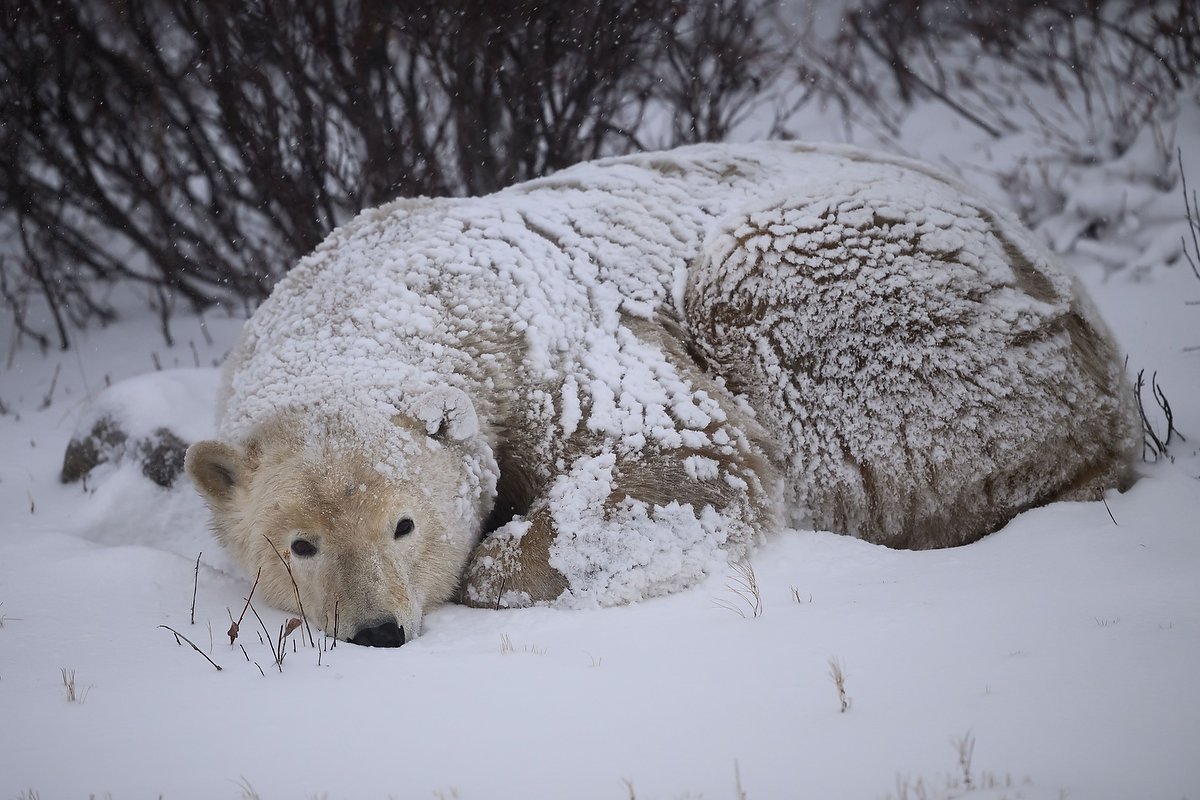
Clear that first night, by morning it was snowing. This was the first bear we saw that day. As cold as it was for us, this was warm weather for the bears. Nikon Z8, Manual exposure with Auto ISO, Auto white balance, ISO 900, 1/1000 at f/2.8 in Matrix metering, -0.7 EV, Nikkor Z 400mm f/2.8 TC VR S lens at 400mm.
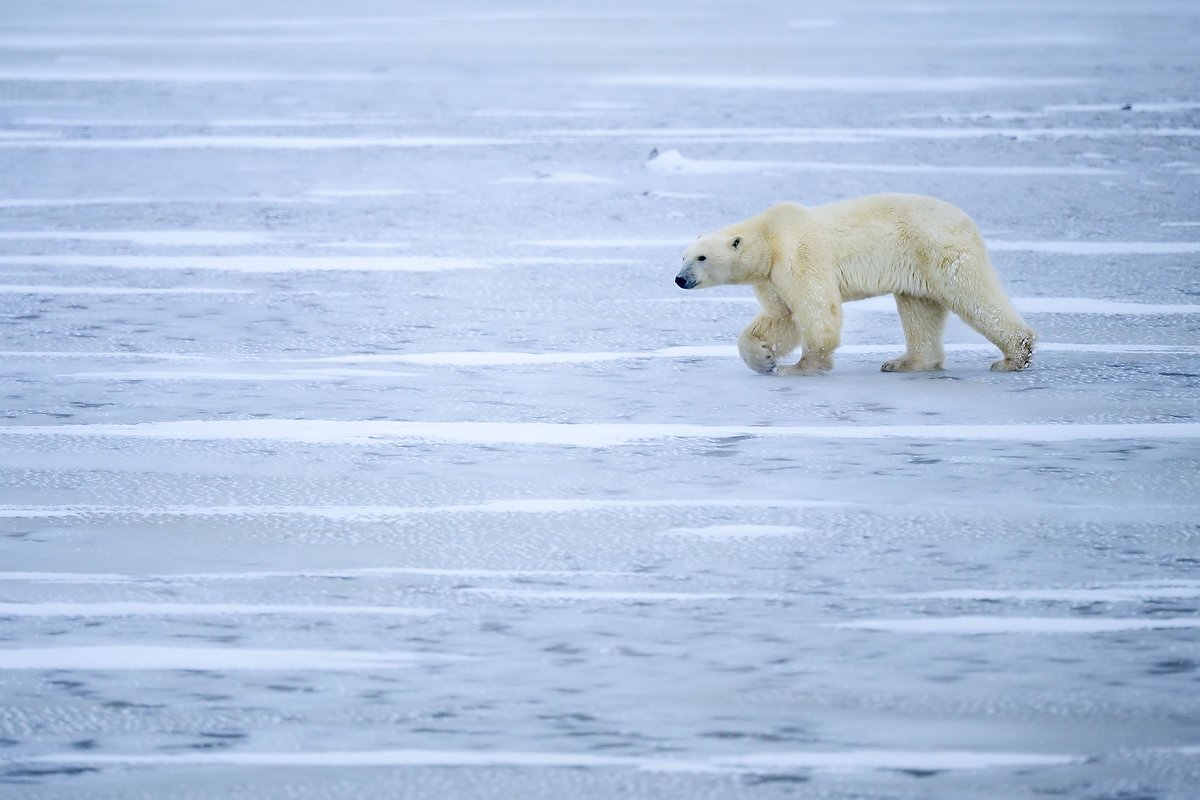
Another bear from that first day, crossing a frozen marsh. This kind of weather, and light, is common at this time of year. Nikon Z 8, Manual exposure with Auto ISO, Auto white balance, ISO 110, 1/1000 at f/2.8 in Matrix metering, 0.0 EV, Nikkor Z 400mm f/2.8 TC VR S lens at 400mm.
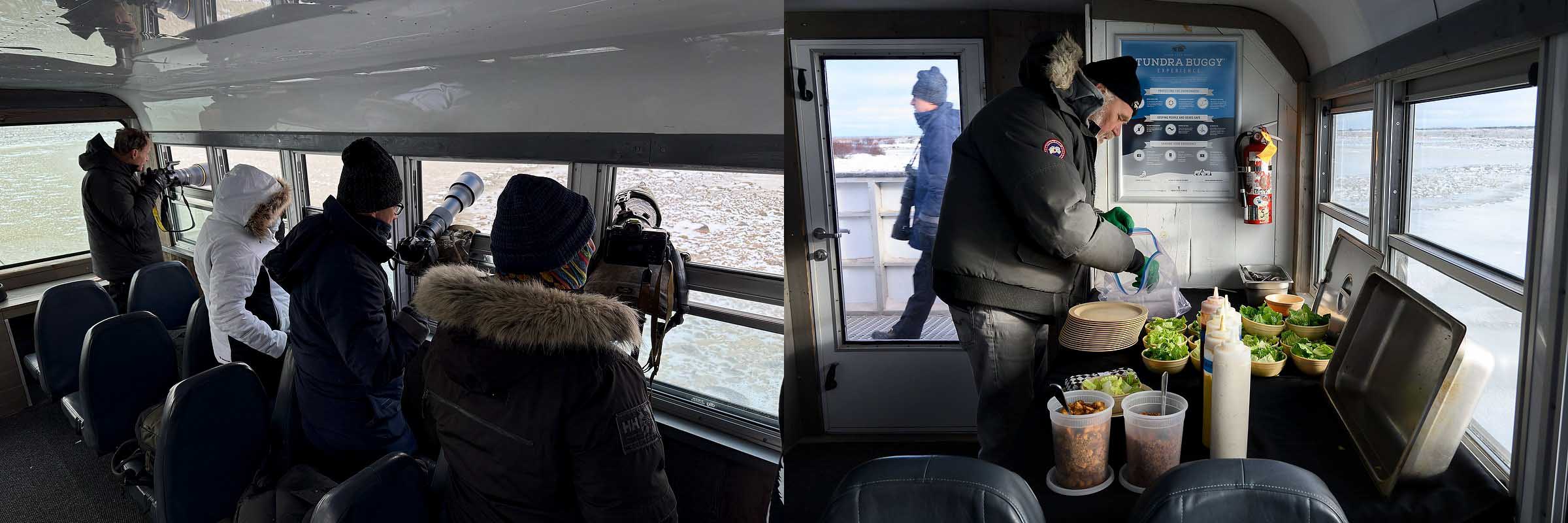
This is what it’s like inside the tundra buggy. With the brutal wind, we worked mostly from inside, shooting out the windows. On the right is our driver, “Buggy Bob,” preparing lunch as we photograph a bear. iPhone photos.
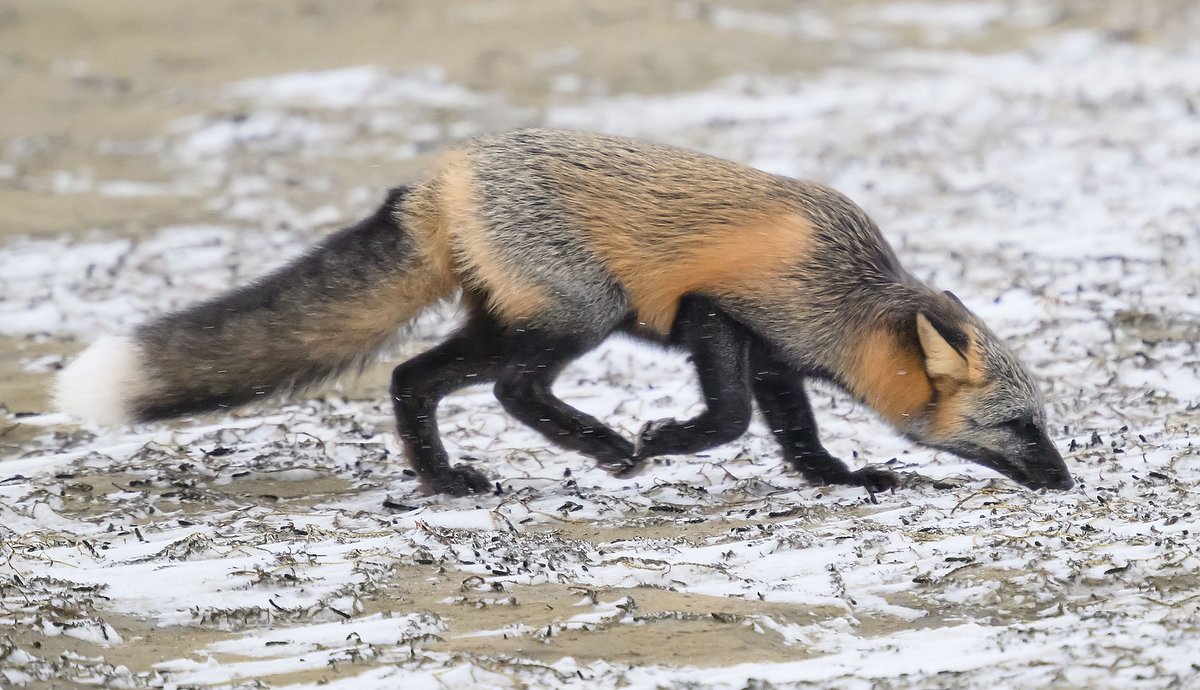 While polar bears are the big draw, there’s other wildlife as well, like this cross fox we watched hunt. Nikon Z8, Manual exposure with Auto ISO, Auto white balance, ISO 2800, 1/800 at f/5.6 in Matrix metering, +0.3 EV, Nikkor Z 400mm f/2.8 TC lens with 2X teleconverter for a total of 800mm.[/caption]
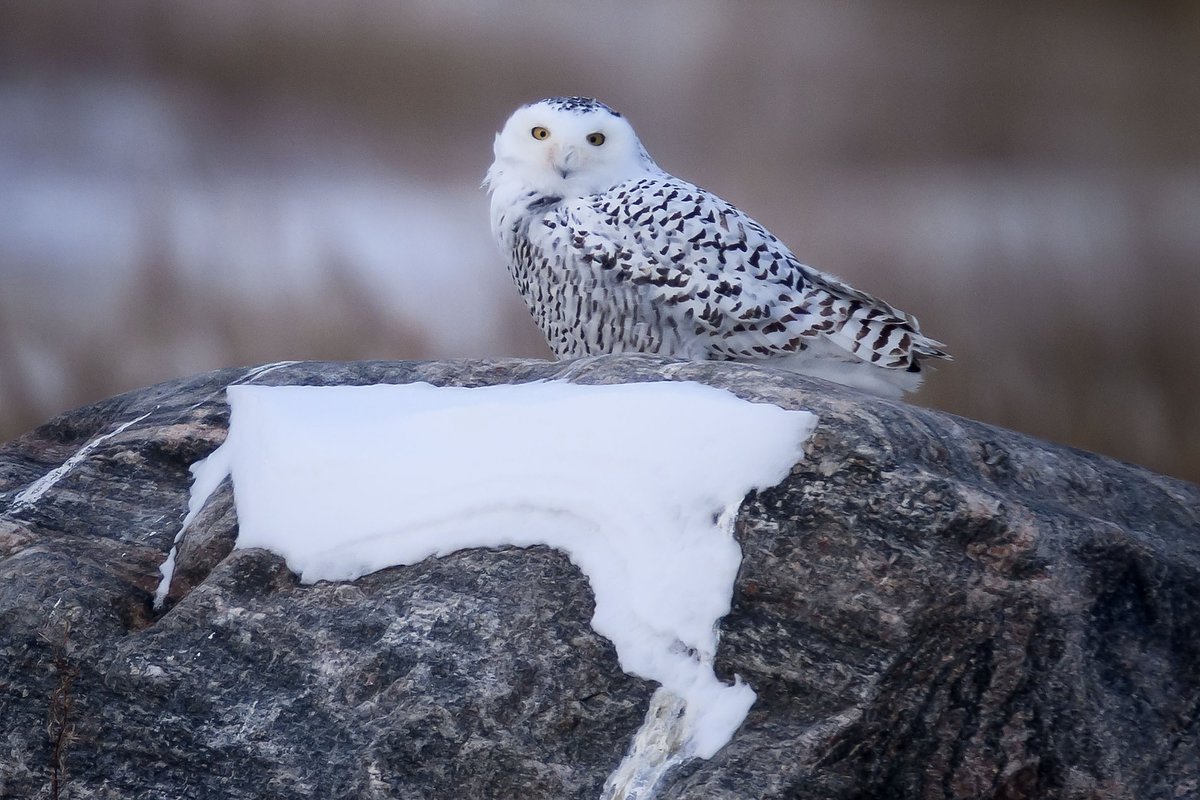
And, a snowy owl. Nikon Z8, Manual exposure with Auto ISO, Sunny white balance, ISO 560, 1/640 at f/8 in Matrix metering, 0.0 EV, Nikkor Z 400mm f/2.8 TC lens for 560mm, with 2X teleconverter for a total of 1120mm.
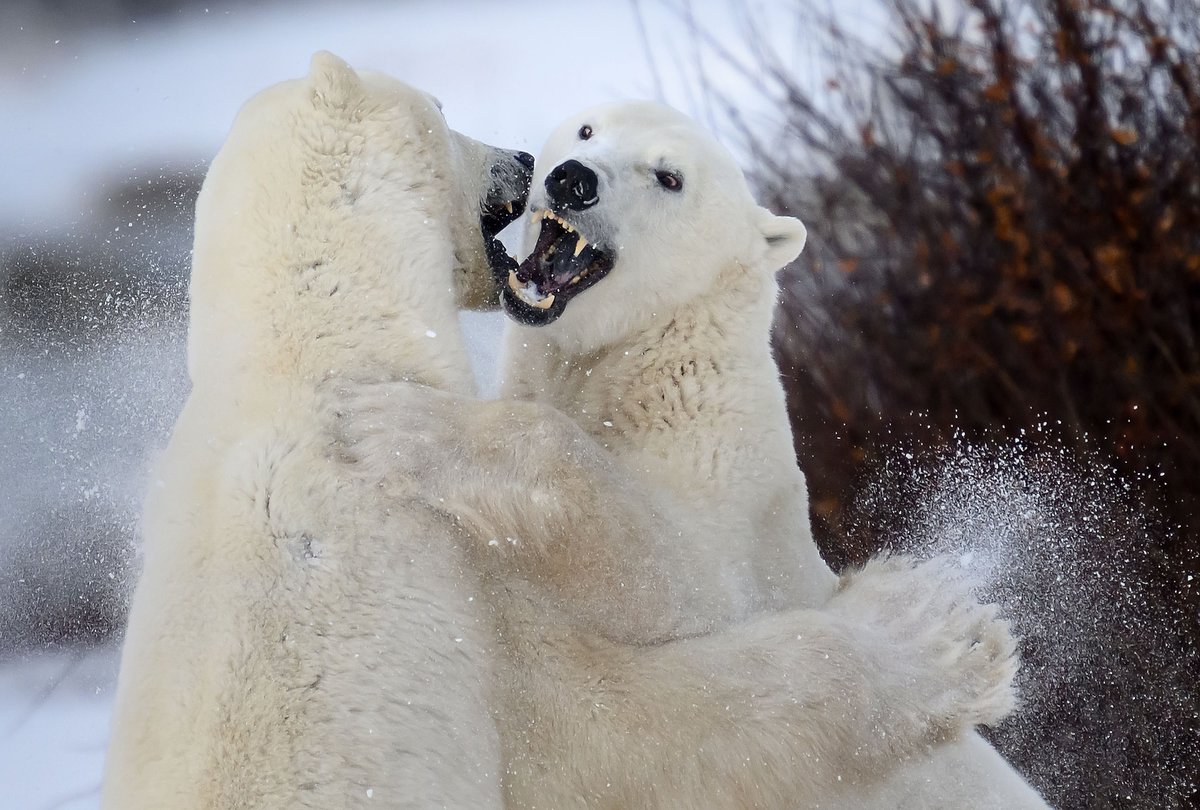
What we most wanted to photograph, and were excited to find that first day, was a pair of male bears sparring. Nikon Z8, Manual exposure with Auto ISO, Auto white balance, ISO 1600, 1/1600 at f/8 in Matrix metering, +0.3 EV, Nikkor Z 400mm f/2.8 TC lens with 2X teleconverter for a total of 800mm.
For three days we followed that same routine. Breakfast, then all day out in the buggy. This time of year, at that latitude, sunset is about 4 p.m., after which we’d return to the lodge. We were able to stay out all day because the buggies have a bathroom, and our guide serves a morning snack and lunch, all inside the buggy. While the buggy is heated, you still need to dress warmly since you’ll open the windows to take pictures, and you can also go out onto the back deck to photograph. Although the temperatures tended to be in the 20s, the wind was almost always around 30 mph, gusting into the 50s.
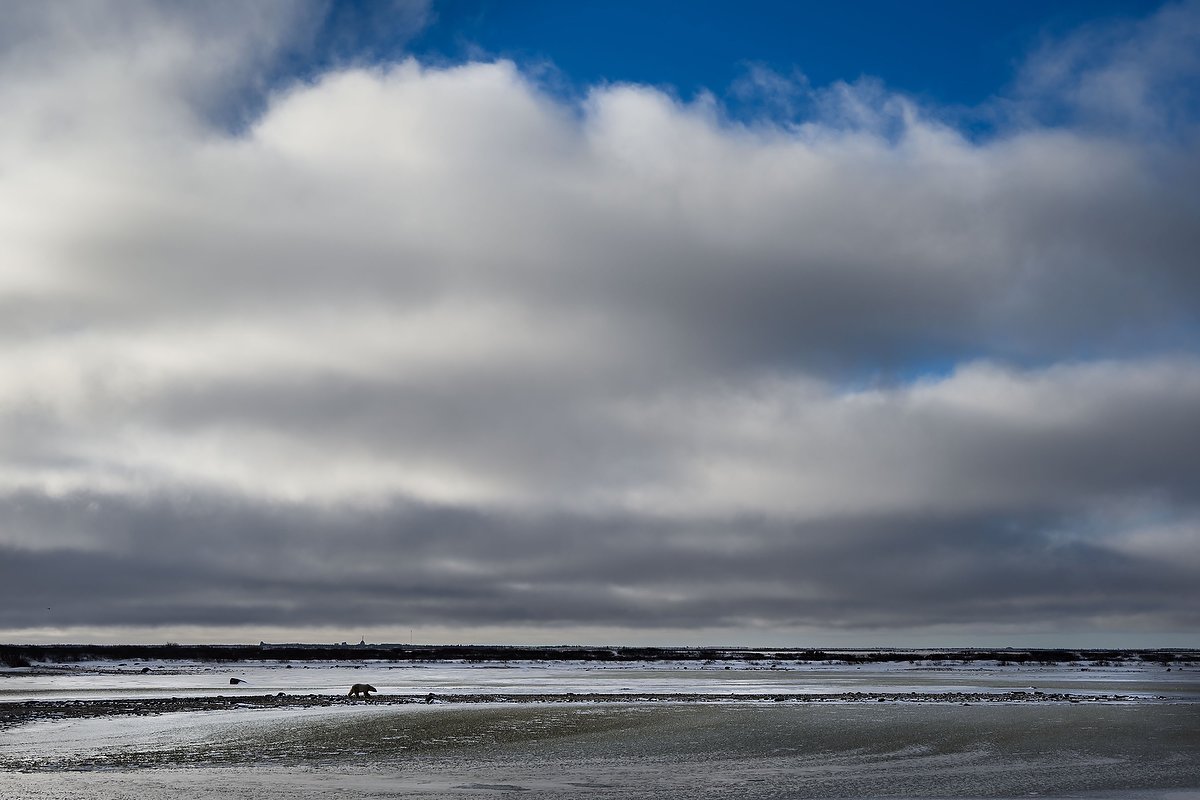
Blessed by sun the afternoon of the second day, we took advantage of it to bring the sky into some photos and show the barren landscape. Nikon Z6III, Aperture Priority, Auto white balance, ISO 100, 1/250 at f/11 in Matrix metering, +1.0 EV, Nikkor Z 28-400mm f/4-8 VR lens at 50mm.
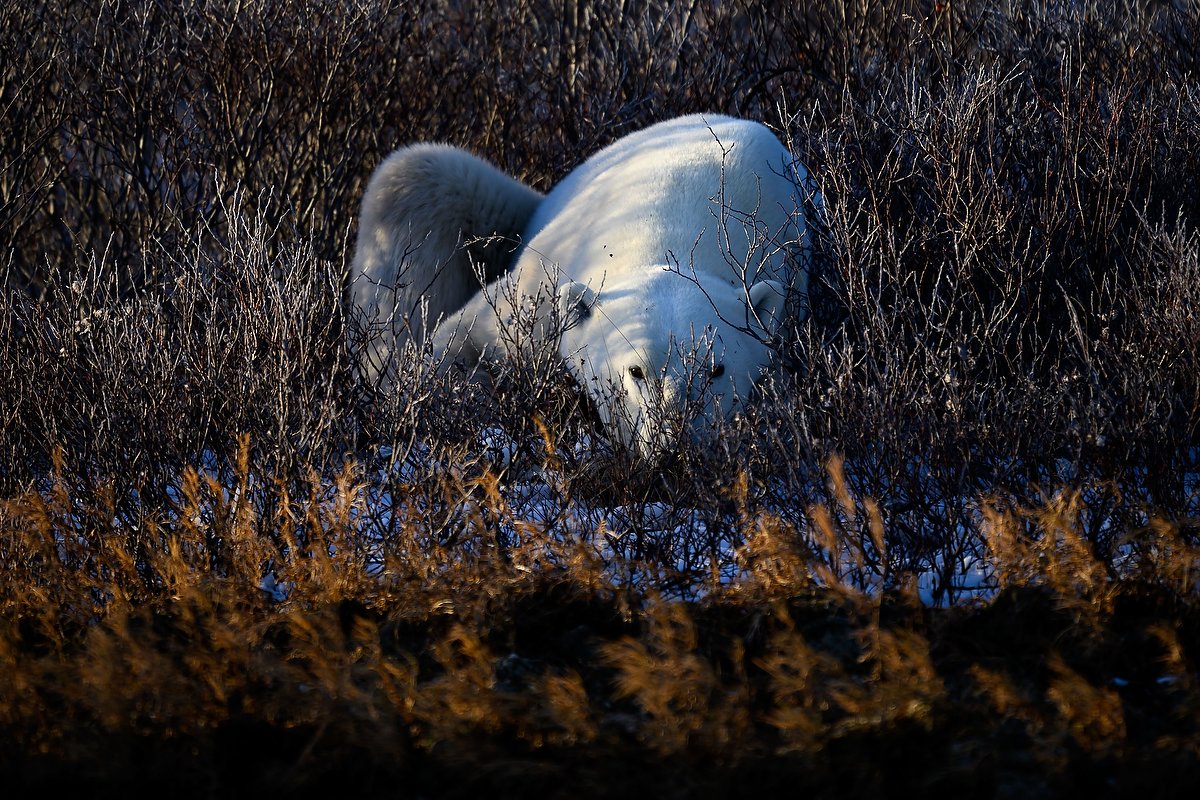
The sun also gave us directional light, and brought out some of the color in the tundra. Nikon Z8, Manual exposure with Auto ISO, Auto white balance, ISO 72, 1/500 at f/4 in Matrix metering, -1.7 EV, Nikkor Z 400mm f/2.8 TC lens using the built-in 1.4X teleconverter for 560mm.
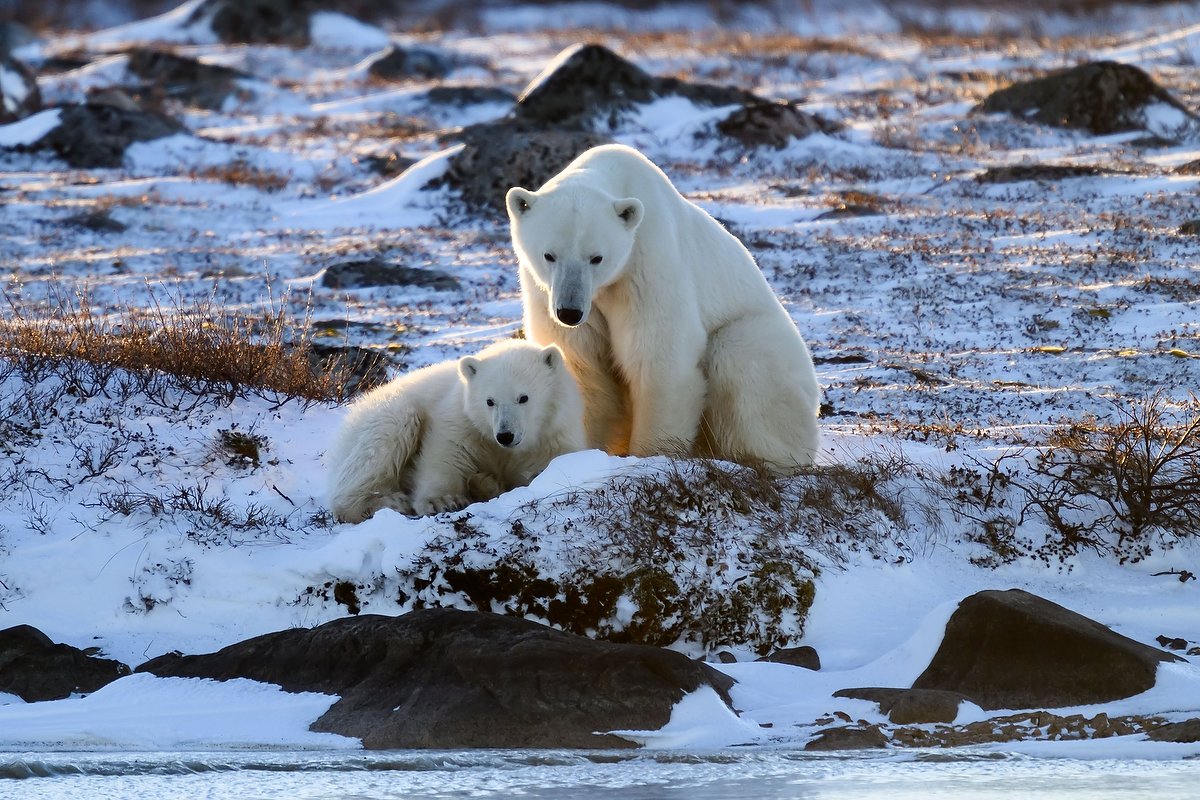
Near sunset we found a mother and cub by the shore of a pond. They have to avoid male bears, who might kill the cub in an effort to mate with the mother. Nikon Z8, Manual exposure with Auto ISO, Auto white balance, ISO 800, 1/500 at f/8 in Matrix metering, -0.3 EV, Nikkor Z 400mm f/2.8 TC lens for 560mm, with 2X teleconverter for a total of 1120mm.
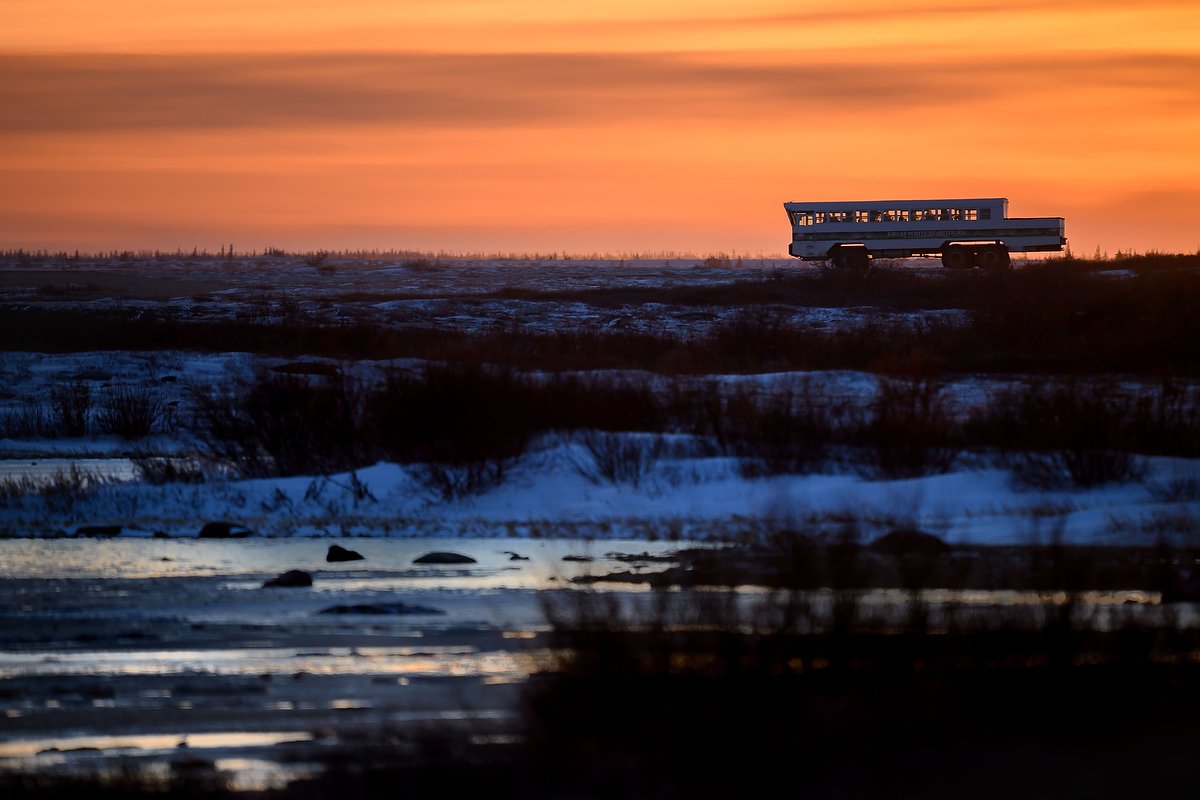
A colorful sunset that day let me silhouette one of the other buggies passing by a marsh. Nikon Z8, Manual exposure with Auto ISO, Sunny white balance, ISO 220, 1/800 at f/4 in Matrix metering, -0.7 EV, Nikkor Z 400mm f/2.8 TC with built-in 1.4X teleconverter for 560mm.
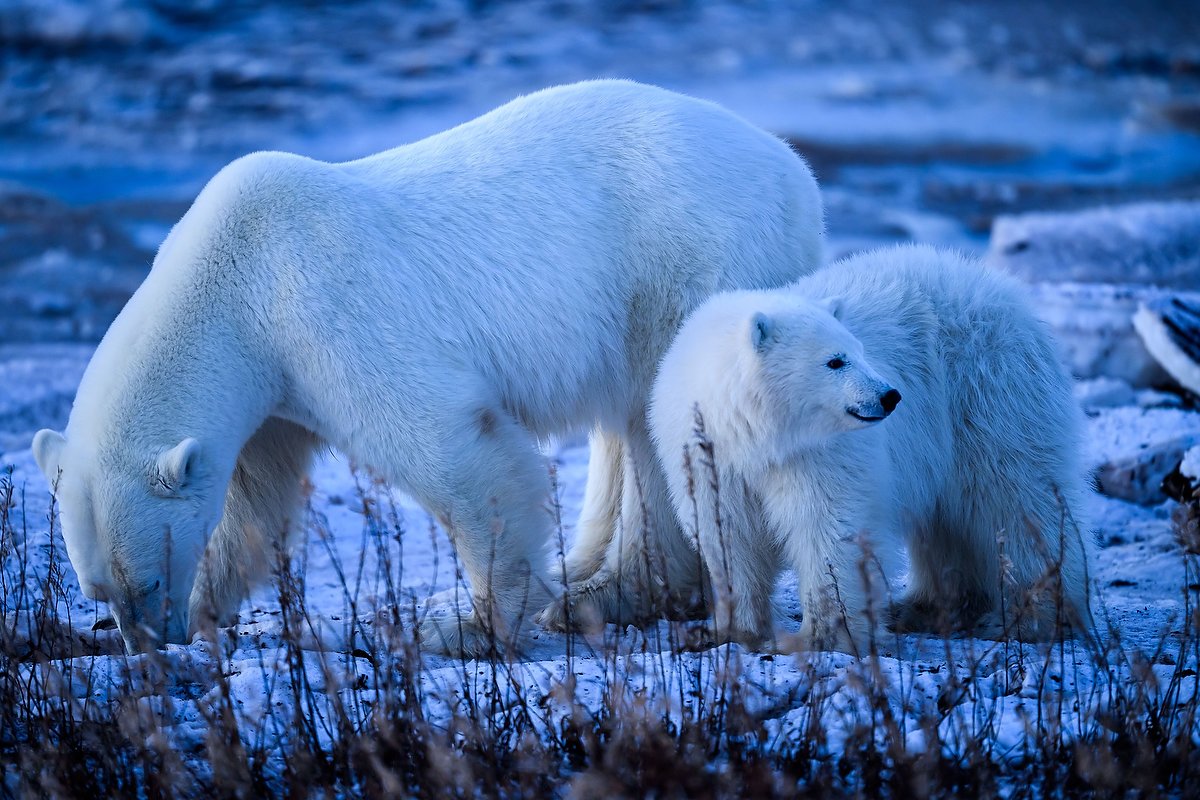
That same mother and cub came up to the shore after sunset to eat some kelp (not many calories, but better than nothing), keeping a wary eye out for male bears. Nikon Z8, Manual exposure with Auto ISO, Sunny white balance, ISO 2000, 1/400 at f/2.8 in Matrix metering, +0.3 EV, Nikkor Z 400mm f/2.8 TC VR S lens at 400mm.
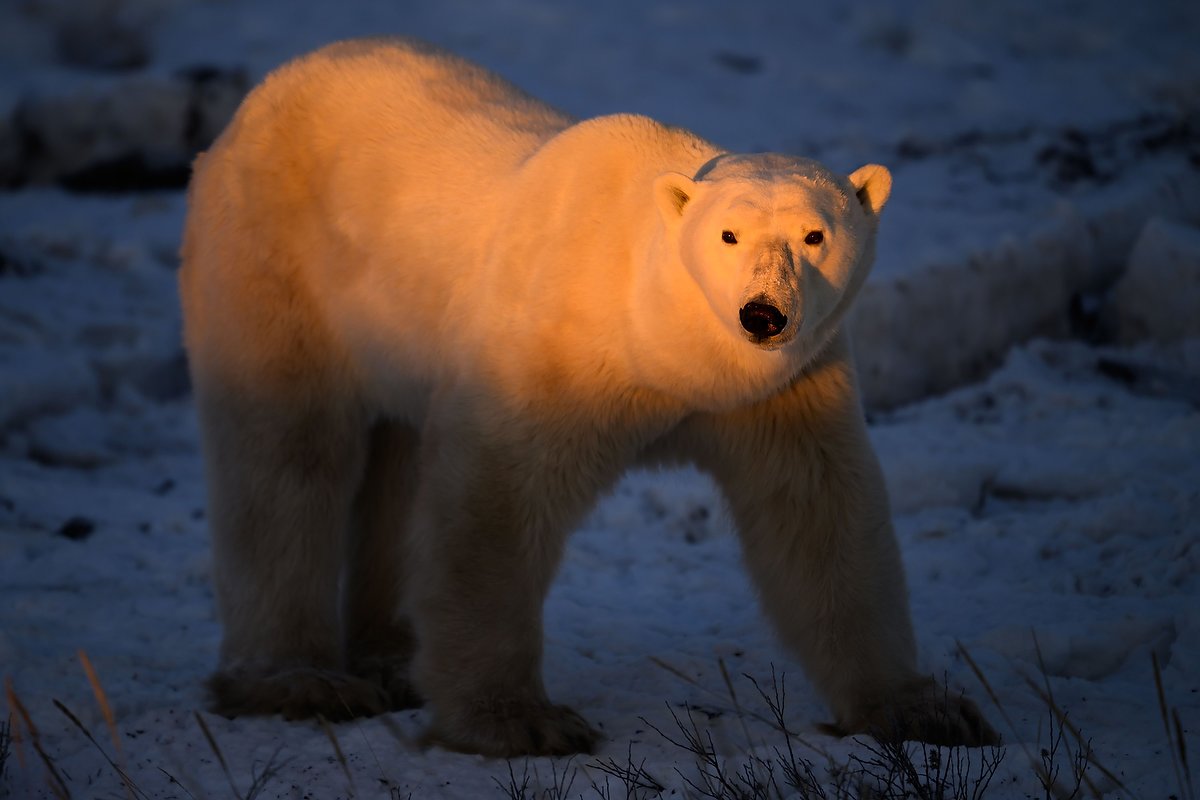
The morning of our third day on the tundra began with beautiful, warm light. Unfortunately, it clouded over in about thirty minutes. Fortunately, there was a bear nearby. Nikon Z8, Manual exposure with Auto ISO, Sunny white balance, ISO 450, 1/1000 at f/4 in Matrix metering, 0.0 EV, Nikkor Z 400mm f/2.8 TC VR lens with built-in 1.4X teleconverter for 560mm.
Our fourth and final day was almost like the first three with a few exceptions. We needed to have our luggage ready to go before heading out in the buggy (it would be taken to the Churchill airport during the day). So we put in a full day photographing bears (like the pair below), then at dusk, instead of returning to the Tundra Buggy Lodge, we returned to Churchill for our charter flight back to Winnipeg. One more night in the hotel there (again, part of the package), then the next day a short walk across the street to the airport to begin our travel home.
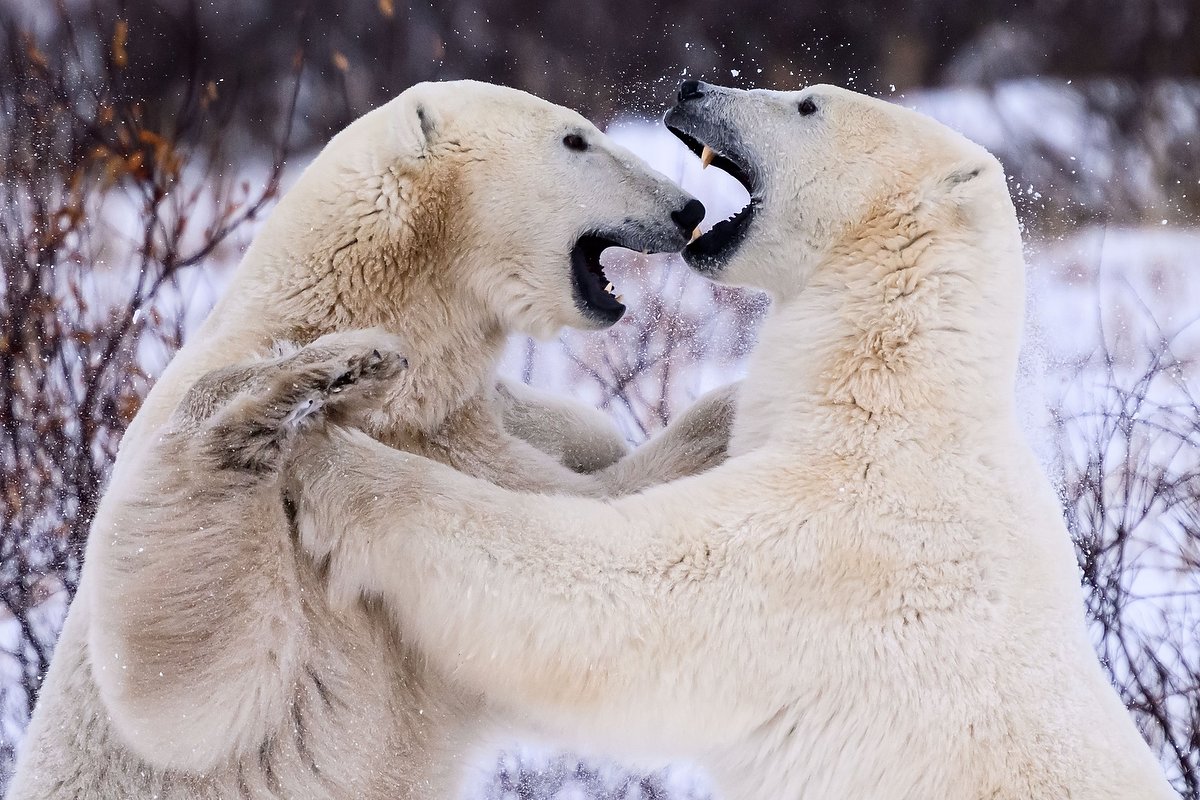
The last day on the tundra couldn’t have started better. We found a pair of male bears who spent about two hours taking turns picking fights with each other. Nikon Z8, Manual exposure with Auto ISO, Natural Auto white balance, ISO 4500, 1/2000 at f/5.6 in Matrix metering, +0.7 EV, Nikkor Z 400mm f/2.8 TC lens for 560mm, with 2X teleconverter for a total of 1120mm.
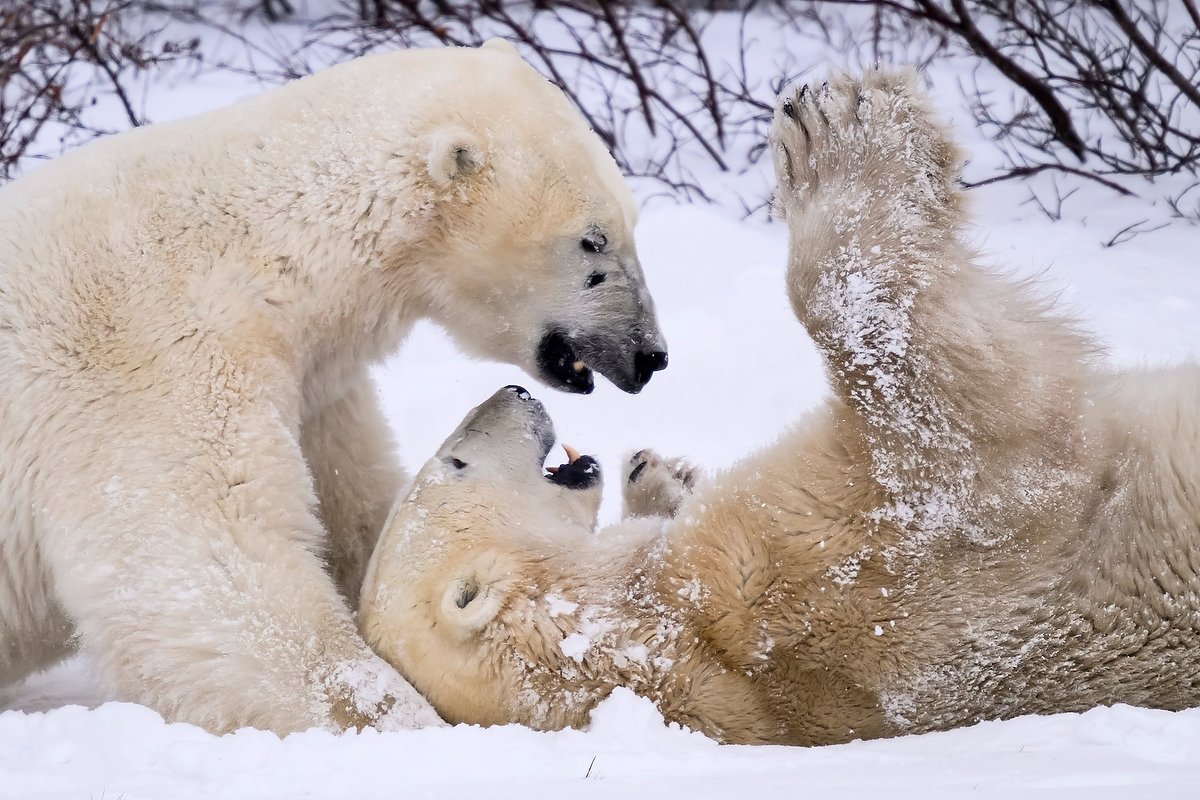
They don’t fight all the time, and sometimes they just look like a pair of dogs wrestling. Nikon Z 8, Manual exposure with Auto ISO, Natural Auto white balance, ISO 2800, 1/1600 at f/8 in Matrix metering, +0.3 EV, Nikkor Z 400mm f/2.8 TC lens for 560mm, with 2X teleconverter for a total of 1120mm.
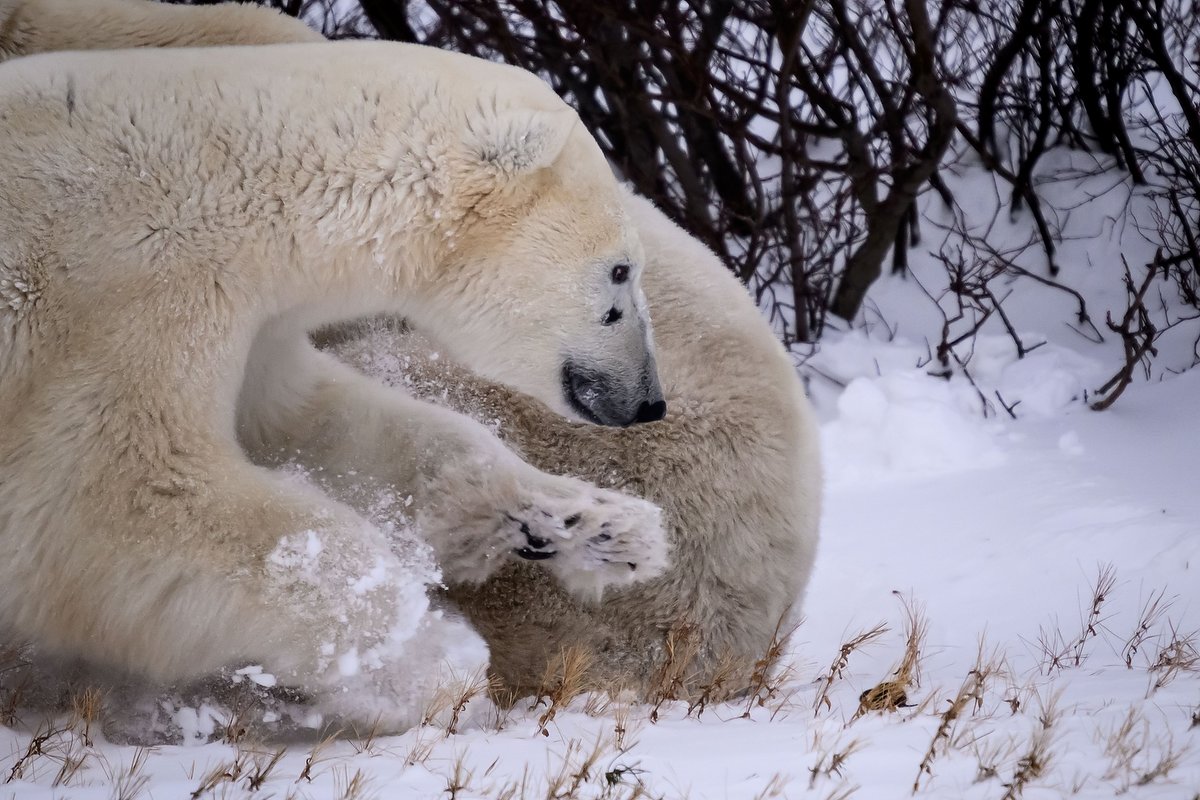
At one point they found a den of voles or field mice under the snow, and took a break from wrestling to snack on a few. You can see one about to be pounced on here. Again, the calories weren’t worth the effort, but they can’t turn off the hunting instinct. Nikon Z 8, Manual exposure with Auto ISO, Natural Auto white balance, ISO 5000, 1/1600 at f/8 in Matrix metering, +0.7 EV, Nikkor Z 400mm f/2.8 TC lens for 560mm, with 2X teleconverter for a total of 1120mm.
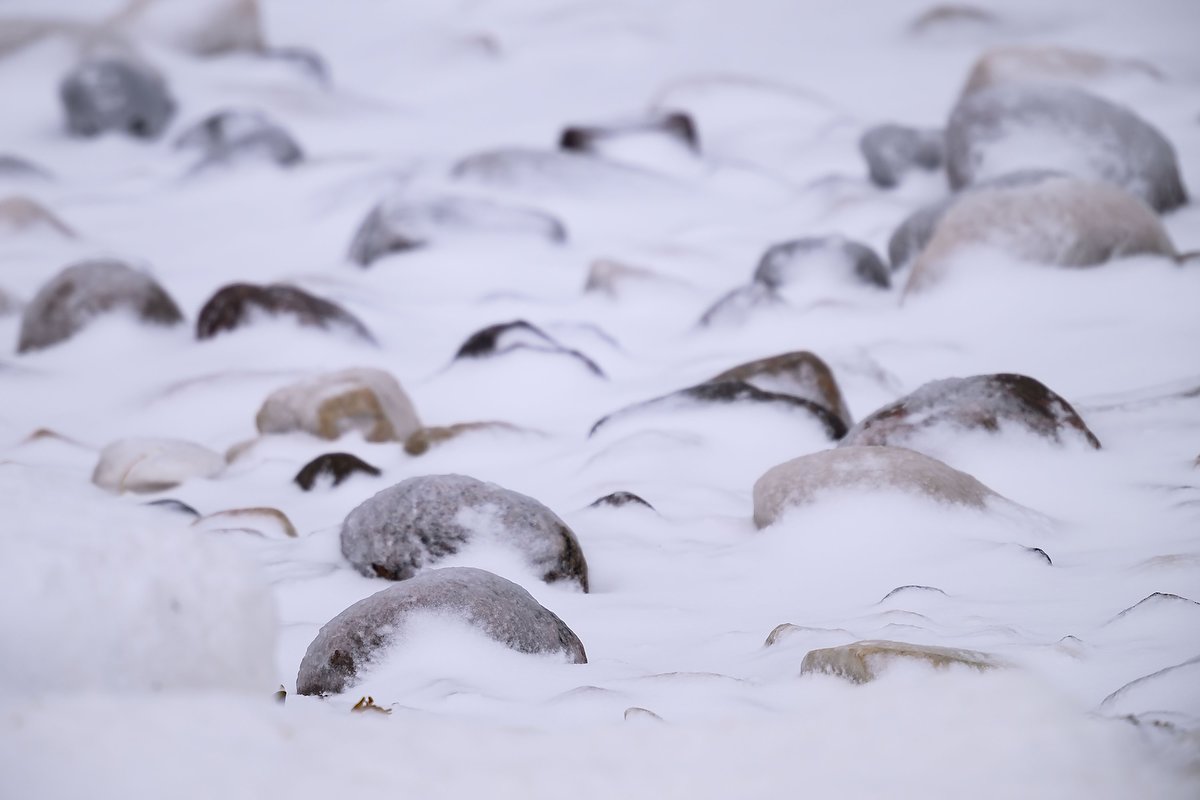
Again, bears are the draw, but there are other interesting photos to be made as well, like these frost-covered rocks along the shore. Nikon Z8, Manual exposure with Auto ISO, Natural Auto white balance, ISO 360, 1/640 at f/5.6 in Matrix metering, +1.3 EV, Nikkor Z 400mm f/2.8 TC VR S with 2X teleconverter for 800mm.
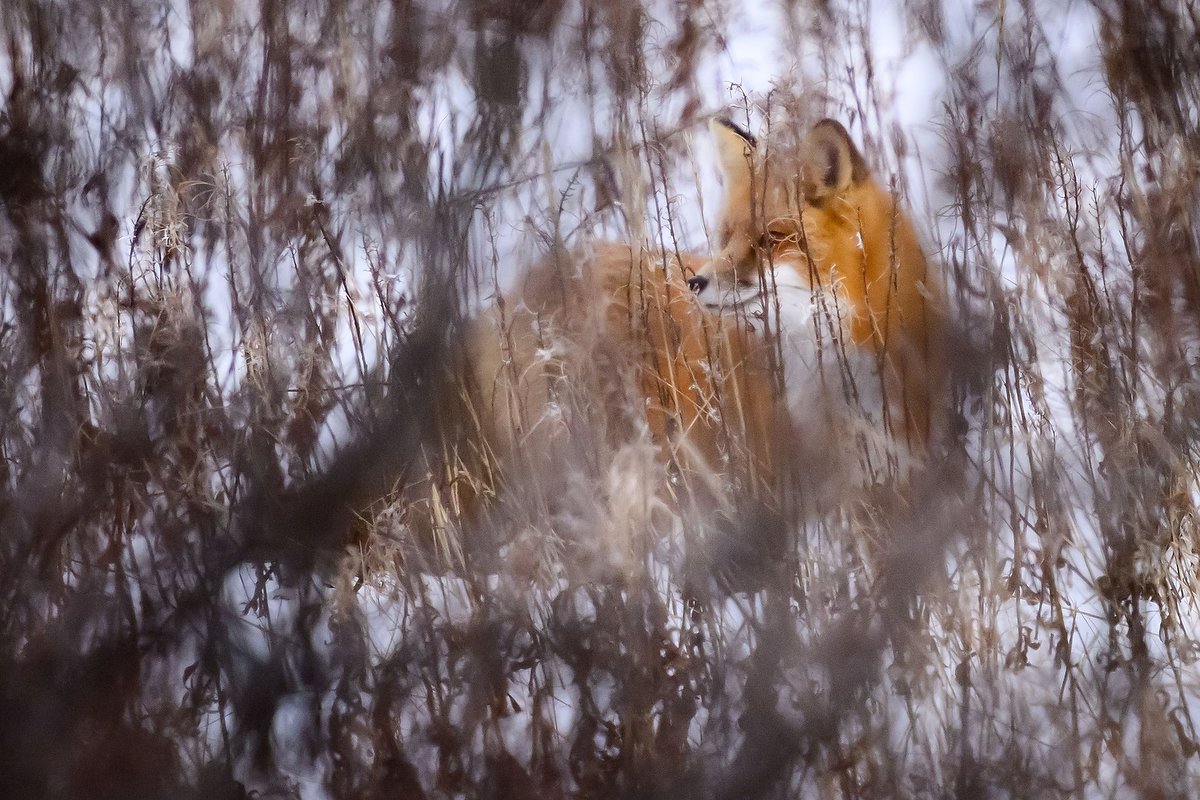
We also followed a red fox as it hunted among the grasses along the shoreline. Nikon Z8, Manual exposure with Auto ISO, Natural Auto white balance, ISO 7200, 1/1600 at f/5.6 in Matrix metering, +0.3 EV, Nikkor Z 400mm f/2.8 TC lens for 560mm, with 2X teleconverter for a total of 1120mm.
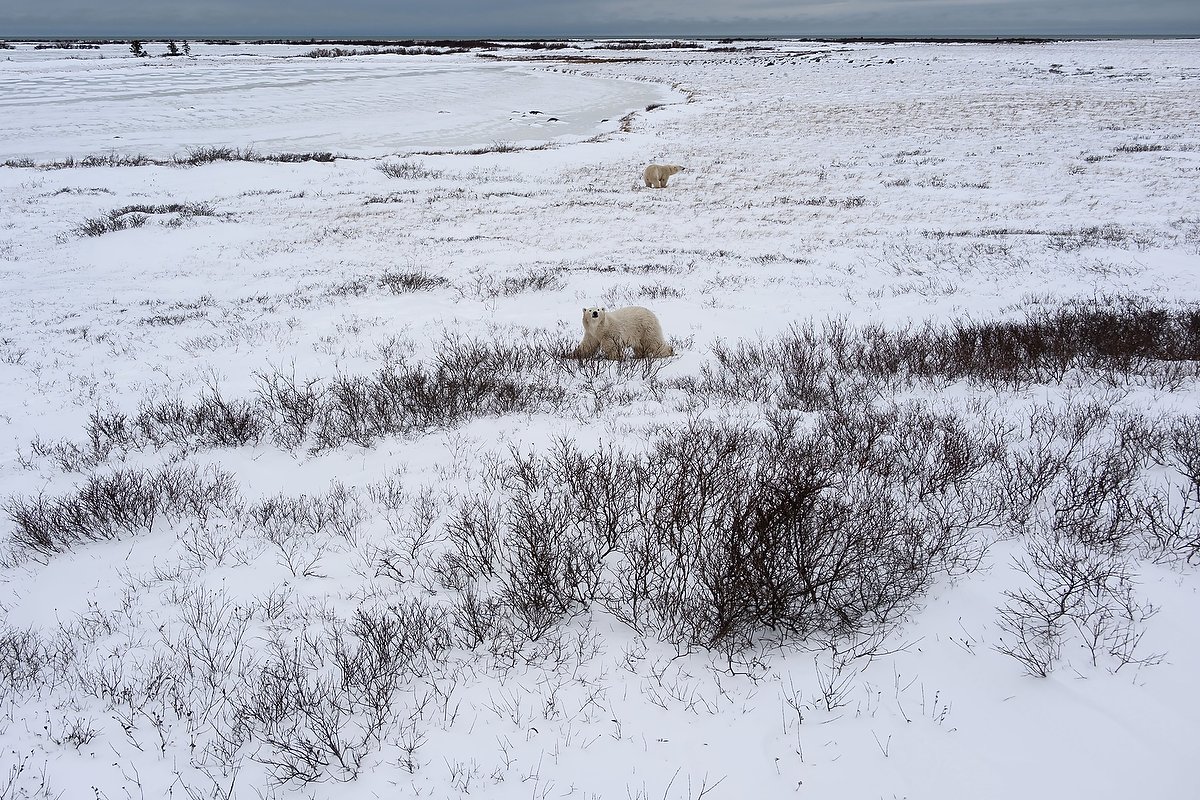 And occasionally a wide-angle lens was called for, to show what the tundra was like. That’s a large cub in the foreground coming over to check us out, with mom in the background. Nikon Z6III, Aperture Priority, Natural Auto white balance, ISO 250, 1/400 at f/7.1 in Matrix metering, +0.7 EV, Nikkor Z 28-400mm f/4-8 VR lens at 28mm.[/caption]
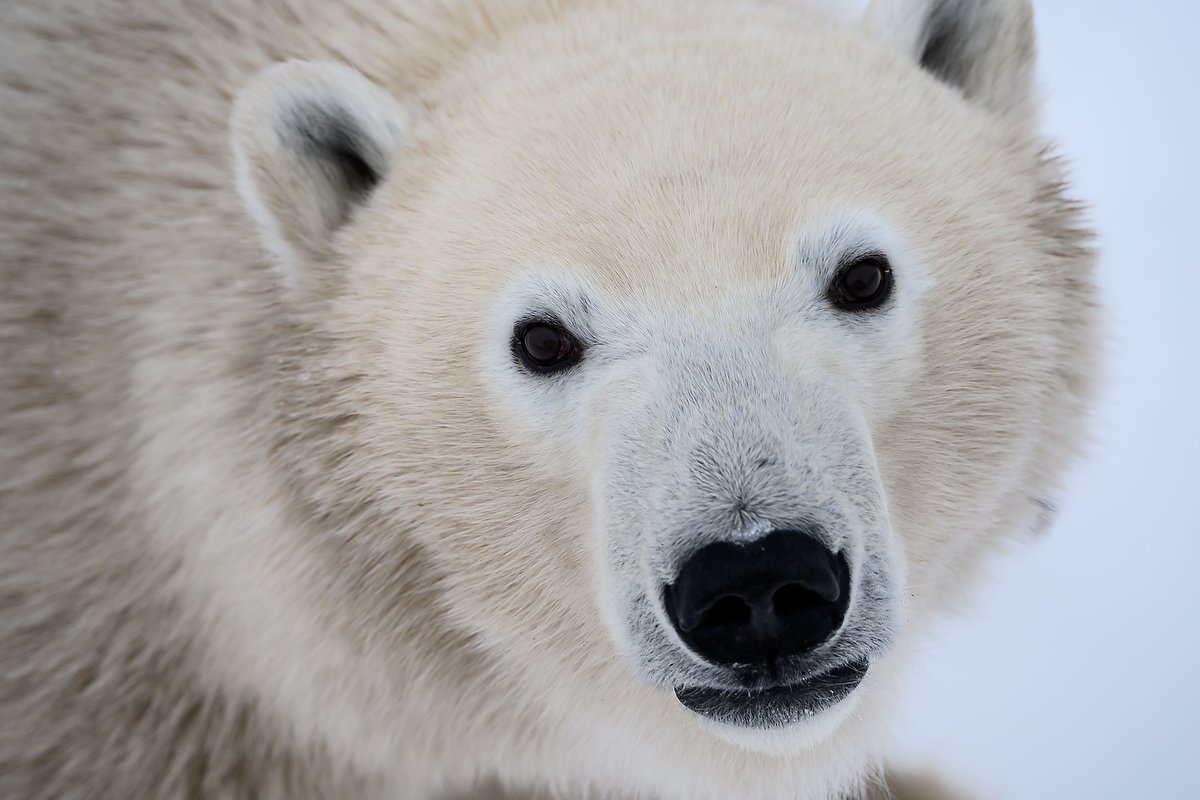
That cub came right up to our buggy, which made for some nice close-ups. Nikon Z6III, Aperture Priority, Natural Auto white balance, ISO 400, 1/250 at f/8 in Matrix metering, +1.0 EV, Nikkor Z 28-400mm f/4-8 VR lens at 270mm.
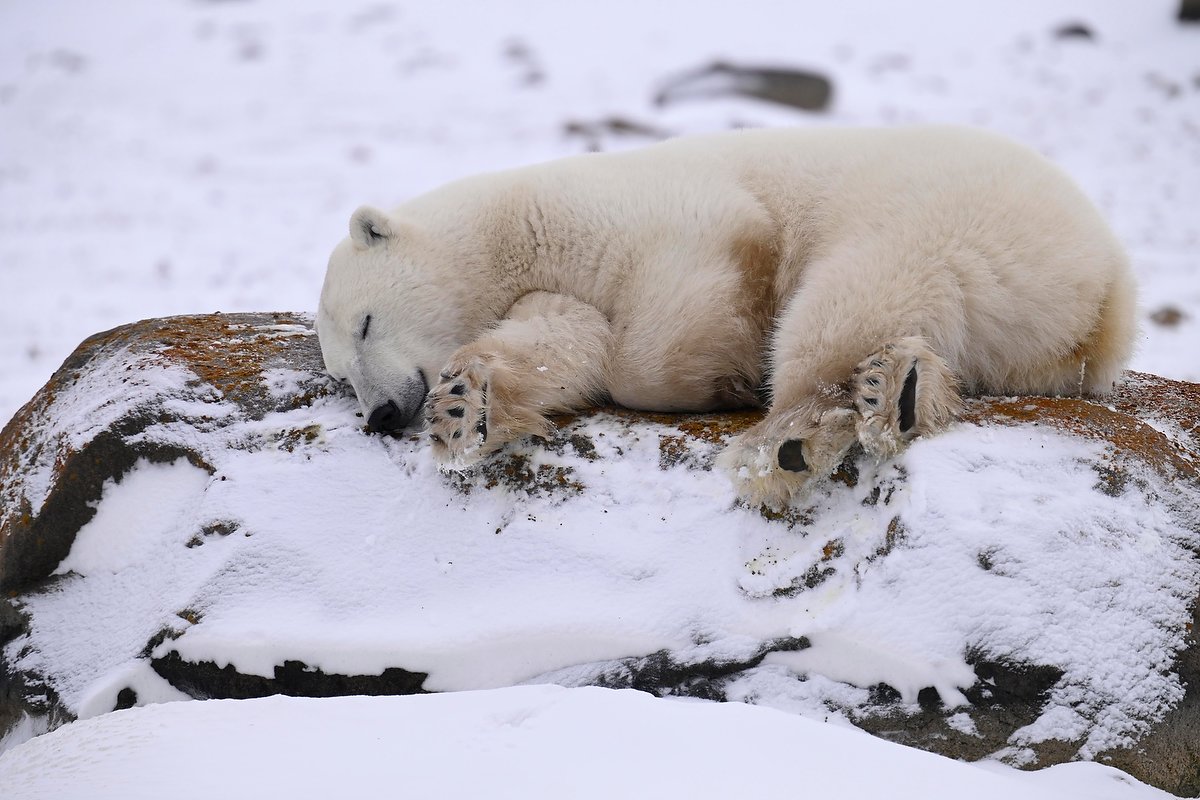
We thought this bear might be uncomfortable on that rock, but the guide explained that it was using the rock to cool down. Even with the wind, temps in the 20s are warm for them. Nikon Z8, Manual exposure with Auto ISO, Natural Auto white balance, ISO 800, 1/1000 at f/5.6 in Matrix metering, +1.0 EV, Nikkor Z 400mm f/2.8 TC VR S lens with 2X teleconverter for 800mm.
Sure, if we’d only visited Hudson Bay for just one day instead of four, we’d have photographed bears. But spending more time meant more opportunities, including finding a mom and her cub on two of those days. So especially for a once-in-a-lifetime trip, extra days can make a big difference.
Gear Notes
Cameras: I brought a Nikon Z8 (primary camera, used with my long telephoto) and a Nikon Z6III (backup and for shorter lens photos) on this trip. They use the same battery, so that meant just one charger (and I brought two spare batteries).
Lenses: My primary lens was the Nikkor Z 400mm f/2.8 TC lens (built-in teleconverter for 560mm at f/4). Much of the time, though, I added a Nikkor Z 2X teleconverter, which gave me 800mm at f/5.6. And occasionally I’d flip down the switch for the built-in 1.4X teleconverter, which when added to 800mm then resulted in 1120mm at f/8. I also brought along the Nikkor 28-400mm f/4-8 lens and the Nikkor 14-30mm f/4 lens, which I used on the Z6III.
Other
As mentioned above, I plan on returning to Africa to lead two photo trips in 2027. Namibia in the spring, and Tanzania (Serengeti) in the summer. If you’re interested in joining, let me know!
NOTE: I’ll also be teaching an online Wildlife Photography class this January for the Creative Photo Academy (and a Night Photography class after that). Message me if you’d like more information about either of them.
(If you like this story, please share it with your friends and let them know about the links on photography that I post on my business Facebook page. I’m also on Instagram and Twitter, @reedhoffmann. And if you’re curious about the workshops I teach, you can find them here. Finally, you can subscribe to this blog on my home page.)