
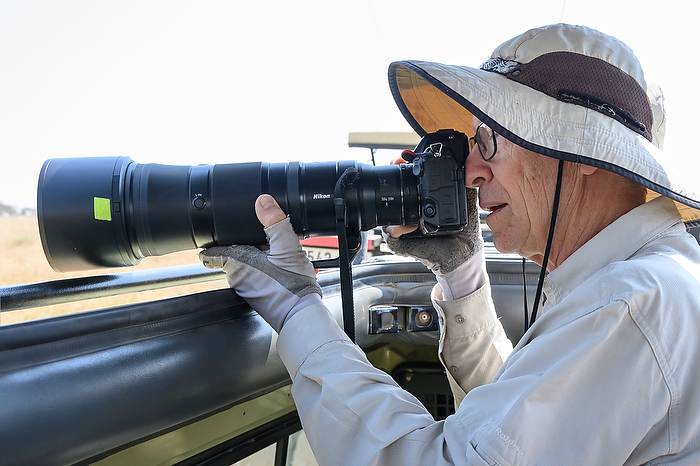
I’m always happy when a small thing that doesn’t cost much can make a big difference, or just make me more comfortable. I was reminded of that recently when I bought a new, tiny flashlight. That made me realize I have a few favorite photography accessories worth sharing. And better yet, they’re not camera gear, so relatively cheap!
Sun hat: After we moved to Kansas City and I started covering NASCAR races, some photographers made fun of the big, floppy sun hat I’d wear. At the end of the day, though, their necks and ears were burned bright red, as the ball caps they wore didn’t protect those areas. Since then, most have switched to sun hats. My favorite has been, and still is, made by Sunday Afternoons. The company began by creating them for gardeners, but then other people realized how good they were. Now you can find all different types of designs, and mine’s been all over the world with me for twenty years now. That’s what I’m wearing in the photo above, during the Serengeti safari I was leading last summer.
Sun gloves: I photographed adventure races in the late 90s, and in addition to discovering those great sun hats, learned about the importance of keeping the rest of my skin covered. Ever since then, if I’m out in the sun for any period of time, I wear lightweight long pants and long-sleeved shirts. But what about my hands? That’s when I discovered fishing (or waterskiing) gloves. They cover all but the tips of my fingers, giving me additional protection from the sun. Again, you can see mine in the photo above.
Nitecore Tube V2.0 USB Rechargeable Light – I’ve always found that having a small flashlight with me is super handy. Problem is, they’re often bigger than I’d like, and need the battery replaced. That’s why this keychain light is so nice – it’s tiny and USB rechargeable. I took that one step further, customizing it for night photography by adding a retractable keychain. That way I can clip it to a camera bag, belt or coat and always have it handy without worrying about dropping it. I also appreciate that it only has two power levels, low and high, and doesn’t force you to cycle through both levels every time you turn it off.
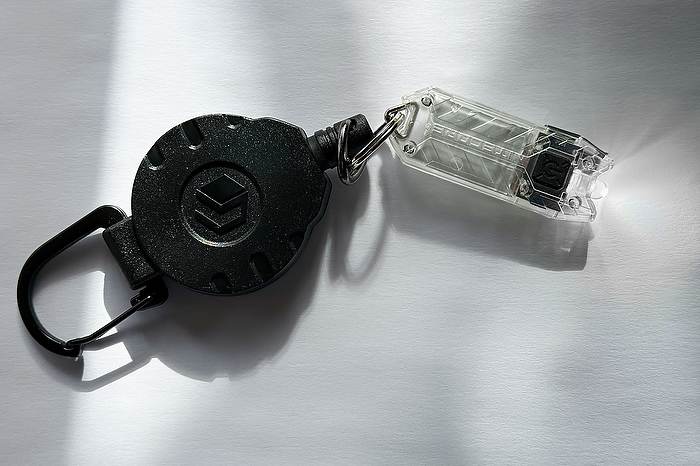
The Nitecore light, on low power, connected to a 3-ft retractable cable. Using the clip on the cable to connect to my belt or a camera bag, I can always have a light handy and not worry about misplacing it.
Compact, tall and lightweight light stand that can be placed on uneven surfaces – As mentioned above, I do a lot of night photography and am often lighting the things I’m taking pictures of. It’s important to have those lights well off the ground, and while I have a few lightweight stands, they only reach five feet. Any taller and I need to bring heavier, bulkier stands. My solution involved two separate pieces of gear. First, a seven foot selfie stick. Lightweight and compact, I needed to add an adapter to the top to mount the light, plus a small ballhead attached to that. But it also needed legs, so then I found a very short tripod to mount the stick on. Since that tripod has two-section legs, I can adjust them to allow the rig to stay upright on an uneven surface, like rocks or a hillside. And the whole rig is still very compact and lightweight.
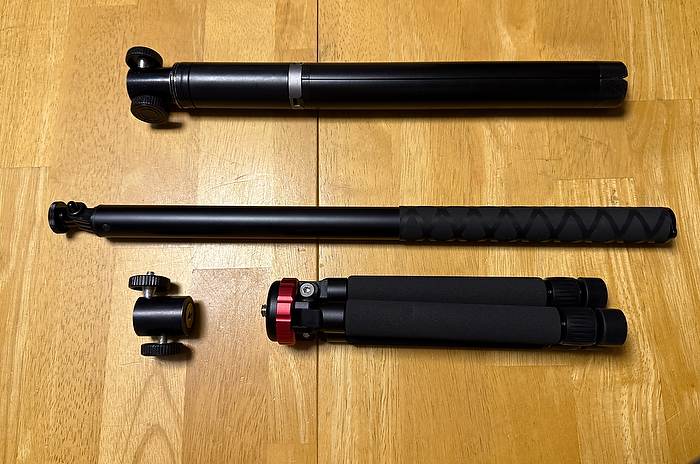
I’ve been a big fan of the Lume Cube five foot compact light stands, at top in this photo, for my night photography. But I wanted something taller, so below it are the pieces that go together to give me a stand that reaches over seven feet and can be placed on uneven surfaces. (The ballhead shown here is an old one I already had, not the one I link to in the story)
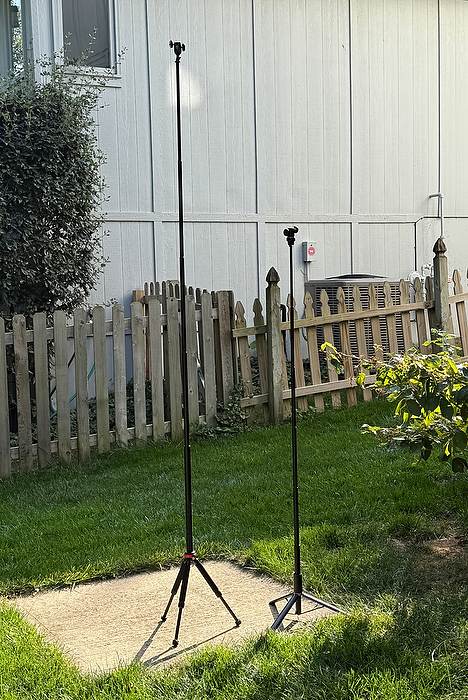
Here you can see how much more height I now have over the Lume Cube stand. And note the extended tripod legs – adjusting them is what allows me to use this on uneven surfaces.
Knee pads – A basic rule of composition in photography is to avoid shooting everything at eye level. Since it’s easier to get low than high, I wear knee pads regularly when out shooting. Mainly to protect my knees from rocks or hard surfaces, they’re also great when it’s wet or muddy. And in cold weather, they help keep my knees warm! My favorites are lightweight and inexpensive, a great combination!
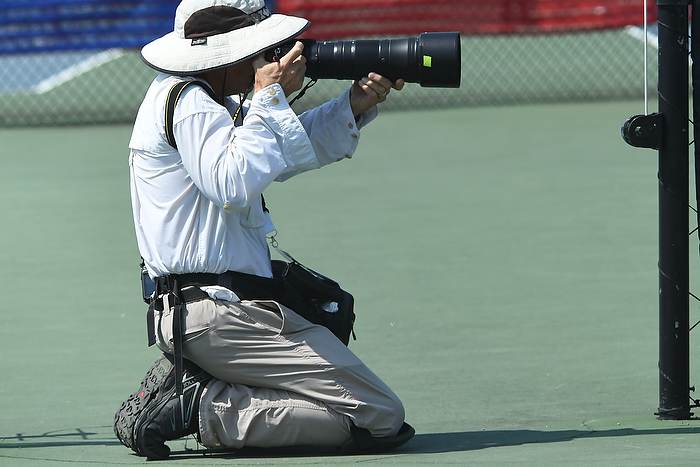
I count on my knee pads let me get a low angle, while protecting my knees from hard, rough, dirty and wet surfaces. Photo by Bob Miller.
Memory card wallet – I always try to have a card in my camera that’s larger than I expect to need, but also want to have spares just in case. My favorite way of carrying and keeping track of them is a card wallet made by Think Tank. I appreciate its compact design, and that it has a loop so I can keep it attached to my bag. That way even if it falls out, I won’t lose it. (They also have models that hold a batteries in addition to cards)
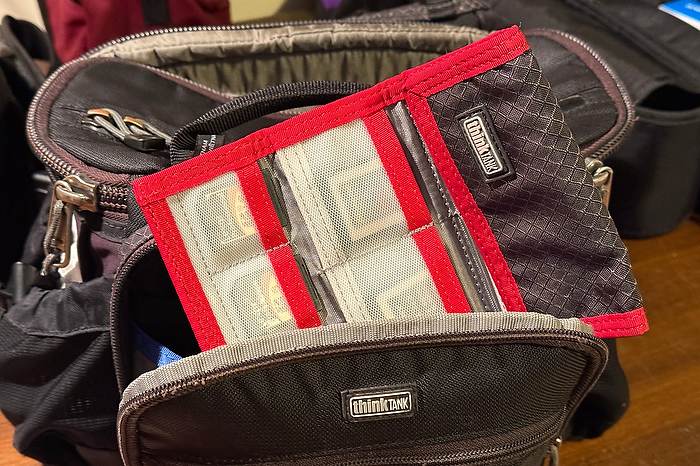
One of my Think Tank card wallets with backup SD and CFexpress cards inside.
Ear plugs – If you cover loud events, like sports or concerts, then keeping a pair of ear plugs in your bag can help save your hearing. I used to cover a huge charity auction every year where about six of us photographers stood in front of huge speakers at the front of the stage. The sound coming from them during the music portions shook my entire body, but I was the only photographer wearing ear plugs. Yikes!
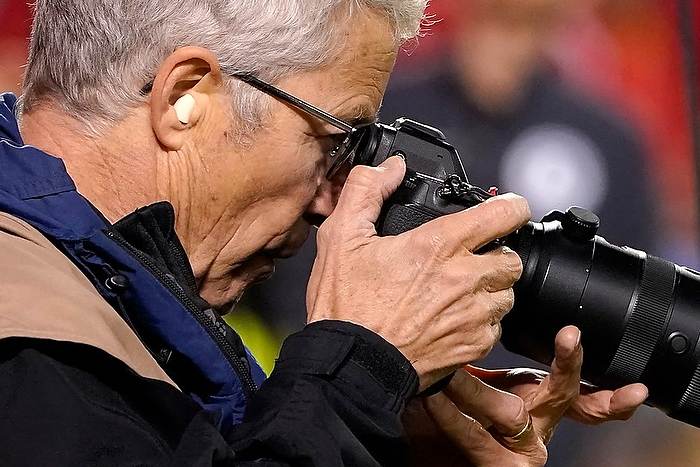
The single best way for a sports photographer to prolong the need for hearing aids. Photo by Ed Zurga.
Hand Warmers – Frigid temps are a huge challenge for photographers. We’d like our hands to stay warm, but still need to be able to control buttons and dials with our fingers. My solution is a good pair of gloves (or “trigger-finger gloves/mittens”) with a small chemical heat pack inside. I usually slip it into the palm of the glove, and when not shooting, pull my fingers back in to the palm area to warm them up.
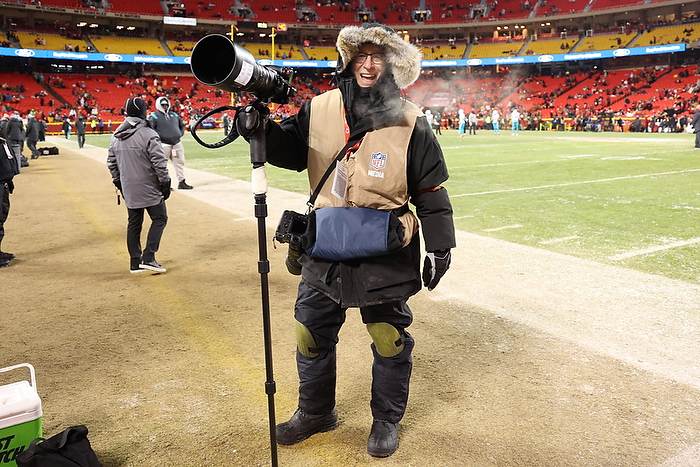
This was me covering the fourth coldest NFL game on record, back in January of 2024. Four-below zero at kickoff with a minus 27 degree wind chill. I had hand warmers in both gloves, two in the muff on my waist and also one taped to the monopod where I’d grip it with my left hand (it’s secured there with white tape). Photo by Jamie Squire.
Glow in the dark tape: This is one of those things I kept thinking about for years before actually getting around to it. I enjoy night photography and am often out in very dark places on moonless nights. If I walk away from my tripod to adjust a night, it can sometimes be a challenge to find that tripod again. Wrapping a piece of that tape on each leg solved that problem. I should also tell you that the tape itself starting coming off after a few uses, so I added a layer of clear plastic tape on top of it.
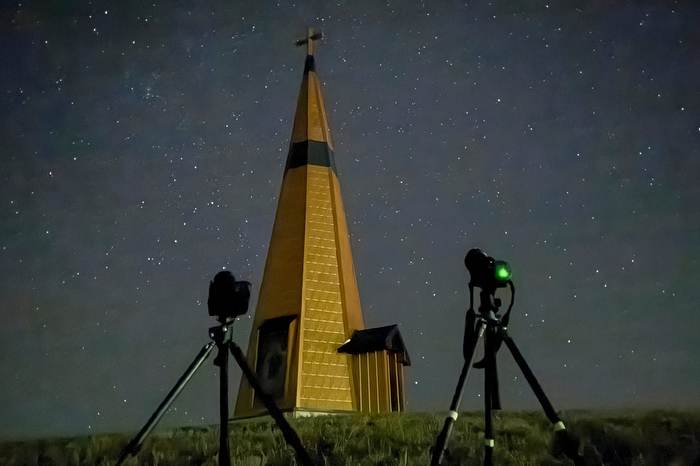
You can see the glow in the dark tape on my tripod’s legs, from a shoot last week.
Portable umbrella: Rain is my least favorite weather to photograph in because it’s a challenge to keep droplets off lenses and diffcult to shoot through. Sure, I’ve got various camera raincoats, from fancy, expensive ones to garbage bags and rubber bands. But what I’d rather do is hold an umbrella over me. I have many in differrent sizes, from small enough to fit in my pocket (when I REALLY don’t expect rain) to mid-sized that hangs from my belt (fair chance of rain) to a compact golf umbrella (rain guaranteed, three-feet of coverage, can handle a lot of wind!). The Repel brand has a good reputation and warranty.
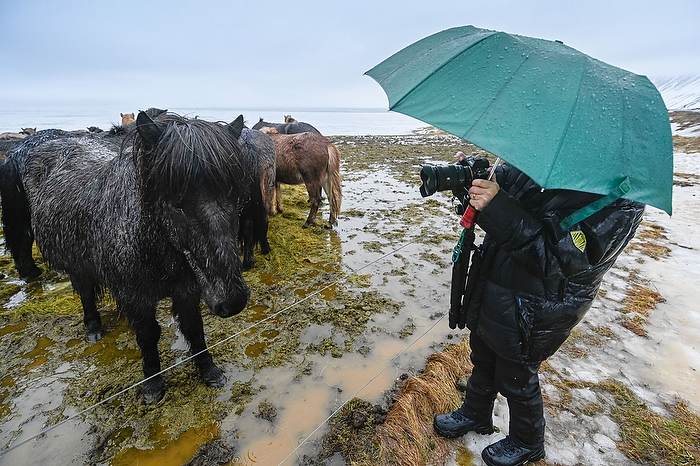
As long as it’s not too windy, an umbrella is a great way to keep water off both your camera and your upper body. They were essential for my group during a wet day in Iceland a few years ago.
Gaffer tape: The better version of duct tape (gaffer doesn’t leave a sticky residue), I can’t tell you how many times it’s come in handy while out shooting. I keep a few pieces wrapped around all of my tripod and monopod legs, as well as a couple of small pieces inside my card wallet. A small, two-inch roll will last for years.
(If you like this story, please share it with your friends and let them know about the links on photography that I post on my business Facebook page. I’m also on Instagram and Twitter, @reedhoffmann. And if you’re curious about the workshops I teach, you can find them here. Finally, you can subscribe to this blog on my home page.)
Had not thought of a compact umbrella to protect cameras in the rain ! Agree with the need for a large sunhat, but forgot about thin UV protective gloves. Ordering the tiny rechargeable flashlight. Gaffers tape always with me since my theatre days. “Duct tape, the handyman’s secret weapon” (Red Green show).
Thank you for the photography tips. May beautiful light make an appearance, during part of your shoot.