
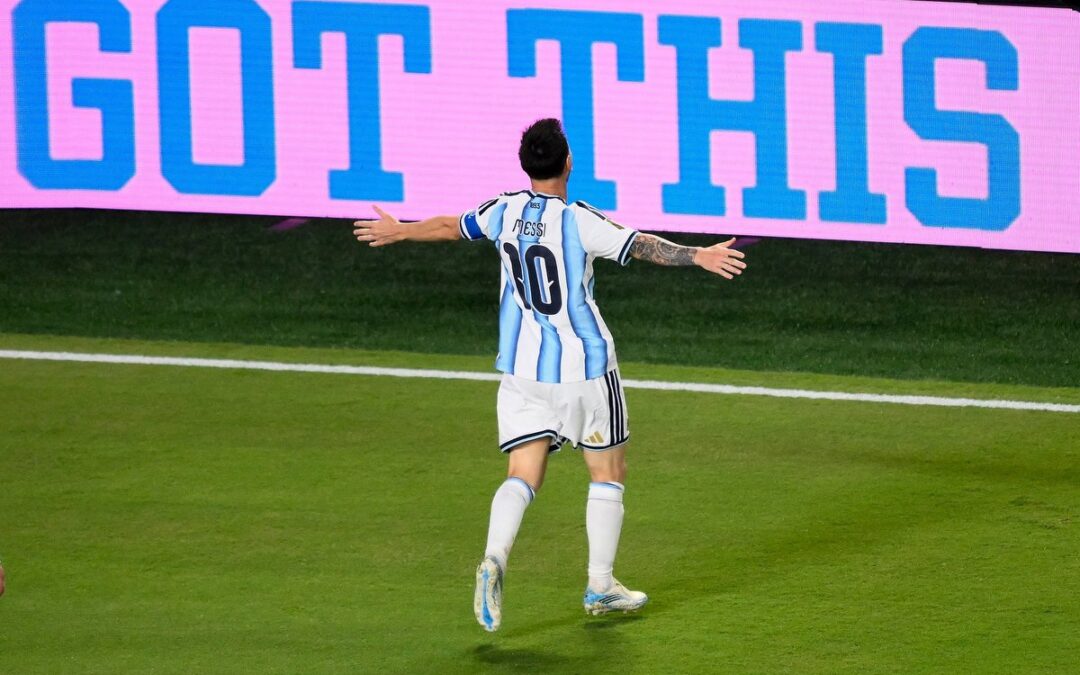
Last January I received an email I’d been hoping for, from an Associated Press photo editor asking if I was available and interested in covering some soccer in Kansas City. Yes and yes! Since 2022, when KC was named one of 16 host cities for the 2026 World Cup, I hoped I could photograph those matches. As it worked out, I ended up shooting all six games here for the AP.
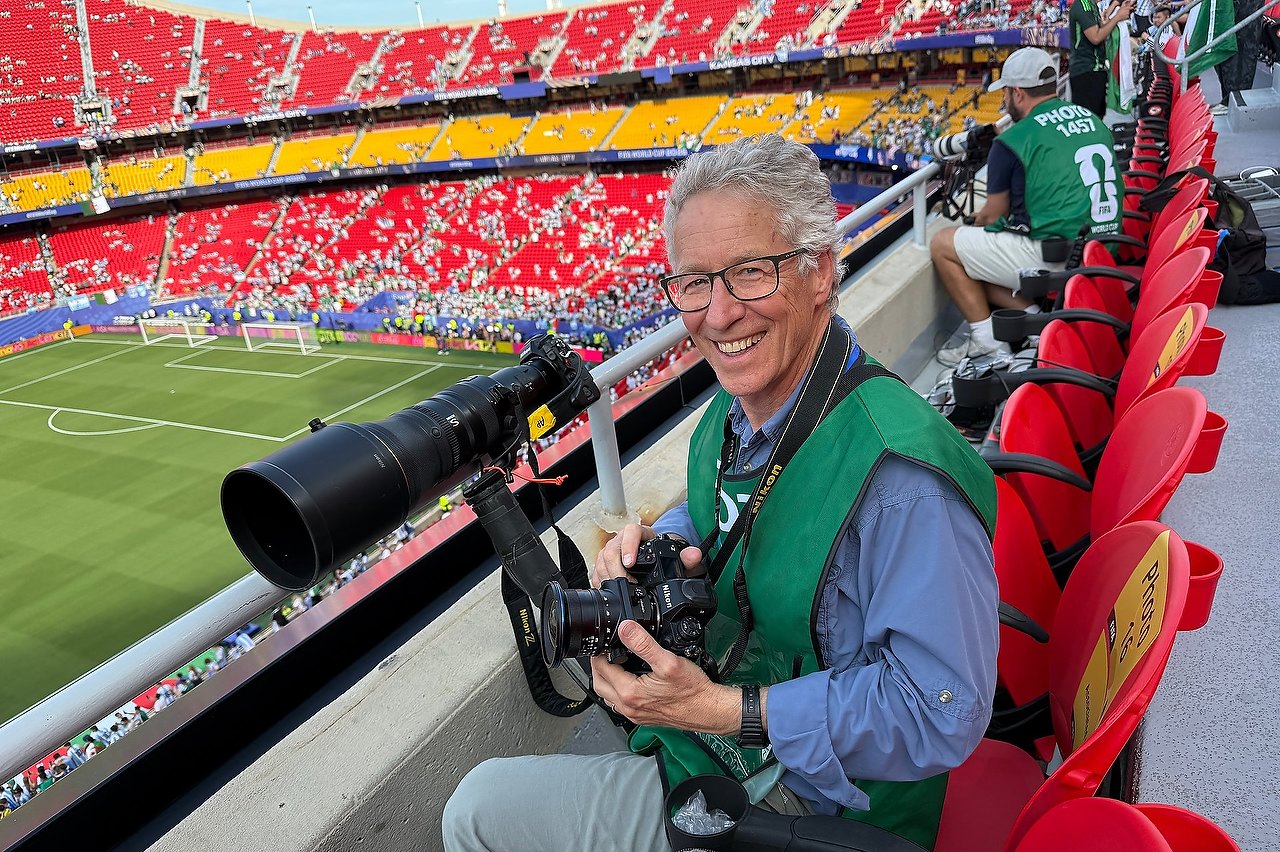
My spot for five of the six World Cup matches.
The first step in photographing the matches is getting permission from FIFA. To do that, you need to be affiliated with a major news organization. As one of the world’s biggest wire services, the AP requested credentials for all the photographers who would be working games for them (multiple photographers for each of the 104 matches in 16 cities across three countries is a lot!). Then I received notification from FIFA and had to provide them with my passport information. Once approved, I’d need to drive to Arrowhead Stadium (renamed Kansas City Stadium for the World Cup) a week before the games and show that passport and pick up my credential.
Next were the seemingly endless emails from the AP editor in charge about every aspect of the coverage, as well as several Zoom sessions. Over 70 Associated Press staffers and stringers (freelancers) would be involved, and each match would have a team of photographers. Positions would be pre-assigned, most at the ends of the pitch plus a “tribune” spot (that’s an elevated position – usually in the stands – and the place I’d be for five of the six games).
Photographers on the field would need to set up remote cameras behind both goals for each game, and gear to do that would be shipped to an AP staffer in each city. Some team arrivals would need to be covered. All pitch and tribune positions would have ethernet cables plugged directly into the cameras, and all cameras (and any laptops) would need their MAC addresses registered with FIFA. FTP addresses would be added in-camera so photos could be sent directly from the cameras.
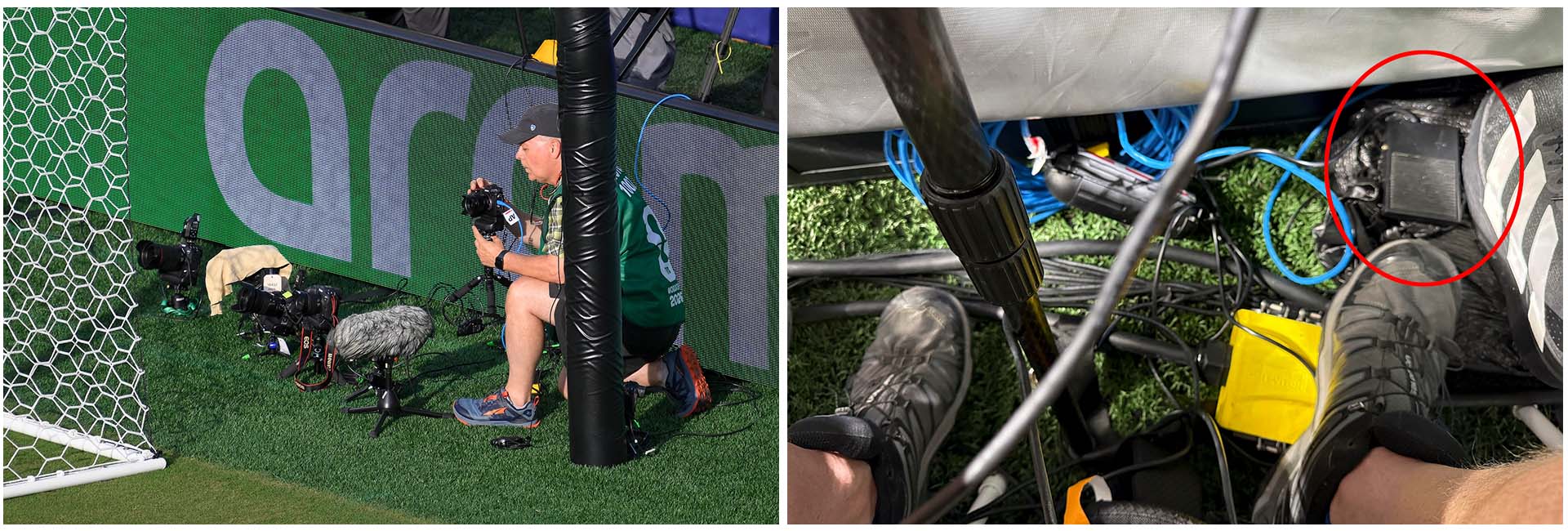
On the left is Ed Zurga, a KC freelancer working for AP, setting up a remote camera behind the goal at his end. At right is the foot switch he and I would both use to trigger it on the matches we covered at that end. Because of all the cables and boxes at our feet, it was a challenge to find a good spot to place it. And you can see the foot of the photographer next to me (white and black stripes, at right), who was often accidentally triggering my remote. That resulted in over 4,000 frames being shot!
Each photographer would have a dedicated editor (not on location) assigned to them, and each photographer’s in-camera FTP settings would make sure the editor saw only that photographer’s photos. As soon as the photographer shot something worthwhile, they could check it on the back of the camera, add a voice memo to it and send, then in a few seconds it would pop up on the editor’s screen. Doing it that way allowed the AP to get photos out to their subscribers very, very quickly.
Photo Mechanic (by Camera Bits) is the best software for deadline editorial work, so that’s what the Associated Press uses. It allows a template to be created, and shared, to make sure all key information (teams, photographer, date and time, copyright, etc.) is consistent. It can also use camera serial numbers to automate much of that, and so unique templates would be created by the editors in New York and distributed to each team of photographers/editors the day of each match. That minimizes mistakes in spelling and accuracy.
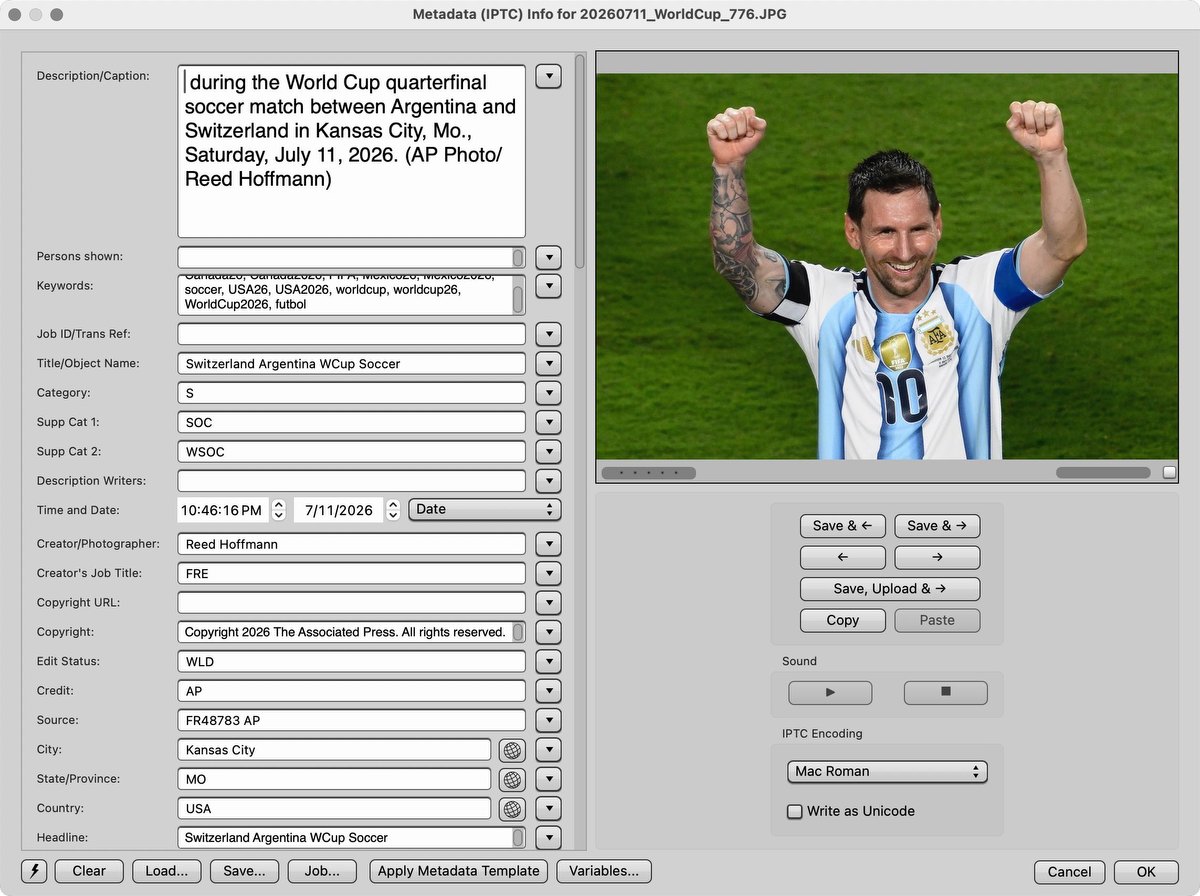
This is the IPTC template that Photo Mechanic automatically applied to every photo I sent from the quarter-final match. That meant my editor just needed to add what was happening in the photo.
Exposure settings, of course, would be critical. Combined with correct white balance (color) meant the editor should only need to crop and caption before posting. And JPEG format only, as RAW files would take up too much bandwidth and slow down the process.
Correct capture time (when the photo was shot) was critical as well. So each photographer had to set exact network time on each camera prior to each match (I use this website to do that). And the first photo they’d send to their editor would be of a computer or phone screen showing that its time matches the camera time.
Having the time right would be even more important for the remote cameras. Those, set up behind the goals, would be triggered by the closest photographer. Also plugged into ethernet, those cameras would transmit every frame directly to a separate FTP site overseen by a separate editor. The photographer would trigger the camera, firing at 30 frames per second, every time they thought there might be a shot on goal. That meant thousands of images would be flying in from each of those cameras, most of them unimportant (no shot on goal). Rather than having to look at each image, the editor could simply wait until there was a shot on goal, check the time, and and then go to the frames shot then.
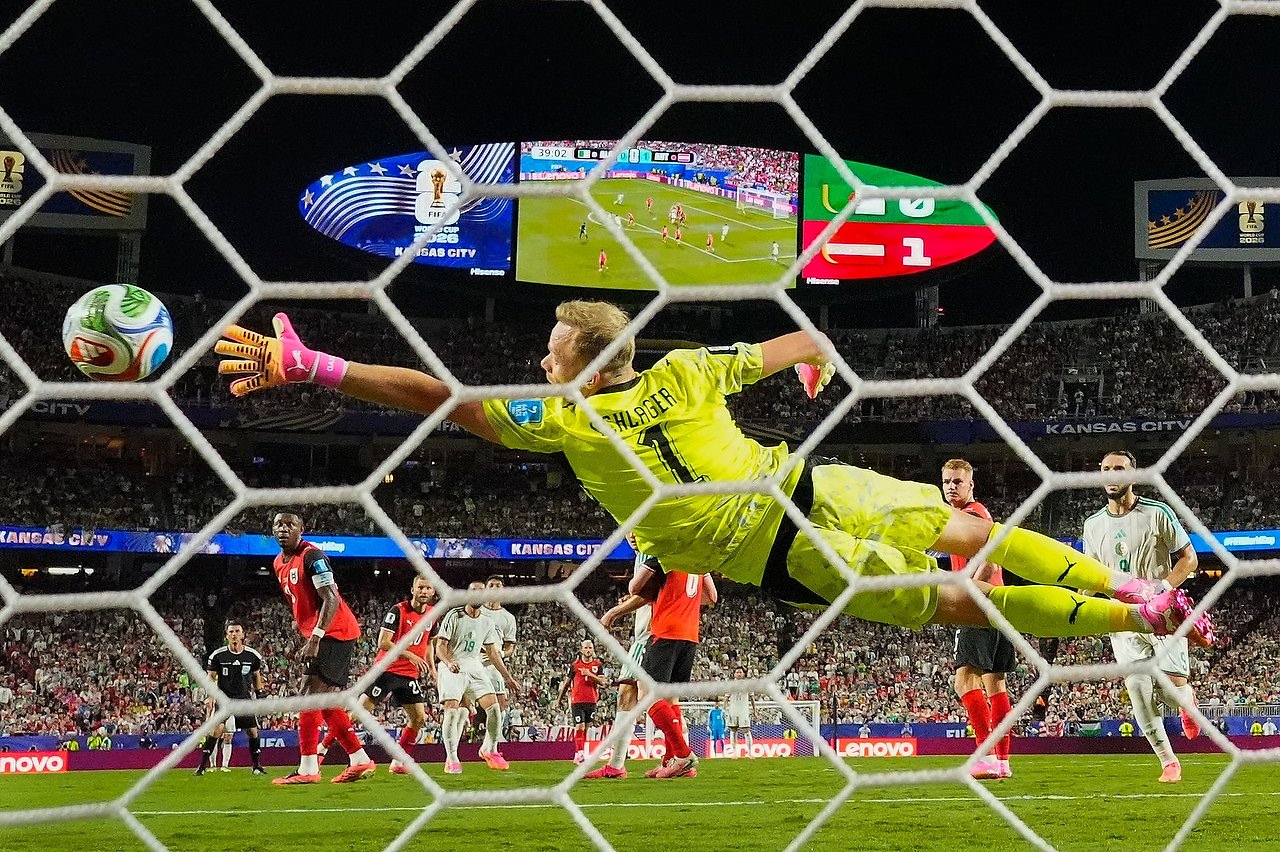
Of the thousands of photos my remote camera captured, this attempt on goal was easy for the editor to find because of the time stamp inside the image data.
Communications on game days would be through WhatsApp. In addition to a general group that included all photographers and editors, on each match day a separate group would be created for each individual match. That smaller group allowed us to keep in touch with just those working the game.
A few weeks before the first match, an AP editor distributed a massive spreadsheet that listed the match location, group, time (GMT), teams, photographers, their positions, and whether they’re responsible for a remote, need to cover arrivals, if they would get a parking pass and who their editor would be. That spreadsheet would have over 1,500 entries in it!
With limited parking passes, each match day I’d arrive at the Kansas City AP staffer’s home about six hours before kickoff. We’d load gear and drive to the stadium, usually arriving a little more than five hours early. That would get us a parking spot relatively close to the media center (outside the stadium), where we’d line up and wait until they let us in, four hours before kickoff. After locking our camera roller bags up inside the media center (World Cups have a bad reputation of camera gear getting stolen), those of us assigned to remotes would head to the pitch to set up the cameras, run cables and send tests.
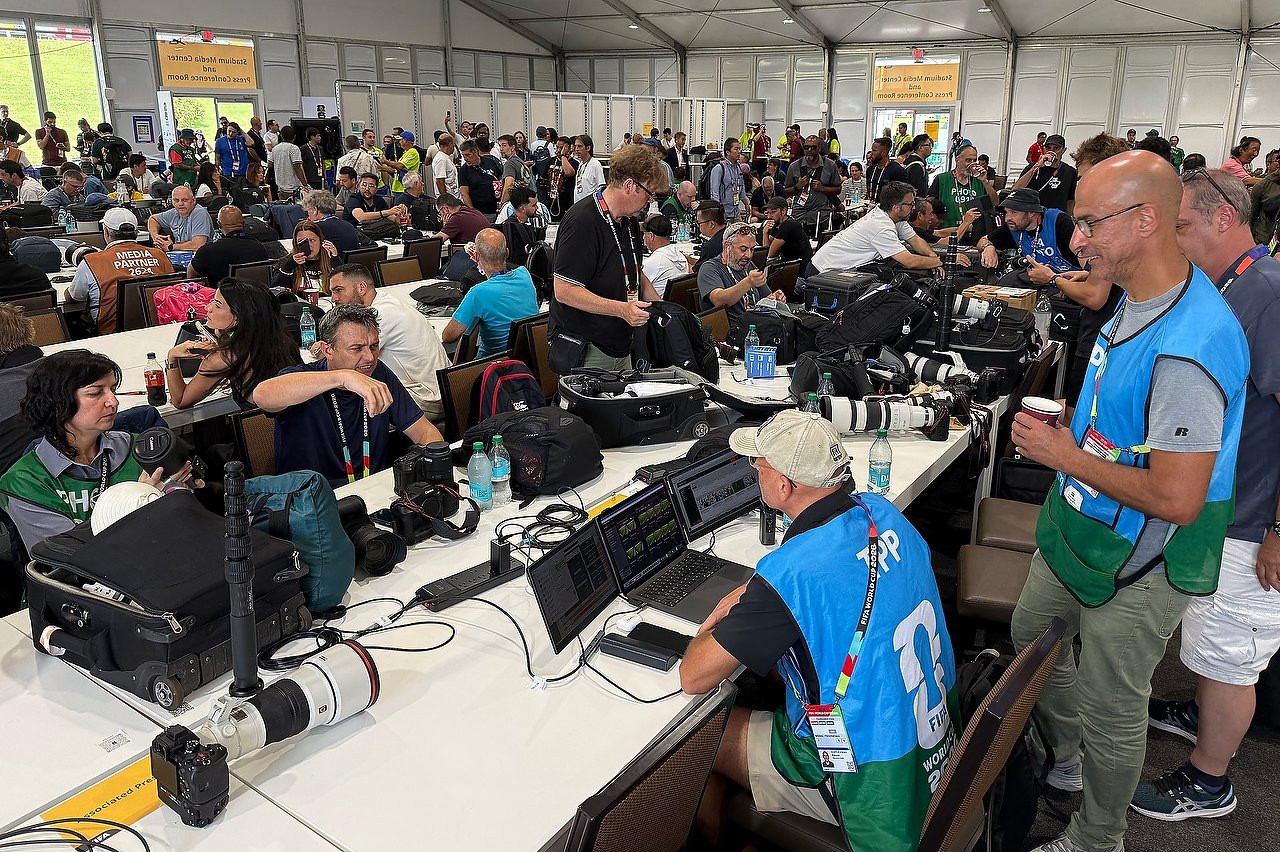
This is how crowded the Media Center was before the quarter-final match between Argentina and Switzerland – and these are just the photographers, from all over the world. Normally, when I cover sports in Kansas City, I know all the photographers working around me, and don’t worry about theft. With this number of strangers, though, we kept all of our Think Tank Photo roller bags locked and cabled to chairs and tables. Thankfully, Think Tank builds cables into those bags.
Once the remote cameras were set and time tests from all the other cameras had been sent, confirming good ethernet connections, we usually had an hour or so to kill. Then, about 90 minutes before kickoff, we’d be in position and start looking for feature pictures to shoot and send. Usually that would be fans, but could also be celebrities, and of course, the players warming up. Each game started with a nice ceremony involving team introductions, giant flags and national anthems. Finally, it was time for kickoff.
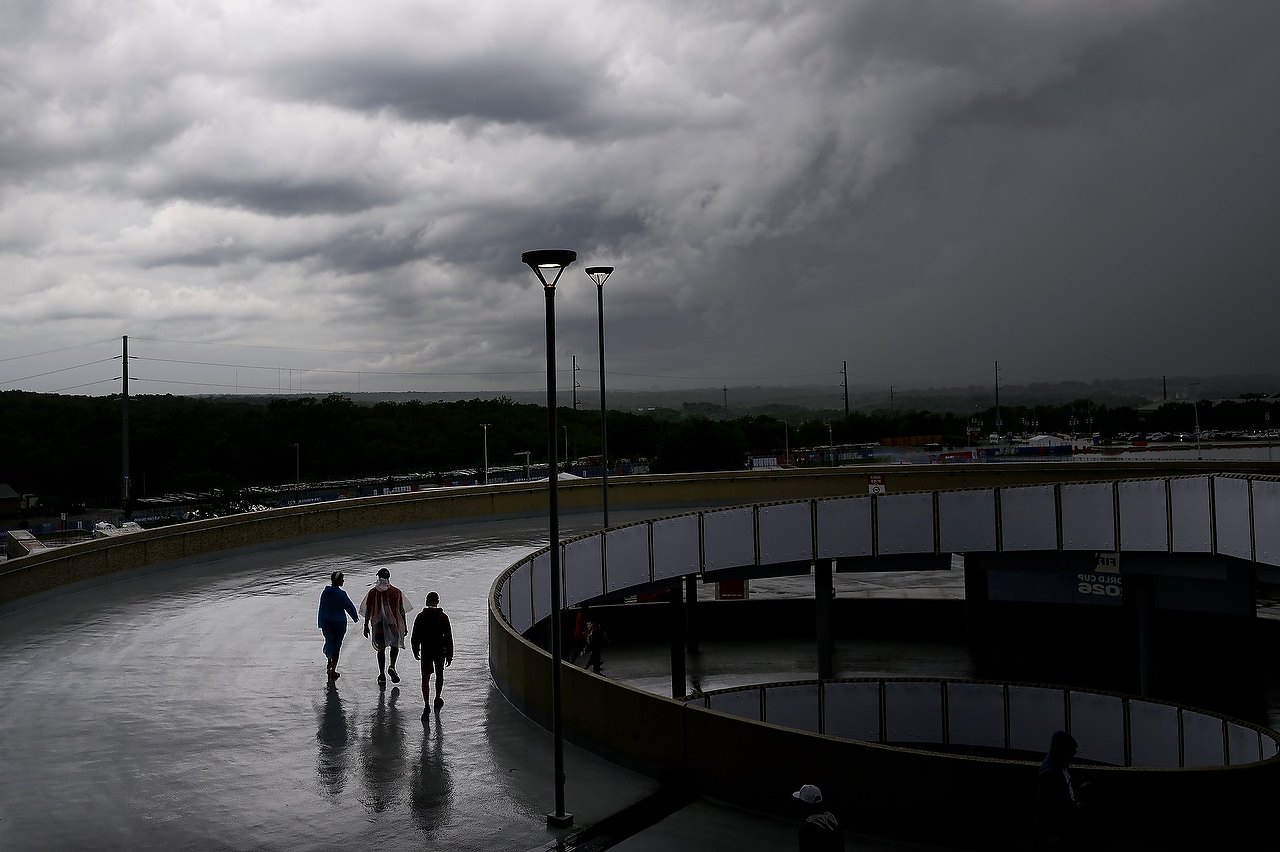
On the one day we had a match starting early enough to have a chance for some sunshine (6 p.m.), it rained. Storms passing through before the game were part of the story, so I wandered the stadium looking for feature photos.
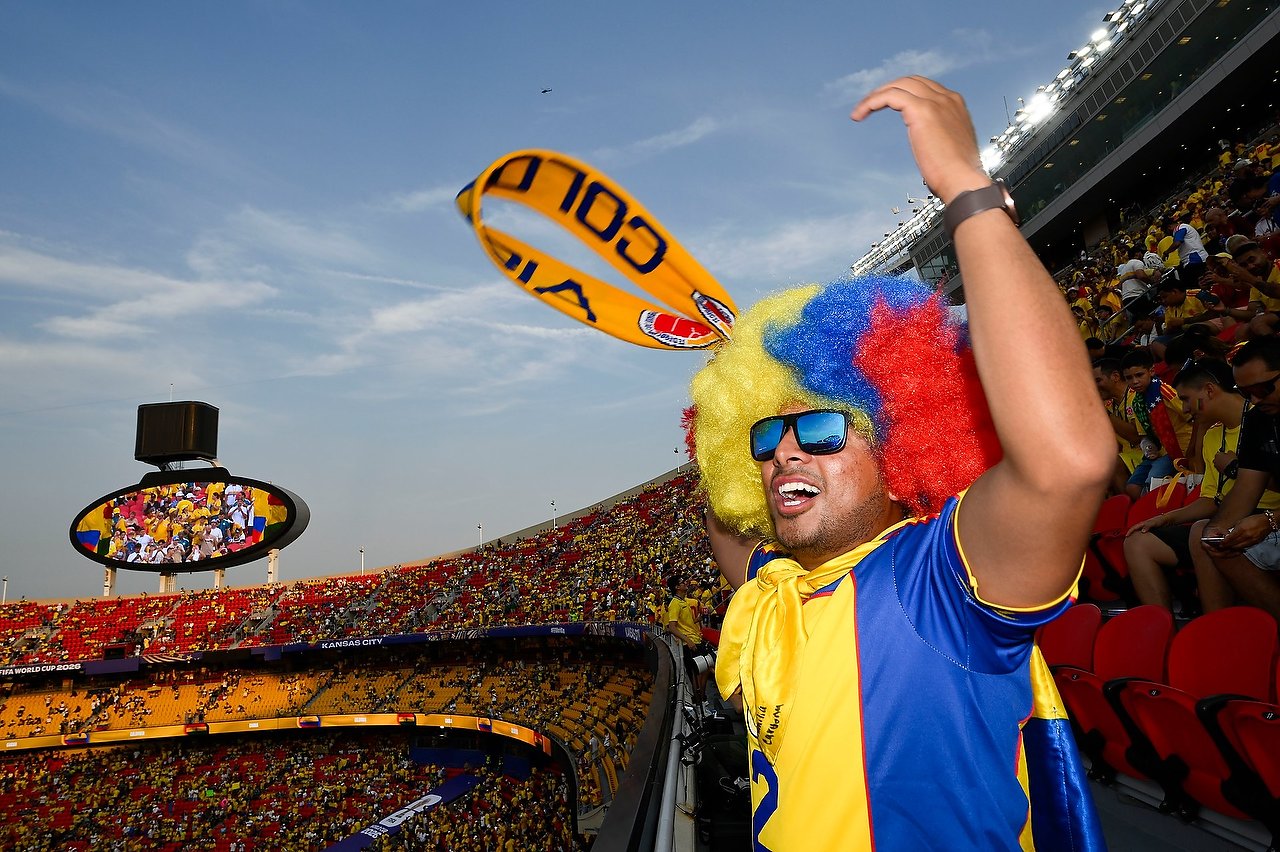
I had limited mobility from my tribune position, but when some Colombia fans came down near me, I took advantage of that. I’d brought a small flash along because I knew my area would be in shade, but the sky would be bright early, so I used the flash to light up this fan.
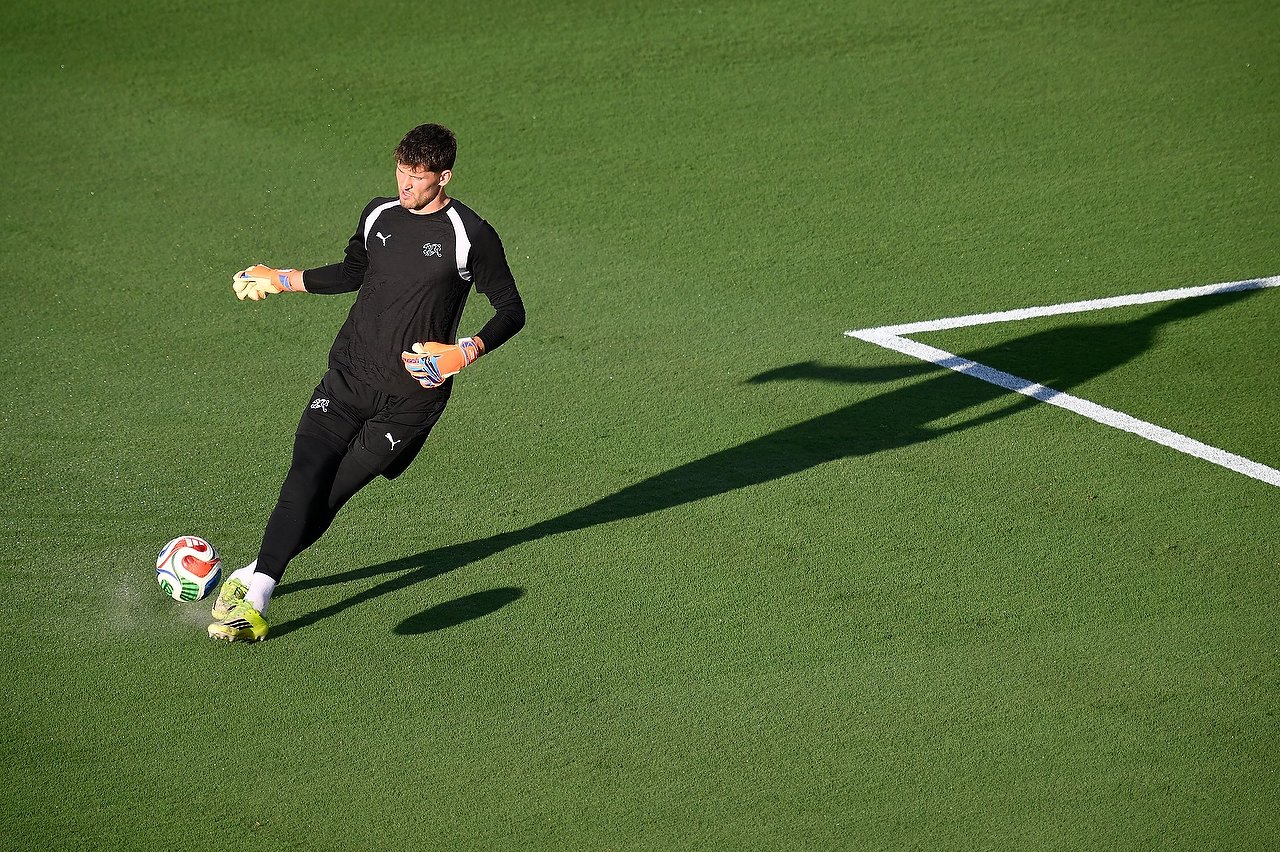
By the time the match between Argentina and Switzerland began, the pitch woud be in shadow. But during warmups there was sunshine at one end of the field, so I could take advantage the shadows it created.
Believe it or not, after the match started, our job got a bit easier. At that point we knew everything was working, with good connections to our editors, and could simply concentrate on covering the game.
Being the “tribune” photographer meant I was up in the stands at what would be the 50-yard line in American football. That put me in a good position for photos showing the entire stadium, but my main job was to be the “safety” photographer. I couldn’t be blocked by players or officials, so if the other photographers were blocked during an important moment, hopefully I’d have a picture. The suggested lens for that was a 400mm f/2.8, which would leave some space when framing an attack on the goal. Using one of my Nikon Z9 cameras, the 45 megapixels they capture gives the editor a lot of resolution to work with, so they can crop in and still have a very usable image.
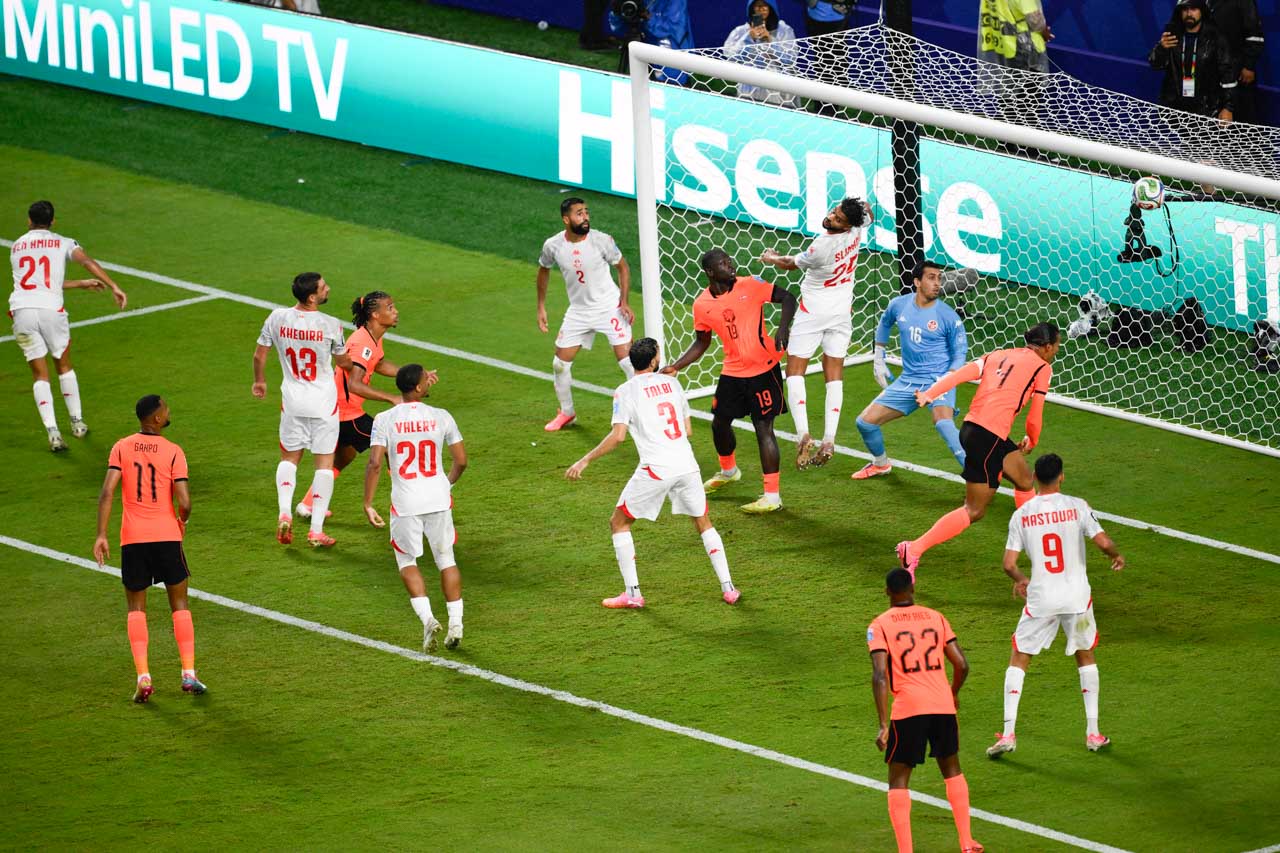
A good example of my role – this was a goal scored by the Netherlands against Tunisia, full-frame from my tribune position with the 400mm f/2.8 lens. If any of the other AP photographers on the pitch were blocked and didn’t get a picture, they had mine.
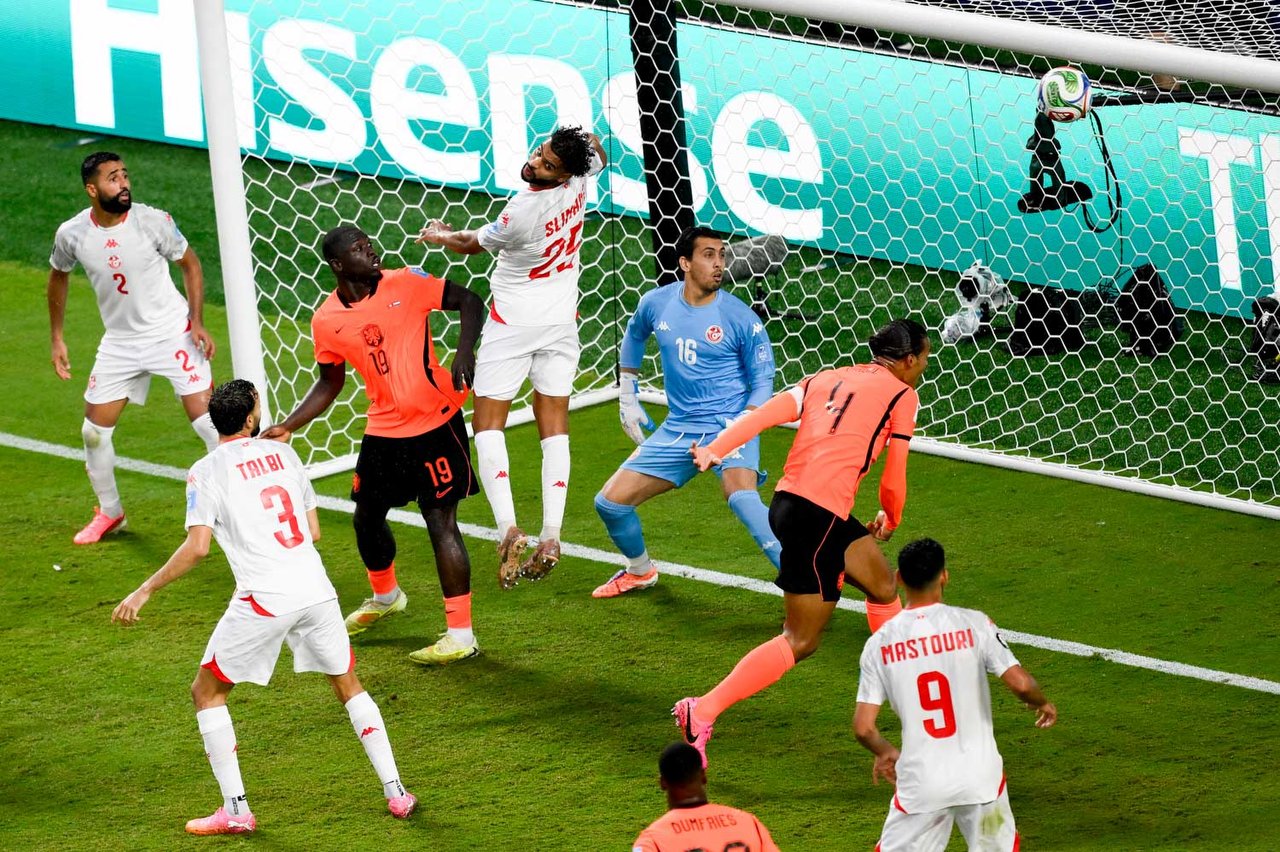
And since the Z9 captures at 45 megapixels, the editor could easily crop in tighter like this and still have 16 megapixels of information.
Fortunately, I have the Nikon Z 400mm f/2.8 TC lens. That “TC” means it has a built-in 1.4X teleconverter. With the flip of a lever on the lens, I can go from 400mm at f/2.8 to 560mm at f/4. That meant when play was in the middle of the pitch, I could shoot tighter, at 560mm, then switch to 400mm any time play got near the goals. Using that combination, I’d follow the action from one end to the other, looking for good moments. For autofocus I set the camera to 3D Subject Detect (People), and for white balance, “Natural Light Auto.” I varied frame rates from 8fps (non-action) to 30fps (action). At 30 frames-per-second I also took advantage of the amazing Pre-release feature my Nikon cameras offer. In that mode the camera is constantly buffering images at 30fps, but when I press the shutter it doesn’t simply start writing images at that moment to the card, but goes back in time ½ second and starts there (I have options to set it to one-second or 1/3 second, but ½ works well for me). That way even if I’m late pressing the shutter for a peak moment, I still capture it. Pretty amazing feature!
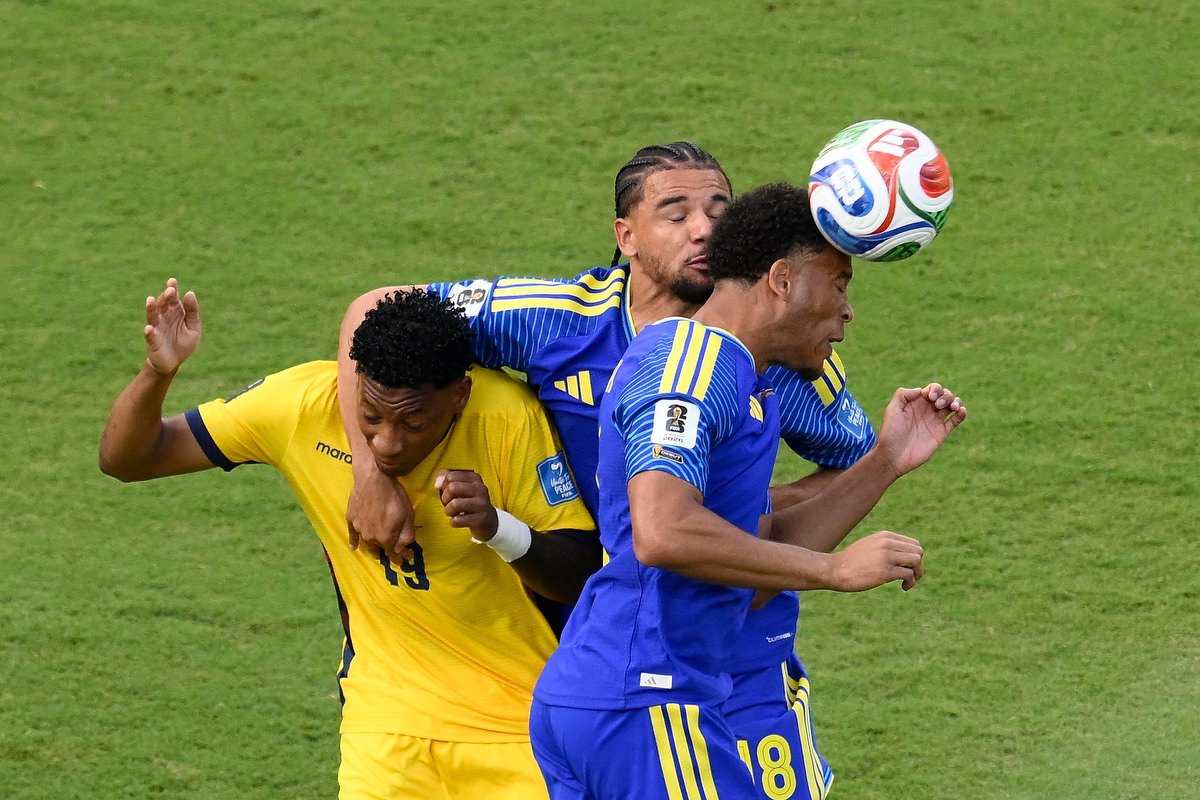
When the action came close to my side of the field, 400mm was plenty. Still, this photo, and the ones below, are cropped tighter for more impact.
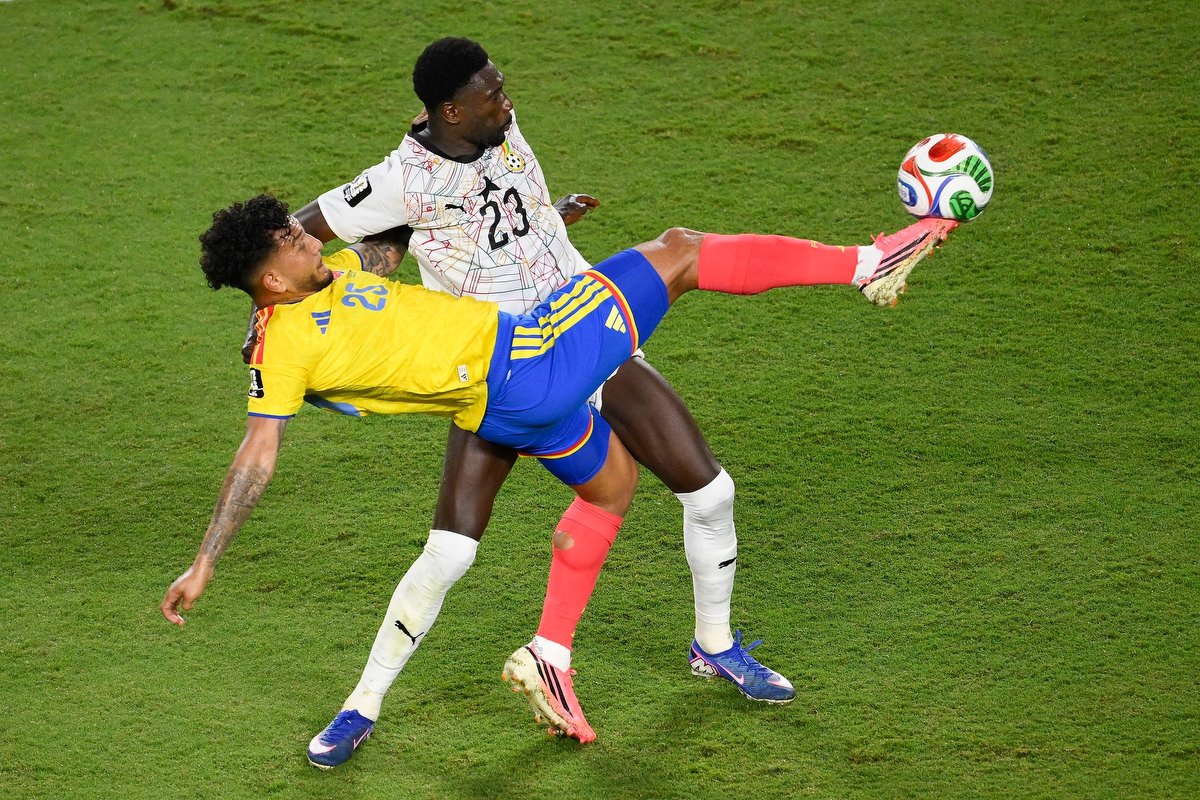
For action toward the center of the pitch, or the far side, I’d use 560mm.
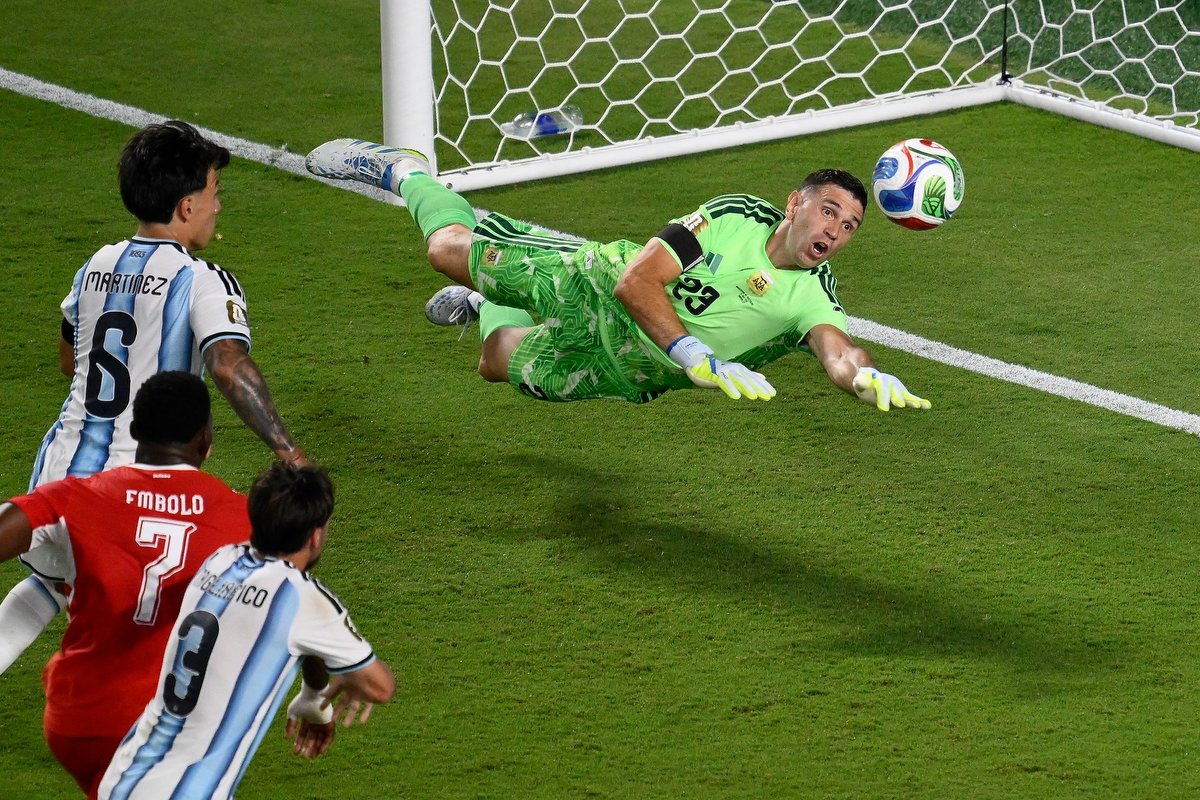
And sometimes I’d stay at 560mm even as the action got close to the goal, like this attempt by Switzerland on the Argentine keeper.
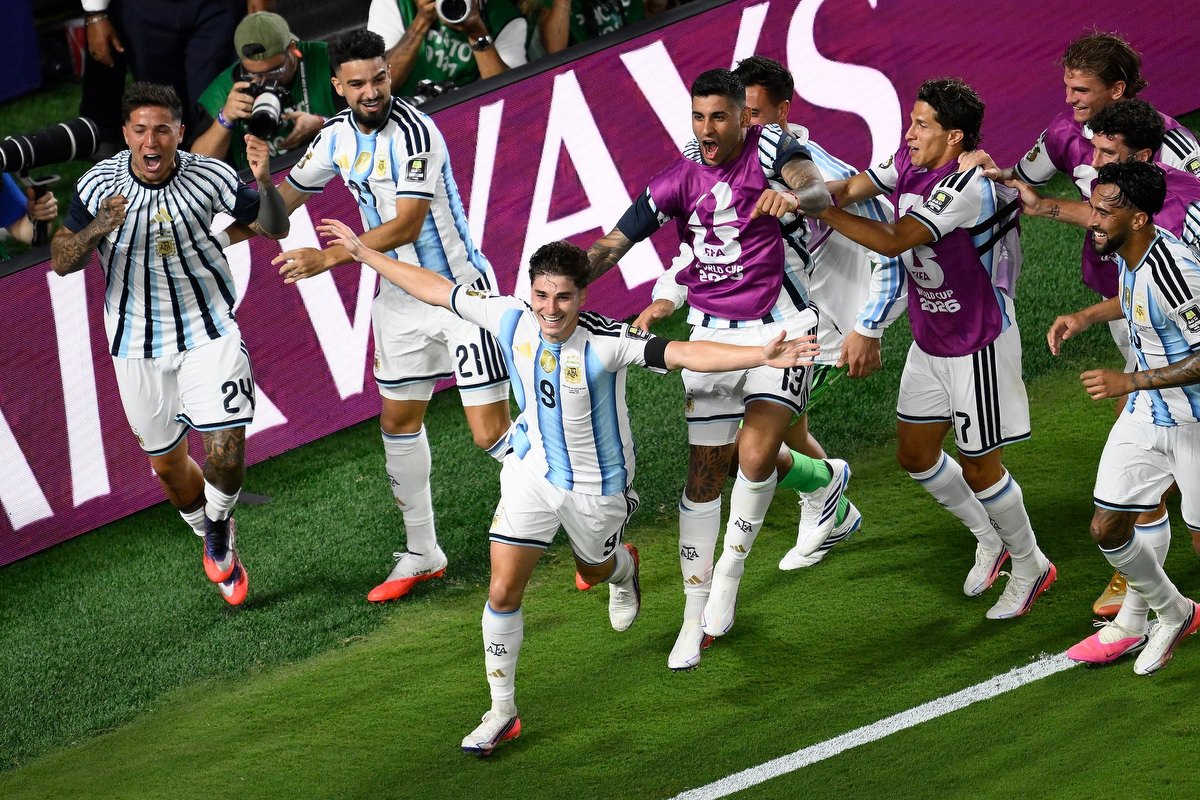
And as soon as a goal was scored, I flipped the lever to 560mm to shoot reaction, like after this goal by Argentina in the quarter-final.
The lens also pairs great with the Nikon Z 2X teleconverter, which then gives me 800mm at f/5.6. And finally, with that 2X attached, I can still flip the switch to now be at 1120mm and f/8! I didn’t use those focal lengths for action, but for pictures before and after the matches.
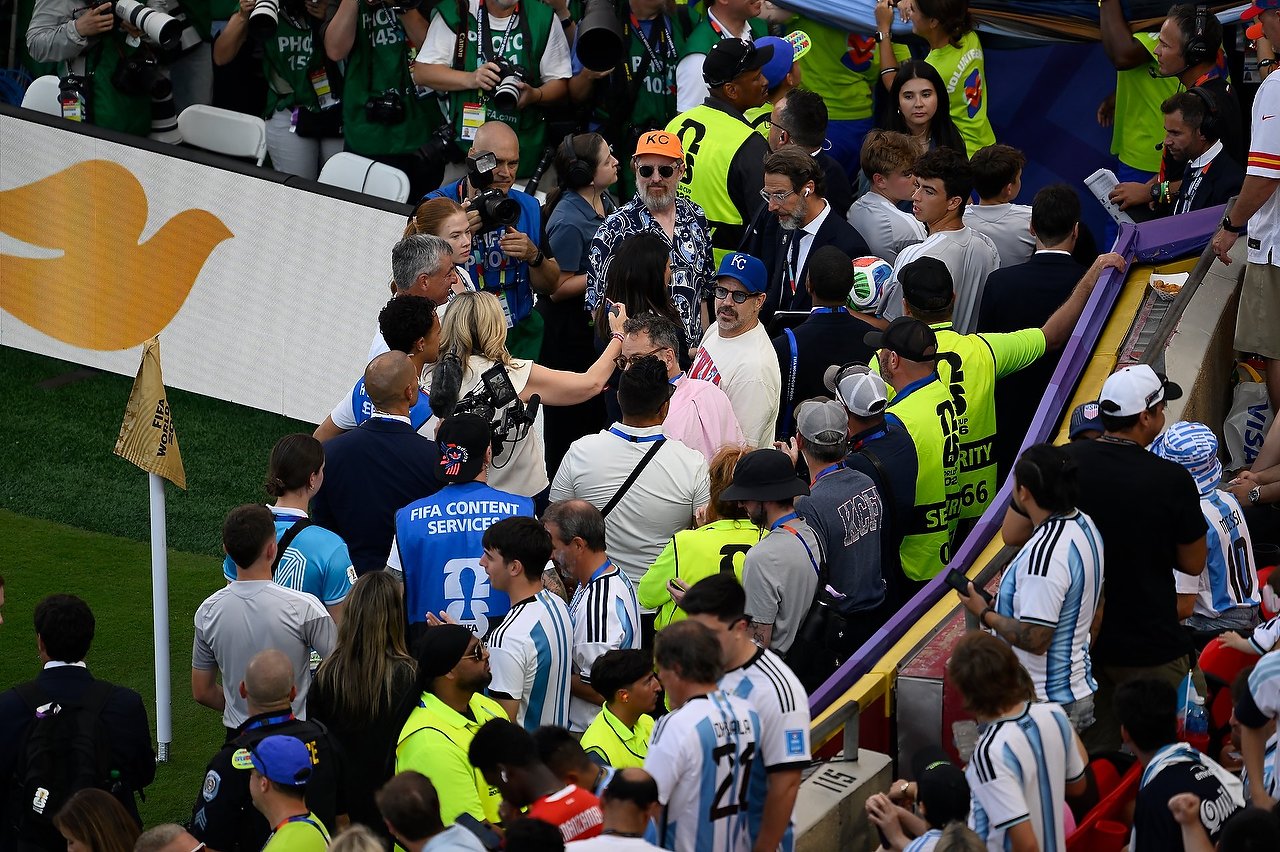
When I spotted Jason Sudekis (blue “KC” hat) on the sidelines with some of the cast from “Ted Lasso,” I quickly added my 2X teleconverter to be able to shoot at 800mm. This is a full-frame image from that sequence.
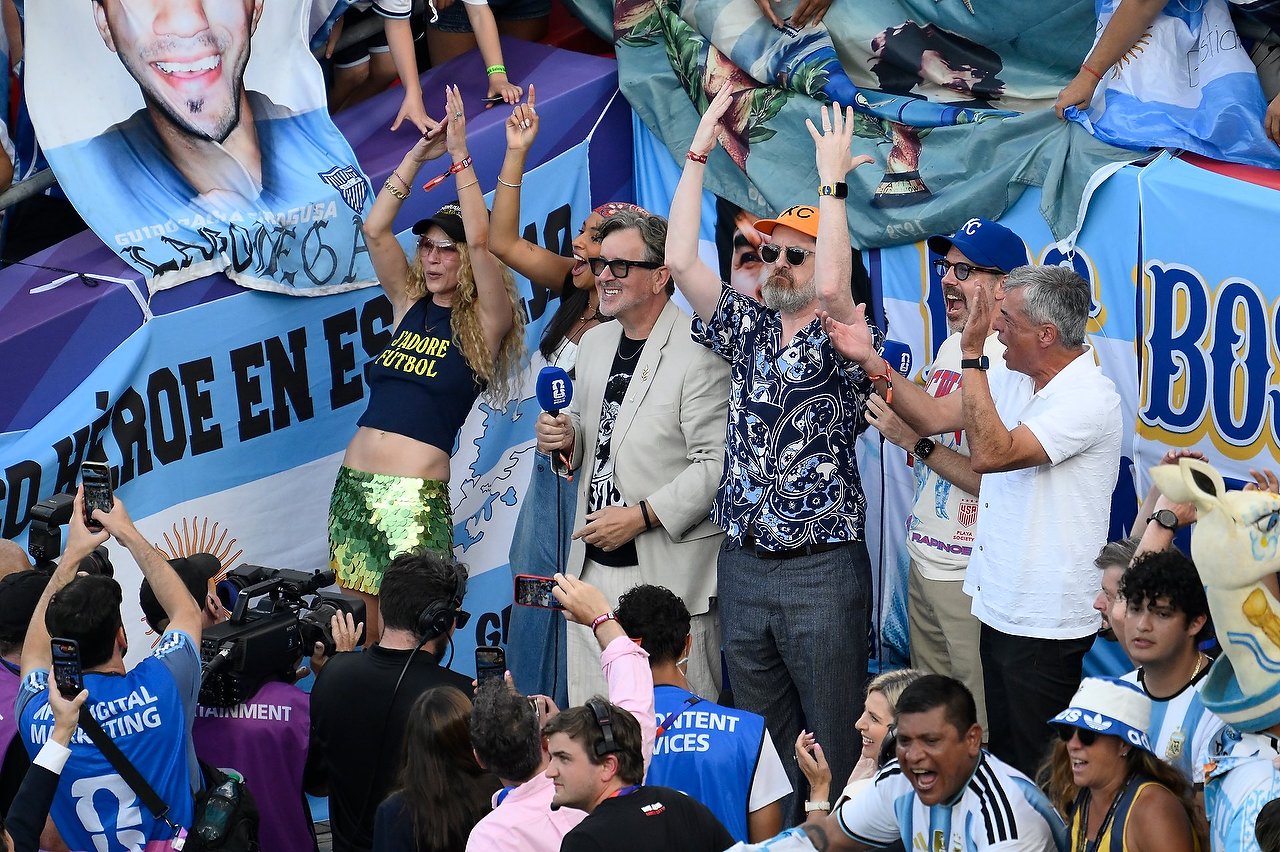
Realizing I’d prefer tighter framing, I flipped in the 1.4X teleconverter on my Nikon Z 400mm f/2.8, which allowed me to be shoot at 1120mm! Now, even though the group is further away, you can see how much better this is, even without cropping.
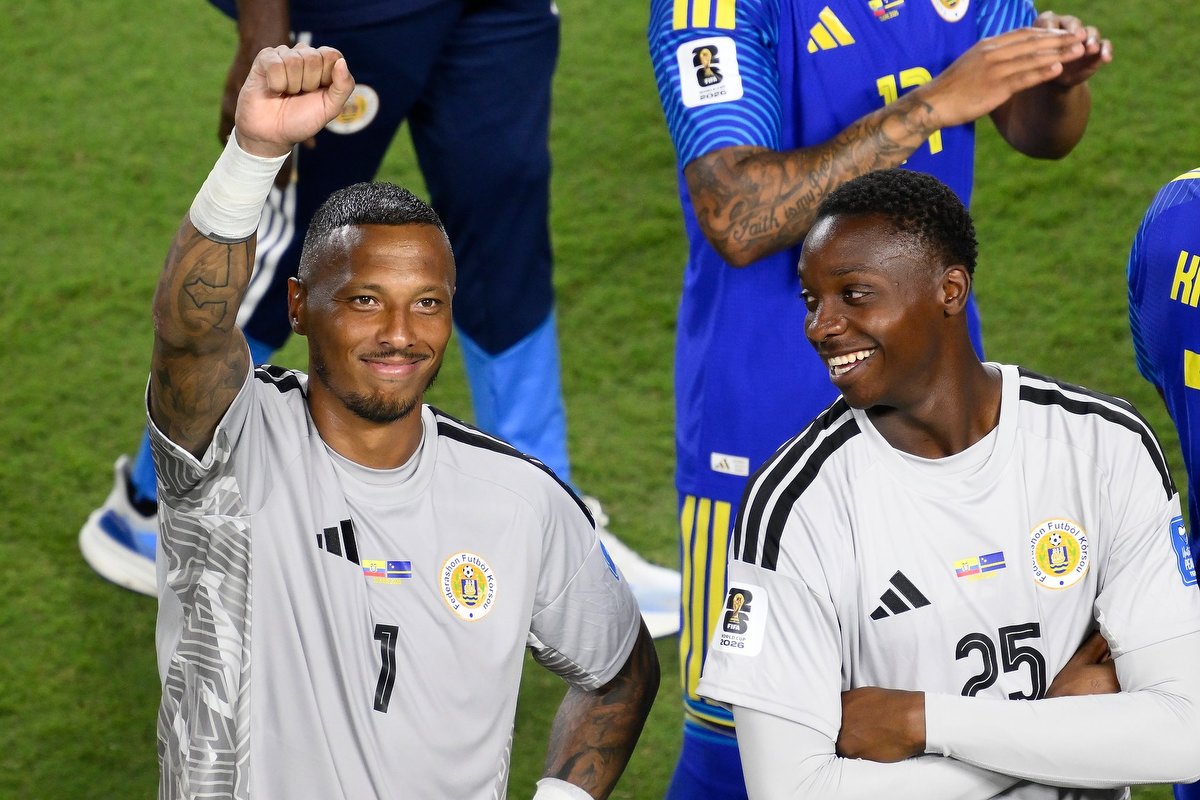
I’d also put that 2X teleconverter on as soon as a match ended. That let me shoot 800mm at f/5.6 for reactions afterward, like this of Ecuador’s keeper acknowledging the fans.
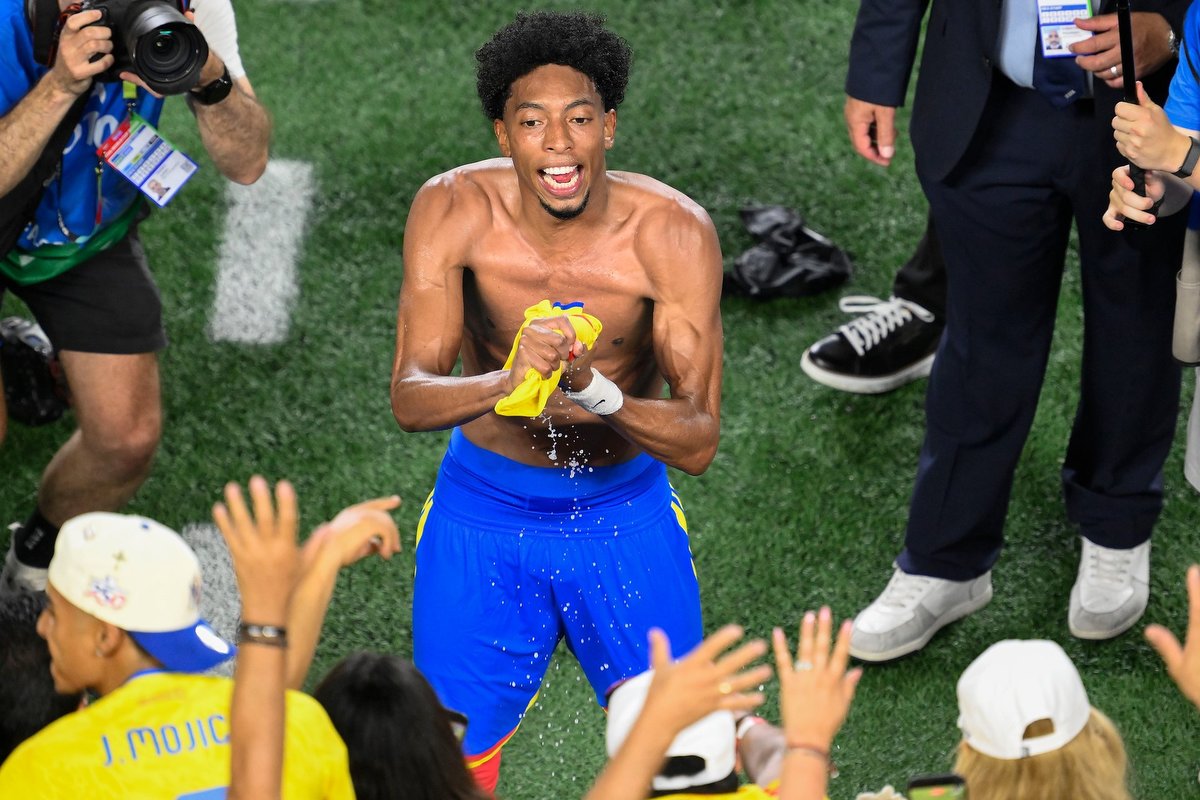
Or this, of a Colombia player wringing out his jersey before giving it to a fan. From the tribune position, I had a clear view of the players reacting to the crowd as they left the pitch.
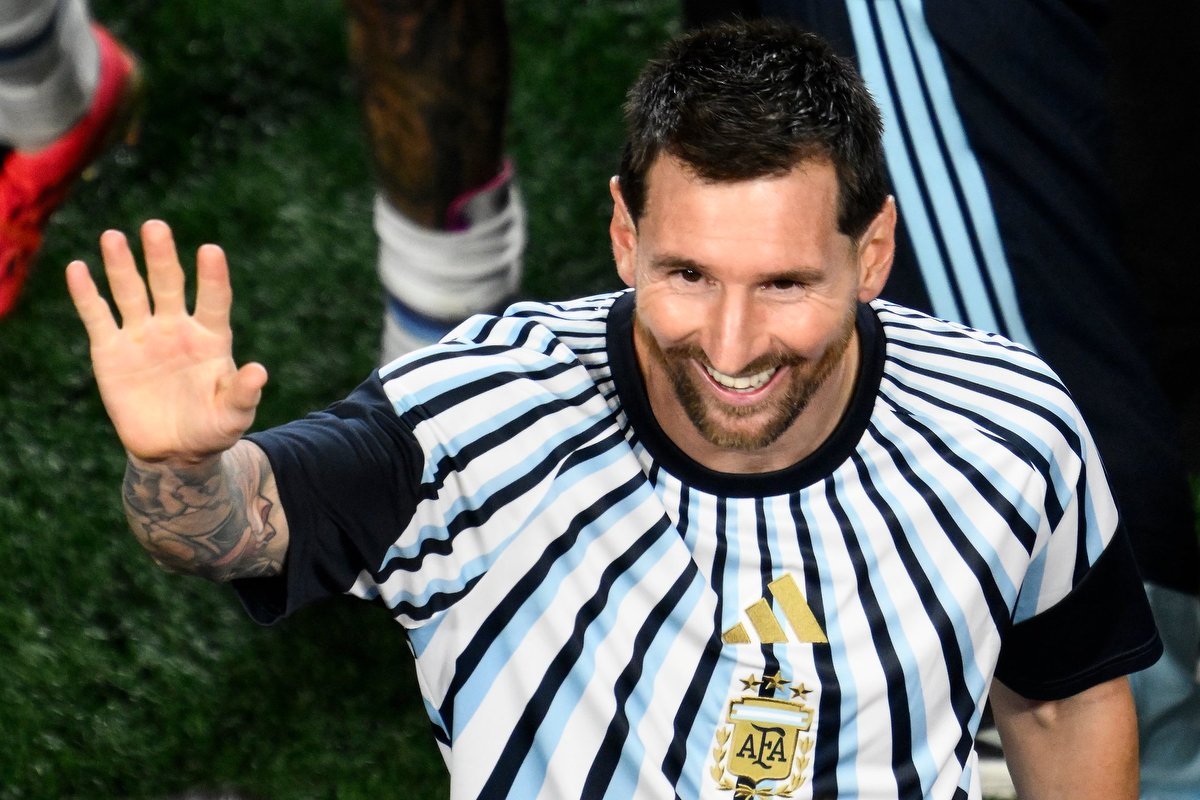
And, I could also flip in that 1.4X teleconverter to get even tighter individual photos after matches at 1120mm, like this of Argentina’s Lionel Messi as he heads to the locker room.
As I mentioned above, that midfield spot was a good place for overall photos, too. In addition to making the usual wide shots with my Nikon 14-30mm f/4 lens, I also brought my Laowa 17mm f/4 tilt-shift lens, and at a later game, my 7Artisans 10mm f/2.8 fisheye. Here are examples from all three of them.
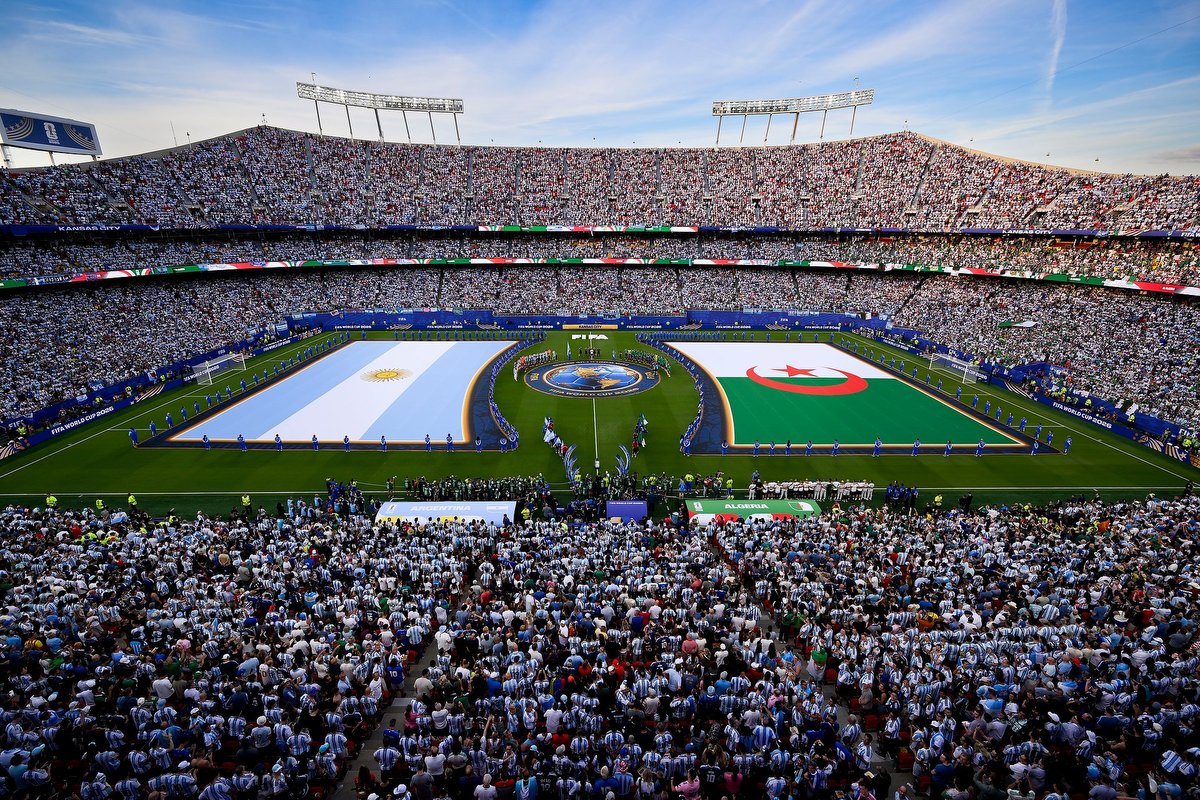
The opening ceremony always made a nice photo from the tribune position with the Nikon 14-30mm lens.
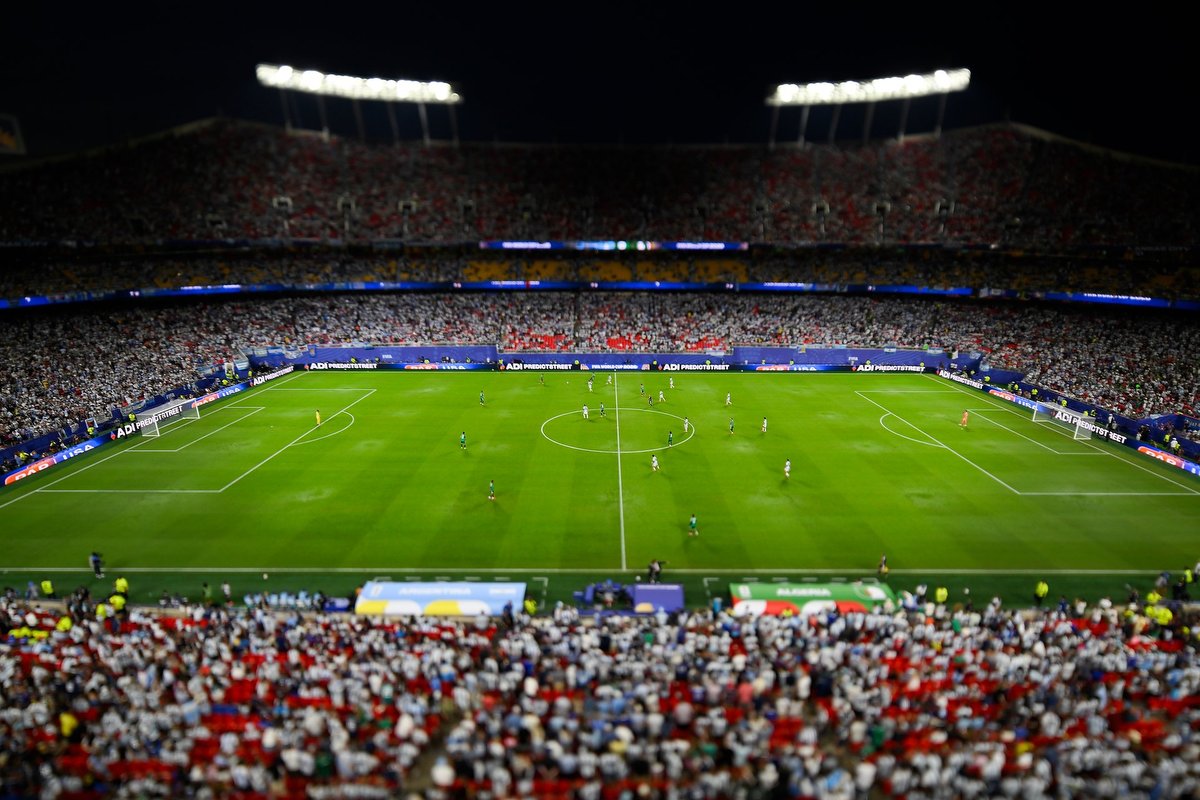
For the first match, between Argentina and Algeria, I also brought along my Laowa tilt-shift 17mm lens, and used it to make this picture with a “miniature” look. After shooting it, I sent my editor a message on WhatsApp letting her know, and the caption on the photo began with, “In this photo shot with a tilt-shift lens…” The AP is very strict about being clear that the photos they send out are not manipulated in software in any way other than to correct for exposure or color.
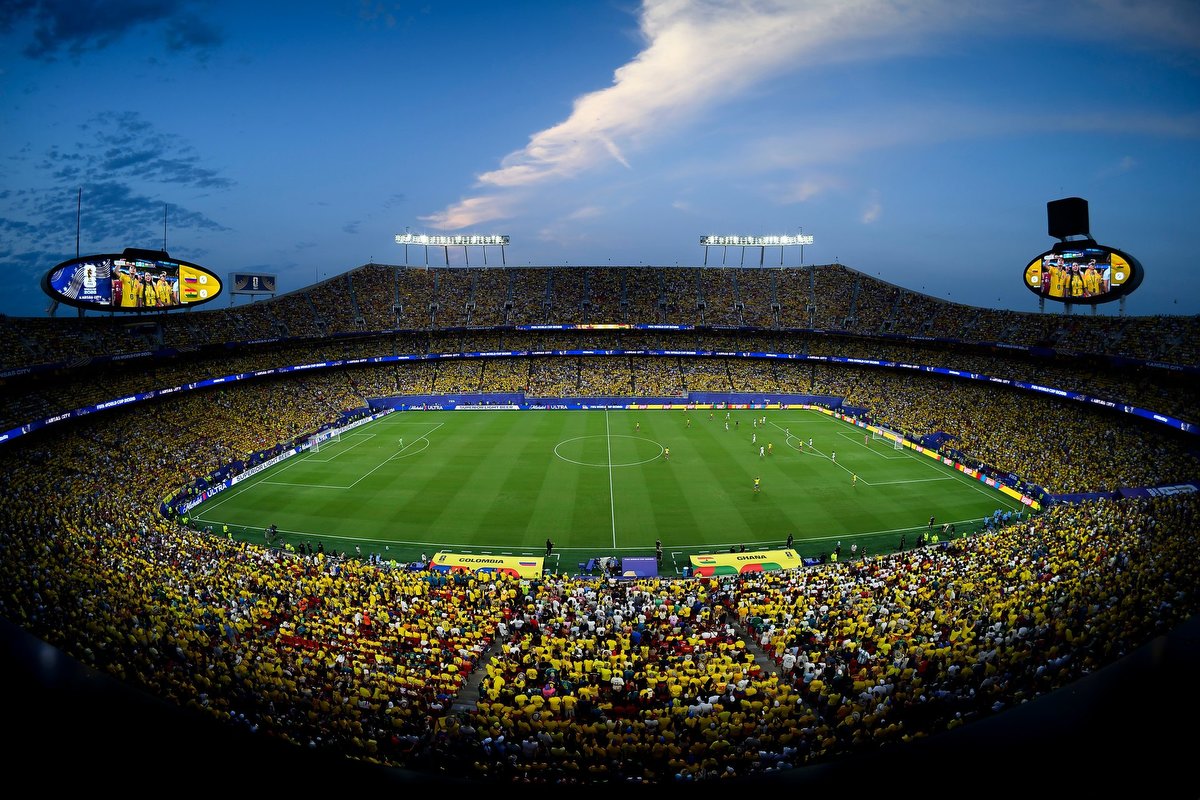
After that, I asked for and received permission to use a fisheye lens during the match between Colombia and Ghana. Again, the caption with the photo began with, “In this photo taken with a fisheye lens…”
For five of the six matches I was in the tribune position, one of three to six photographers for AP at the games. But for the fourth game, Austria versus Algeria, I was moved to one of the pitch positions, so was shooting from the field. That makes for better action photos because you’re at eye level with the players. Since Nikon (along with Canon and Sony) was at the matches offering support, I borrowed a Nikon 180-400mm f/4 TC lens from them for that game. It also has a built-in 1.4X teleconverter, so when the players were closer I could zoom from 180-400mm, and when action was at the far end of the pitch I flipped in the 1.4X for up to 560mm at f/5.6.
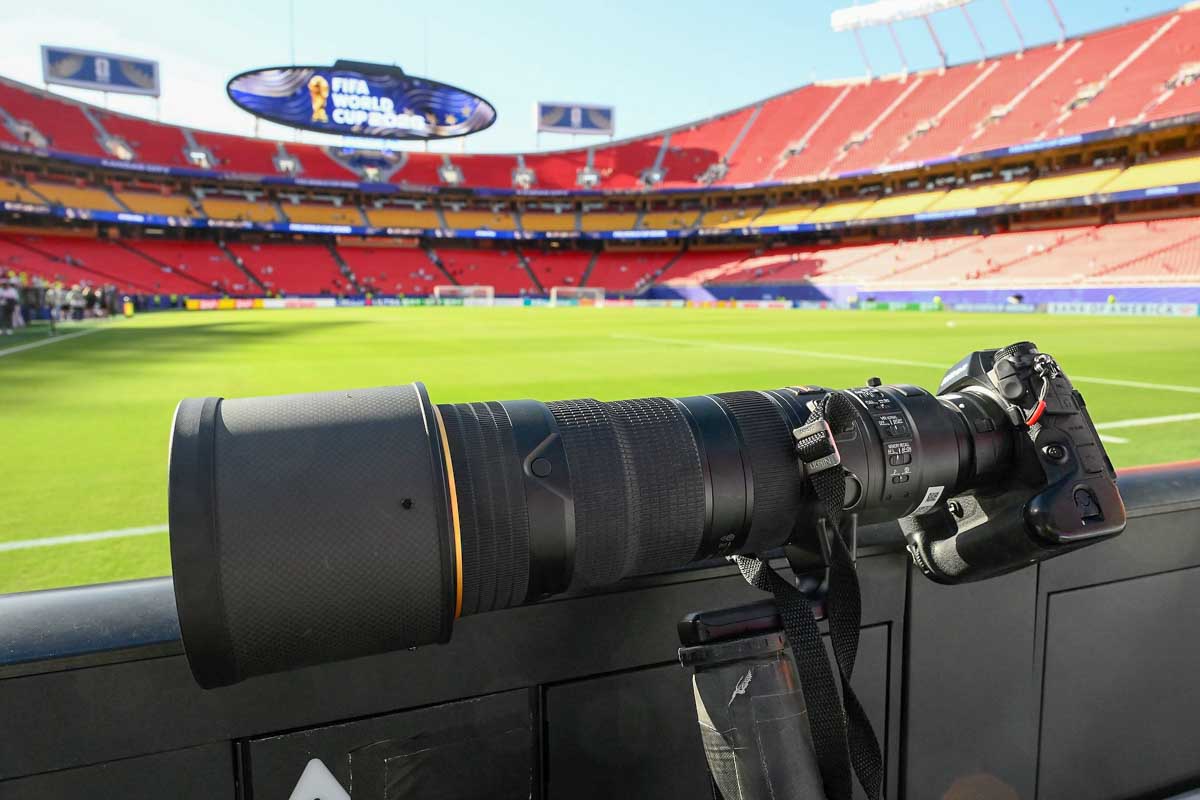
For the match between Algeria and Austria, I was assigned a pitch position, and used this Nikon 180-400mm TC lens from this spot behind the boards.
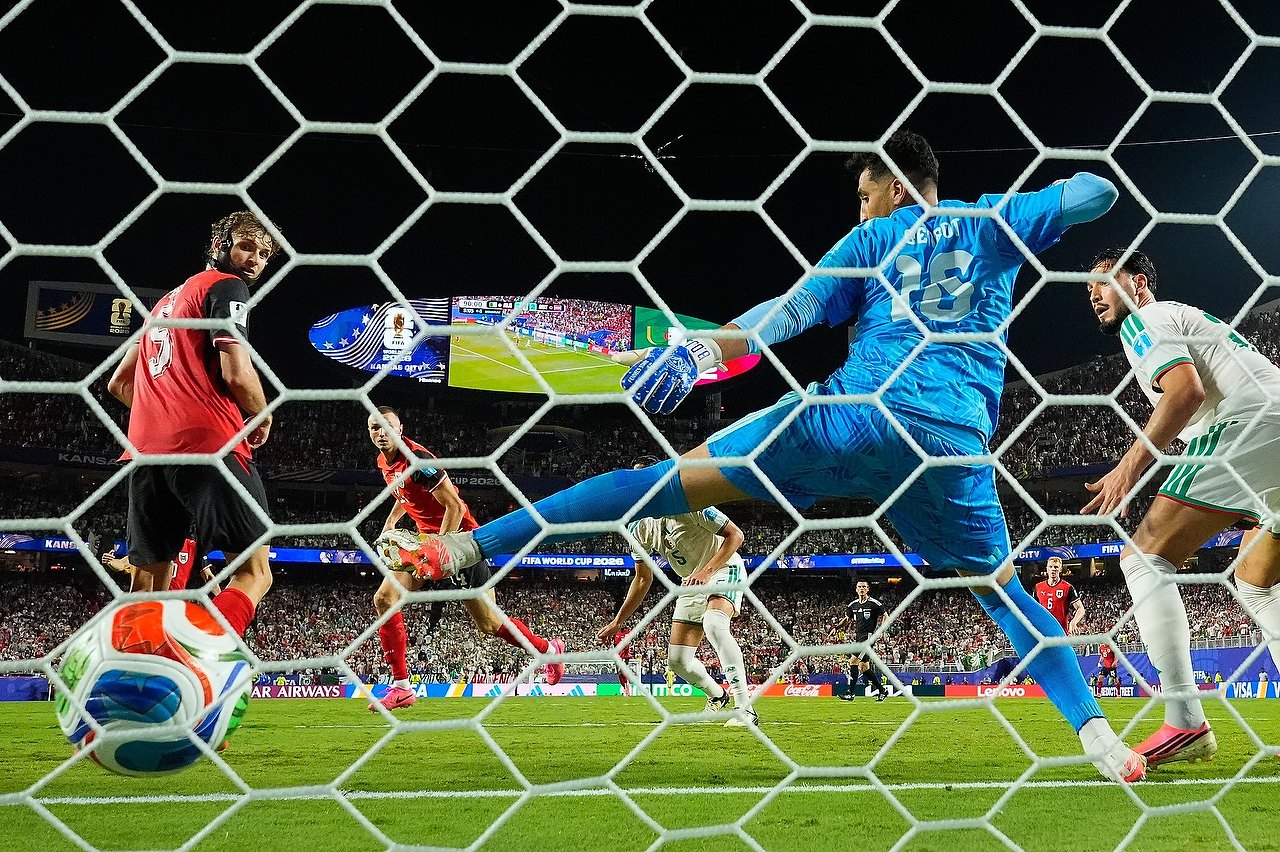
I was also responsible for triggering a remote behind the goal, which is how I made this photo of a goal scored by Austria against Algeria.
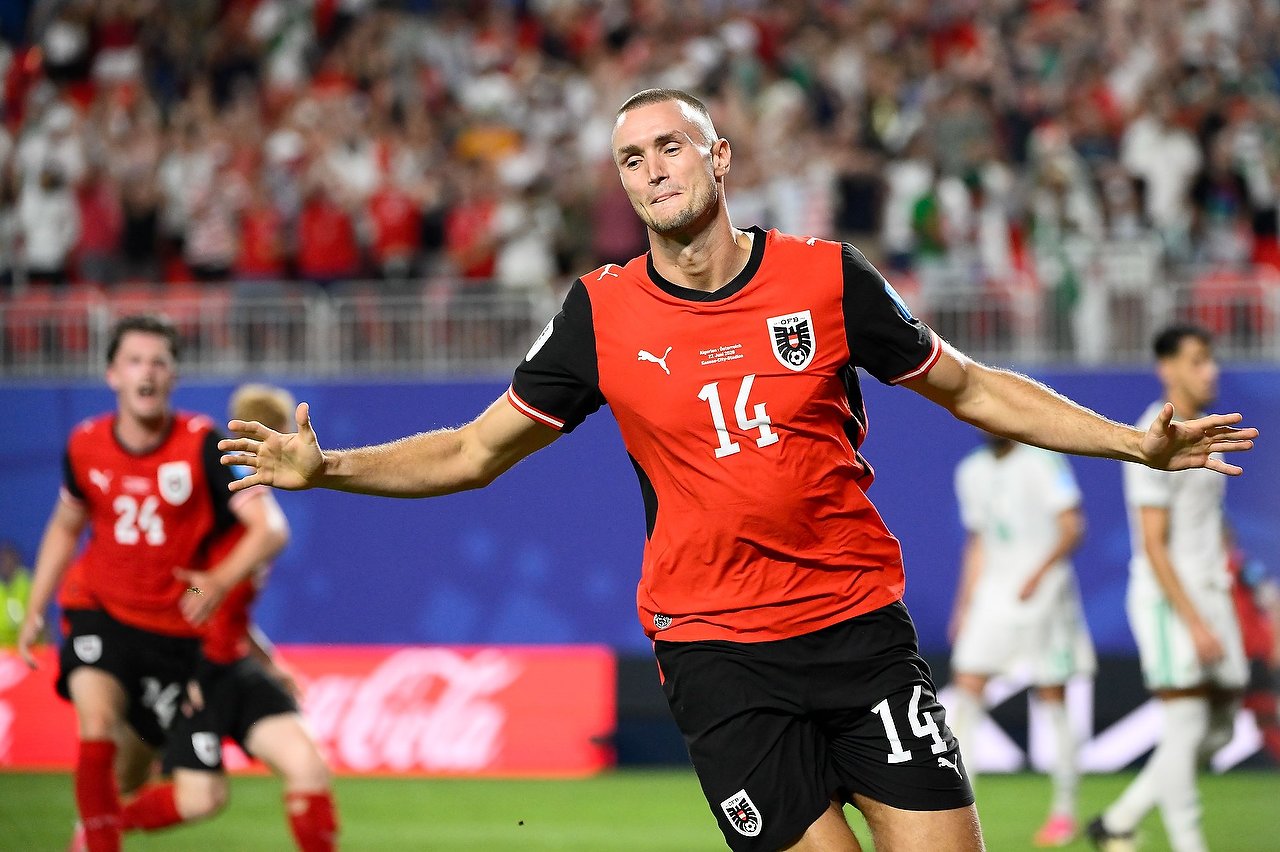
And since I was triggering the remote with my foot, I could still be shooting the reaction with my other camera. Here’s the Austrian player who scored the goal (you can see him in the remote photo), and this image was shot just one second after the remote photo.
I also kept a second Nikon Z9 on my lap, with the Nikon 24-120mm f/4 lens. I only needed it once, but that was a critical moment. With Austria down a goal late in stoppage time, one of their players headed the ball in for the tie, and the team celebrated in my corner. That made a really nice picture, only possible with that wider lens.
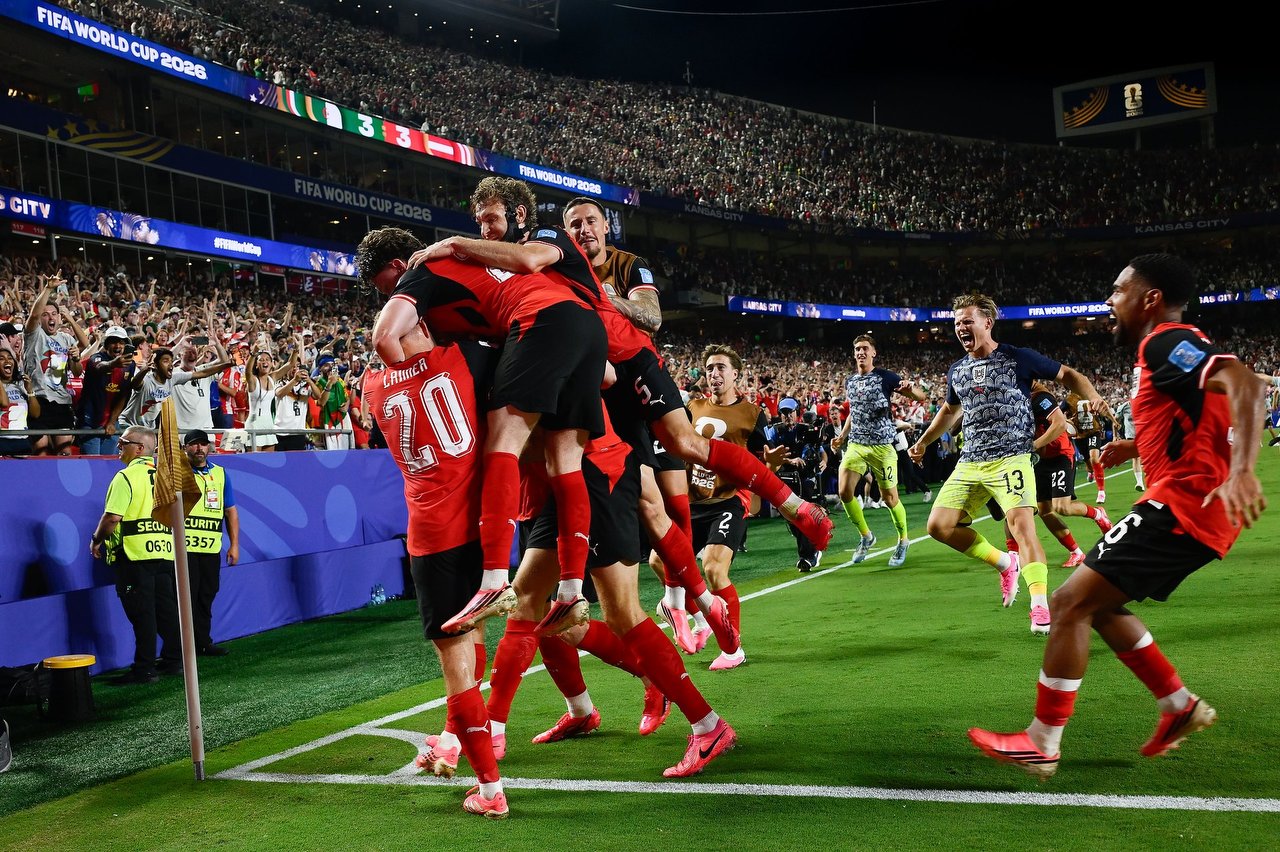
The Austrian team celebrating their goal near the end of stoppage time, giving them a tie with Algeria. This was shot with my Nikon 24-120mm lens, and the reason I had it on my lap the entire game.
For all of the matches, whether I was on the field or up above, I used my Nikon Z9 cameras in Manual exposure and Auto ISO. Keeping the aperture wide open, I could change shutter speed as needed and the camera would shift the ISO to consistently give me a good exposure. That range went from 1,000-10,000 ISO, depending on the amount of light, the aperture of my lens and the shutter speed I was using. From above, I shot action at anywhere from 1/1600 to 1/2500, keeping the shutter speed high to minimize blur I might cause as I had to swing that big lens quickly at times to follow the action (like from a player taking a shot to the keeper). On the field, I could shoot slower, down to 1/1000, as the action was easier to follow.
The World Cup is the biggest sporting event on the planet, and I’m grateful I had the opportunity to be involved photographing it. Not just for the chance to make pictures of something special (the first match here featured Messi’s hat trick!), but also to see the incredible amount of work that goes into covering something like that). There’s talk that Kansas City may be in the running to host the women’s World Cup in 2031. If that happens, fingers crossed I’ll be involved then as well!
– If you’d like to see all the photos I shot for the Associated Press during the World Cup games here in Kansas City, you can find them through this link.
(If you like this story, please share it with your friends and let them know about the links on photography that I post on my business Facebook page. I’m also on Instagram, @reedhoffmann. And if you’re curious about the workshops I teach, you can find them here. Finally, you can subscribe to this blog on my home page.)
Why were you using a Sony camera for the remote camera behind the goal? I’m sure Nikon would not appreciate that at all.
Hi Robert. While I’m a lifelong Nikon shooter – and taught Nikon School for 16 years around the U.S. – I’m not an employee (or even a contractor any more). My friends at Nikon were happy to see me working those games, and that’s the only game where I used a non-Nikon camera, because the AP provided the remote cameras.
OK, fair enough, especially if the AP supplied the camera. Other than that, It looks you are still shooting with Nikon cameras and lenses.
What a great experience and great images, Reed!! Thank you for taking us through all of it and sharing so many insightful and helpful details!!
Real nice work, Reed. Your preparedness and professionalism shine. All of us know all the pre-event work and the total engagement for 4 hrs that it takes. You most certainly have proven through your images that you possess that proverbial “IT”.
GREAT Job….I’m Happy for You.
Thanks Kevin.
How awesome and exciting to be able to be close to the action of the World Cup yet hectic and pressure to make sure you got “the shot”.
But your prep and ability to understand what you needed to get “the shot” – equipment, lens, settings and instincts prepared you to get some great pictures Reed! Congrats and thanks for sharing this story.
Thanks Bob!
If I were still editimg Flashpan, I would sure be asking if I could publish this!
Amazing detail on your work!
David Sutherland
Thanks David!
Reed, great story & images!