
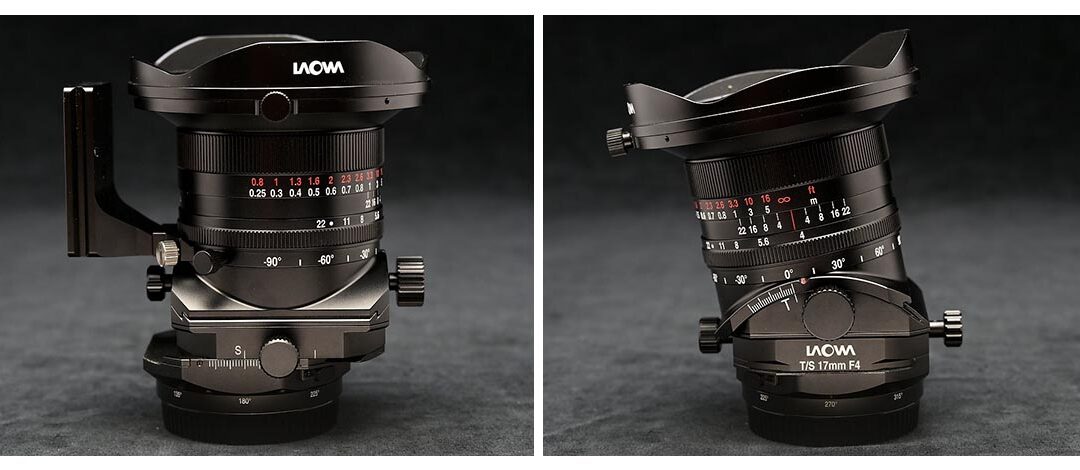
When I got into 35mm film photography in the 1970s, a 35mm lens was the standard wide-angle and 28mm was considered very wide. But I found, and fell in love with, a Vivitar 21mm f/3.8 lens. Why? Super-wide lenses let you create photos other people can’t, and my love affair with them has continued to this day. First 20mm, then 18mm, then 16mm and now 14mm. However, there are some issues that can crop up with wide lenses. That’s why I recently bought a Laowa 17mm f/4 tilt-shift lens. Not only to address those issues, but to add some magic to my photos and challenge me. Here’s why:
The closer you get to a tall subject with a wide-angle lens, the more the subject looks to be falling backwards if you tilt the camera up for the photo. It’s especially noticeable with tall buildings, or if you get low when photographing a person. That has to do with the fact that the sensor (or film) is not parallel to the subject. You can also start seeing curvature and distortion at the edges with wide lenses (and fisheye lenses do that to an extreme).
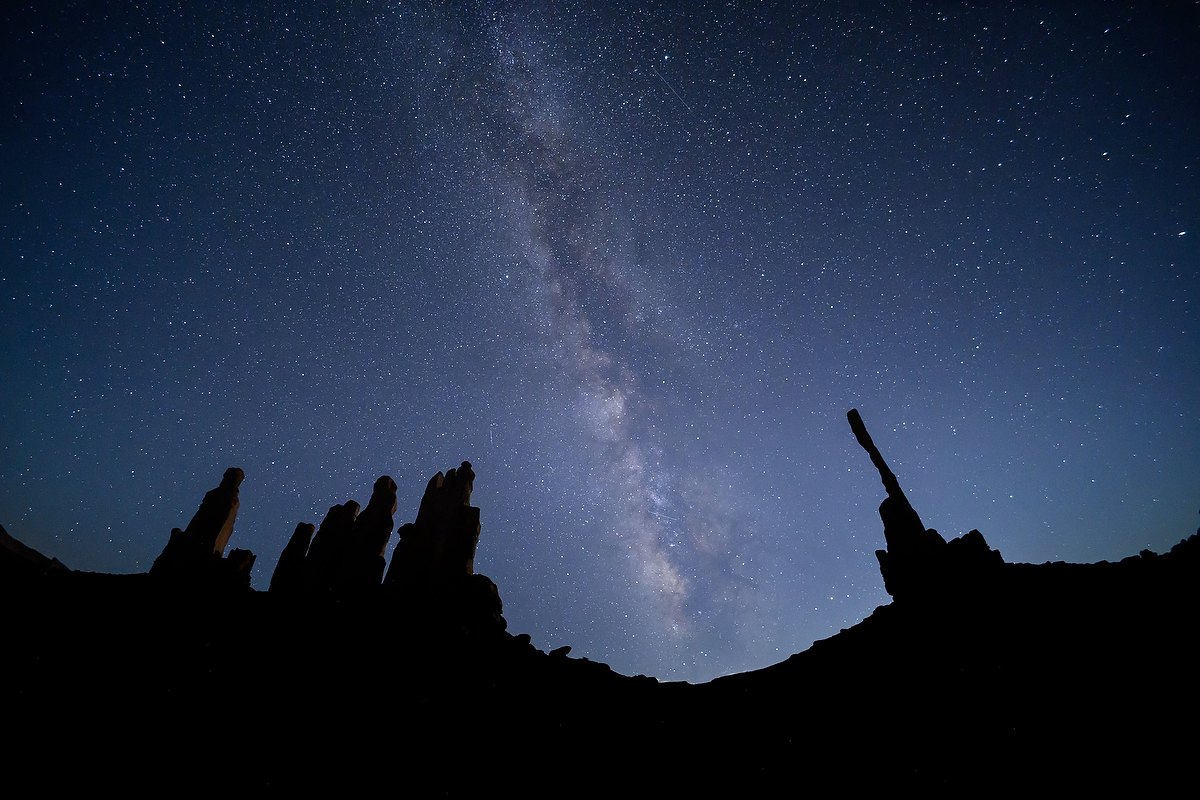
I made this photo with a 10mm fisheye lens on my Nikon Z8 in Monument Valley last year. While any curvature is hidden in the upper part by the sky, you can see its effect along the horizon.
There are various ways to help minimize those defects, like keeping the camera level (not pointing up or down, maintaining parallel orientation), moving further away, and/or using a higher position to photograph from. Another, though, involves physical movements within the camera or lens itself.
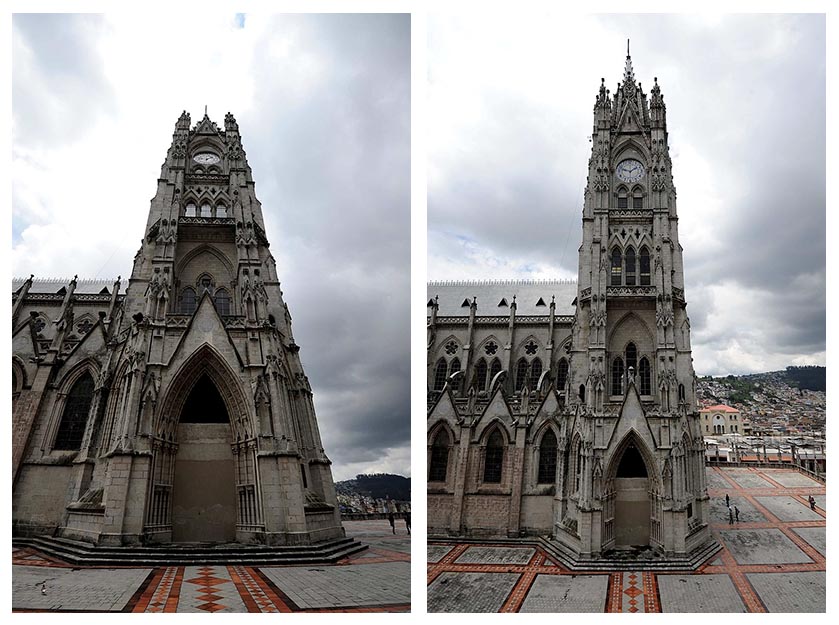
Here’s a pair of photos of Quito, Ecuador’s Basilica del Voto Nacional. On the left I’m at the base shooting up, with a 24mm lens. On the right, I was able to take stairs up to about a third of its height, which resulted in less “lean” in the Basilica, because I didn’t have to tilt the camera up as much.
Back in the days of view cameras (and some are still in use today), that was done by shifting the front and/or back plane of the camera. For a tall building, shooting from ground level and shifting the front plane up would help negate that “falling backwards” look. That’s what the “shift” part of today’s tilt-shift lenses were designed for, to allow photographers to create a similar look with more modern cameras.
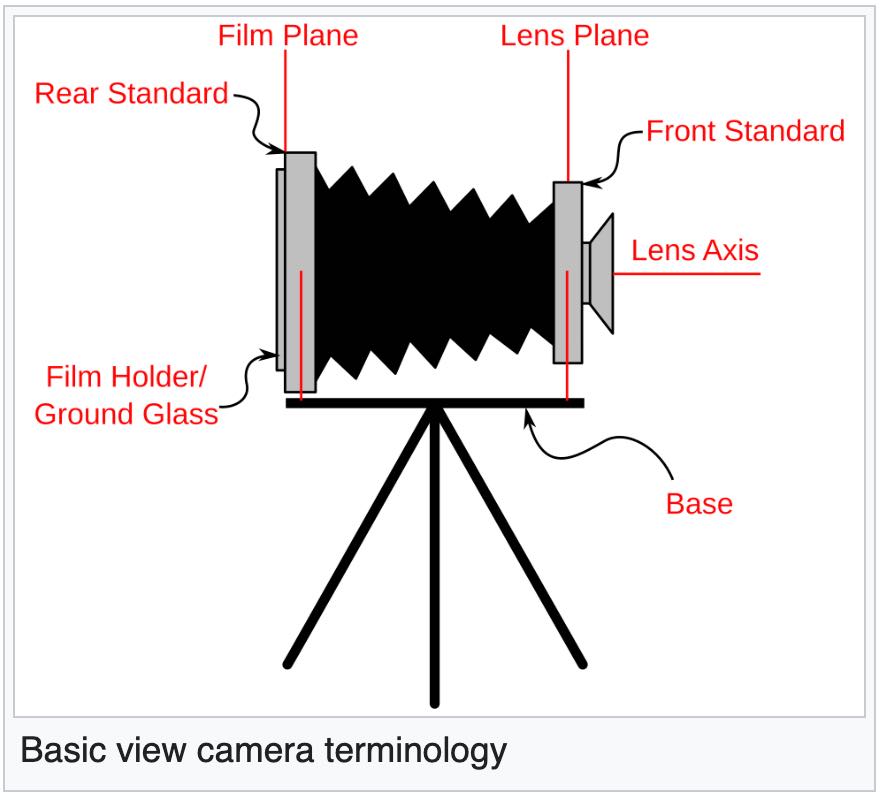
In this diagram from Wikipedia, you can see how a view camera works. Being able to shift or tilt sections of the camera allows you more control over perspective.
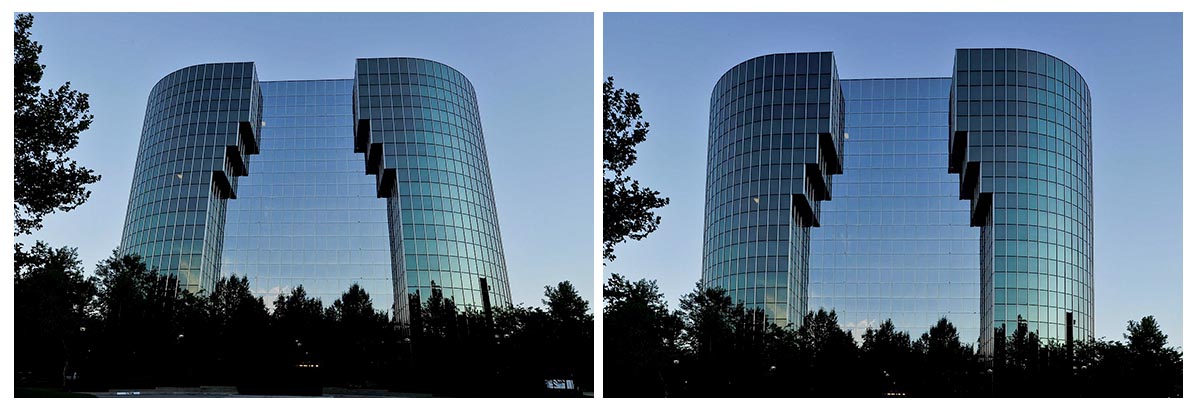
A few years ago I borrowed a Nikkor F-mount 24mm PC (“Perspective Control,” or tilt-shift) lens to photograph this building. On the left, I made no adjustments to the lens. On the right, I shifted it up to correct the perspective. I chose to buy the Laowa lens because I wanted a Z-mount, and also wanted a wider view (17mm vs. 24mm).
View cameras could also “tilt” the lens or film plane, to create greater depth of field without having to use tiny apertures. This the “tilt” part of tilt-shift lenses. And most of these lenses today can be rotated after mounting on the camera, allowing you to use the shift feature for both horizontal and vertical photos, and do the same with tilt. However, that’s not all that photographers do with these lenses.
There’s an old saying: “an experienced photographer knows when to break the rules to make interesting pictures.” The “proper” use of tilt-shift lenses is explained above, but what if you go the other way, and break the rules. Instead of creating greater depth of field, you adjust a tilt-shift’s controls to create much shallower depth of field. The most common use of this is to create a “miniatures” look.
When photographing small things, you have to get close, which means that even at small apertures, you end up with incredibly shallow depth of field (what appears in focus). The further away you get, especially with a wide-angle lens, the harder it becomes to have shallow depth of field, even using a wide aperture. But by playing with the tilt mechanism, you can create that miniature look, even from far away with a wide-angle lens.
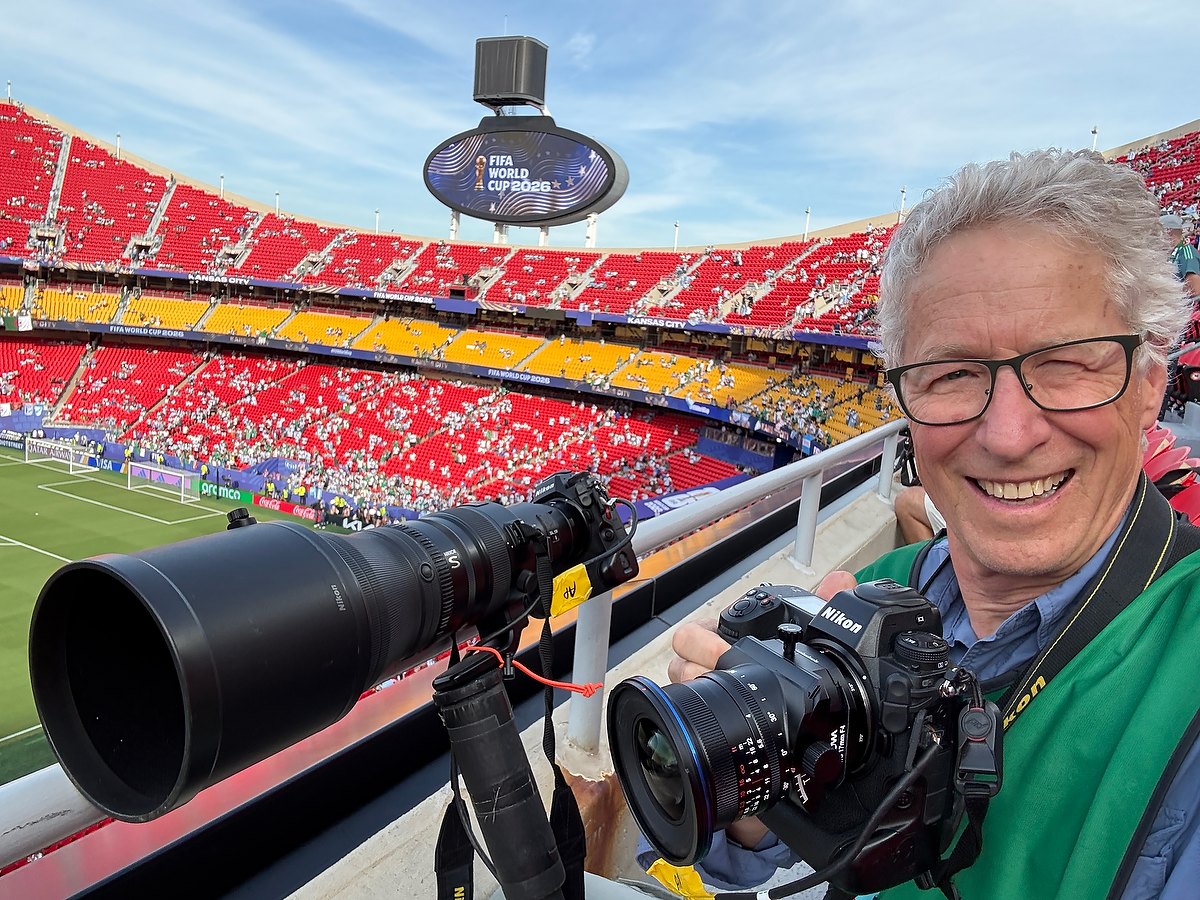
Covering my first World Cup match here in KC June 16, between Argentina and Algeria, I brought along the Laowa tilt-shift.
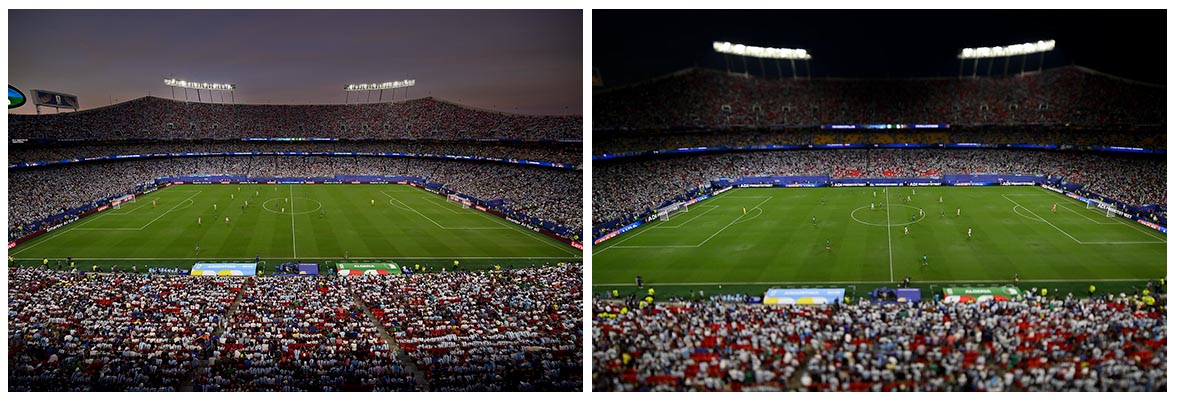
Most of the wide shots I made during that match were with a regular wide-angle lens, like at left with the Nikkor 14-30mm f/4 lens. After half-time, though, I put the tilt-shift on for a few frames, creating that “miniature” look.
In addition to the miniature look, playing with both the tilt and shift mechanisms let you create photos, that again, you can’t with regular lenses.

I played around with both tilt and shift to make this photo during the Palouse trip I recently led. Nikon Z8, Aperture Priority, Sunny white balance, ISO 125, 1/1000 at f/4 in Matrix metering, -1.3 EV, Laowa 17mm tilt-shift lens.
Another option is using the shift feature to build a panorama photo. With the camera on a tripod, and leveled, you shoot a series of frames while “shifting” the lens from one side to the other. This helps avoid the distortion issues you can run into creating traditional, multi-image panoramas.
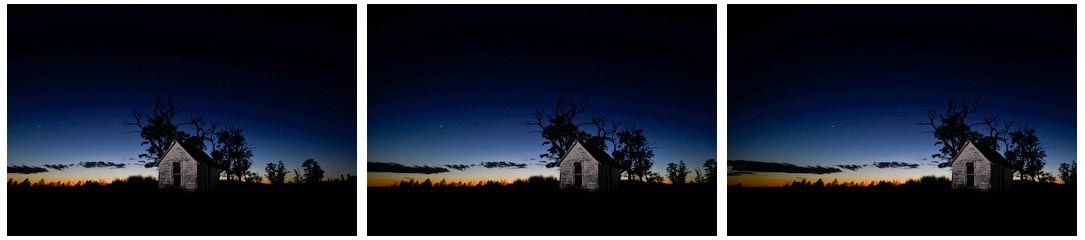
I shot these three frames on a tripod, not moving the camera, but instead shifting the lens some from right-to-left after each frame. Nikon Z8, Manual exposure, Sunny white balance, ISO 250, one-second at f/4, Laowa f/4 tilt-shift 17mm lens.

Combining those three frames in Photoshop using Photomerge, resulted in this wider, higher-resolution image.
Are there downsides to tilt-shift lenses? Sure. They’re bigger and heavier than a “normal” lens of that same focal length and aperture. Since you’re moving where the image circle is projected into the back of the camera, it needs to project a bigger circle. That means more glass. And, they take time and patience to use. You need to loosen locking knobs, adjust the tilt and/or shift knobs for the look you’re trying to get, then lock the knobs down. And, they’re manual, so focus and exposure have to be done the old-fashioned way. But that was one of the appeals to me – slow down, work more intentionally, work differently.
Many of the workshops I lead have me taking people to the same places over and over. That’s great for the clients, because I know what to expect and can suggest the best places to make photos. But I don’t need to shoot the same photos again and again. Adding this tilt-shift to my kit will force me to approach those places in a different way.
I like to say that one of the great things about photography is that if you’re willing to keep learning, there are always new things to try. For me, a tilt-shift lens does that nicely. What will it be for you?
(If you like this story, please share it with your friends and let them know about the links on photography that I post on my business Facebook page. I’m also on Instagram and Twitter, @reedhoffmann. And if you’re curious about the workshops I teach, you can find them here. Finally, you can subscribe to this blog on my home page.)
Great story. Fun stuff. See you in France.
Great Story!