
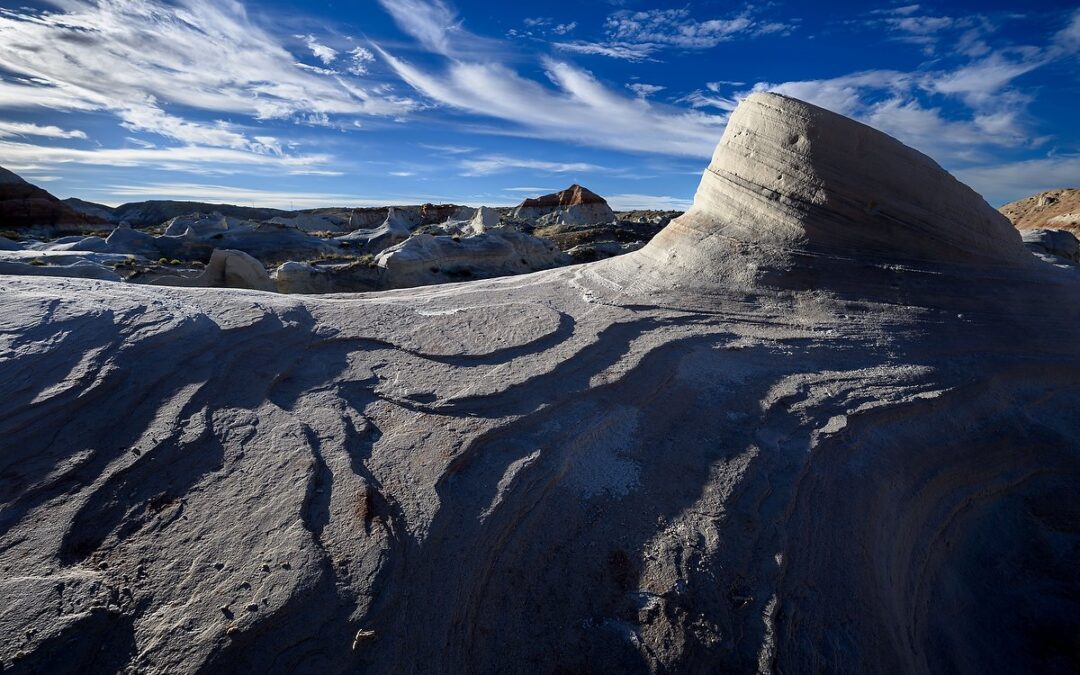
I’m often asked, “Of all the places you’ve photographed, what’s your favorite?” That’s a hard question to answer because some places are great for wildlife photography, others for interesting people and culture and still others for incredible landscapes. If it’s landscapes, though, I have a ready answer – the American Southwest. That area has some of the world’s most fascinating landscapes, and is why I lead three different trips there. I’ve just returned from one of them, where we started and ended in Phoenix, visiting Page, Bryce Canyon and Monument Valley. Here’s what we did on that trip…
Most U.S. trips I run last six days. The first is the arrival day, followed by four full days of shooting, and the sixth is for travel home. On this trip, though, everyone arrived in Phoenix early, the day before we started, which allowed us to do more on what is normally the arrival day. Instead of just driving to Page in time for a sunset shoot at Horseshoe Bend, I added a stop at Wupatki Monument.
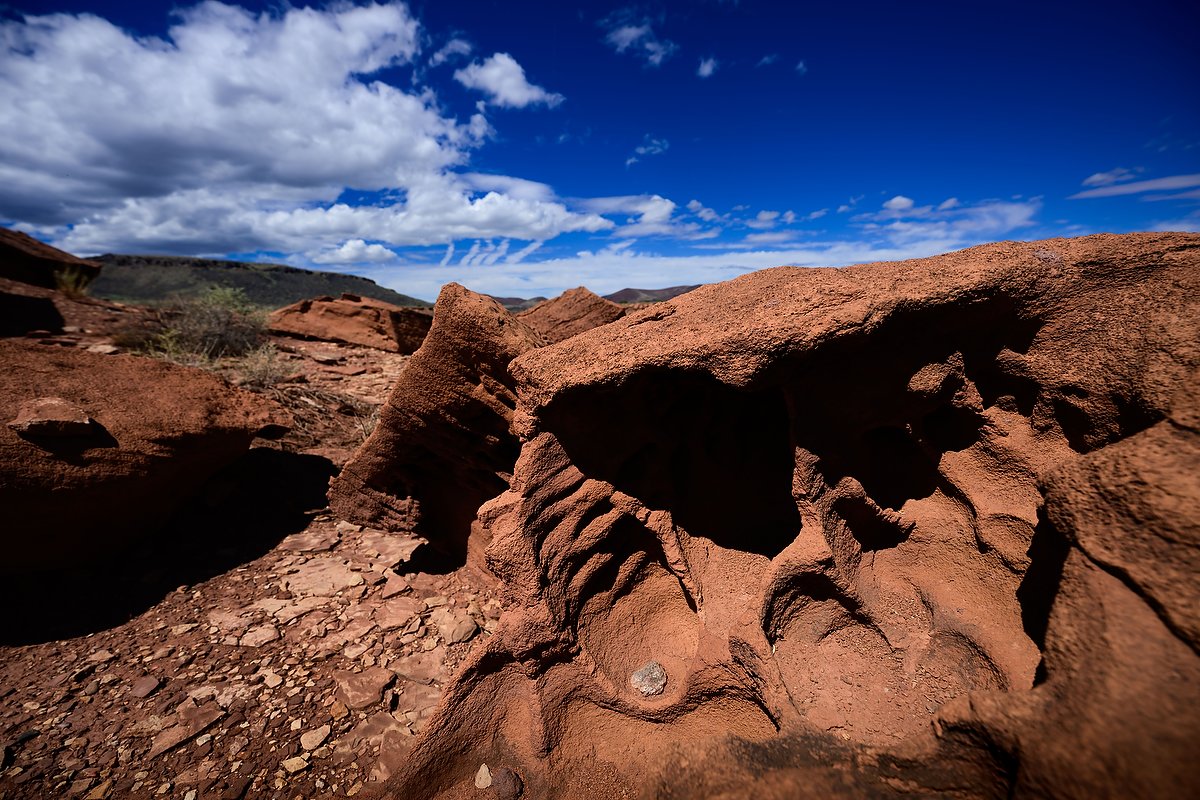
The ruins at Wupatki National Monument are the draw, but I find the eroded sandstone surrounding them just as intriguing. Nikon Z8, Aperture Priority, Sunny white balance, ISO 64, 1/1000 at f/5 in Matrix metering, -1.3 EV, Nikkor Z 14-24mm f/2.8 S lens at 14mm.
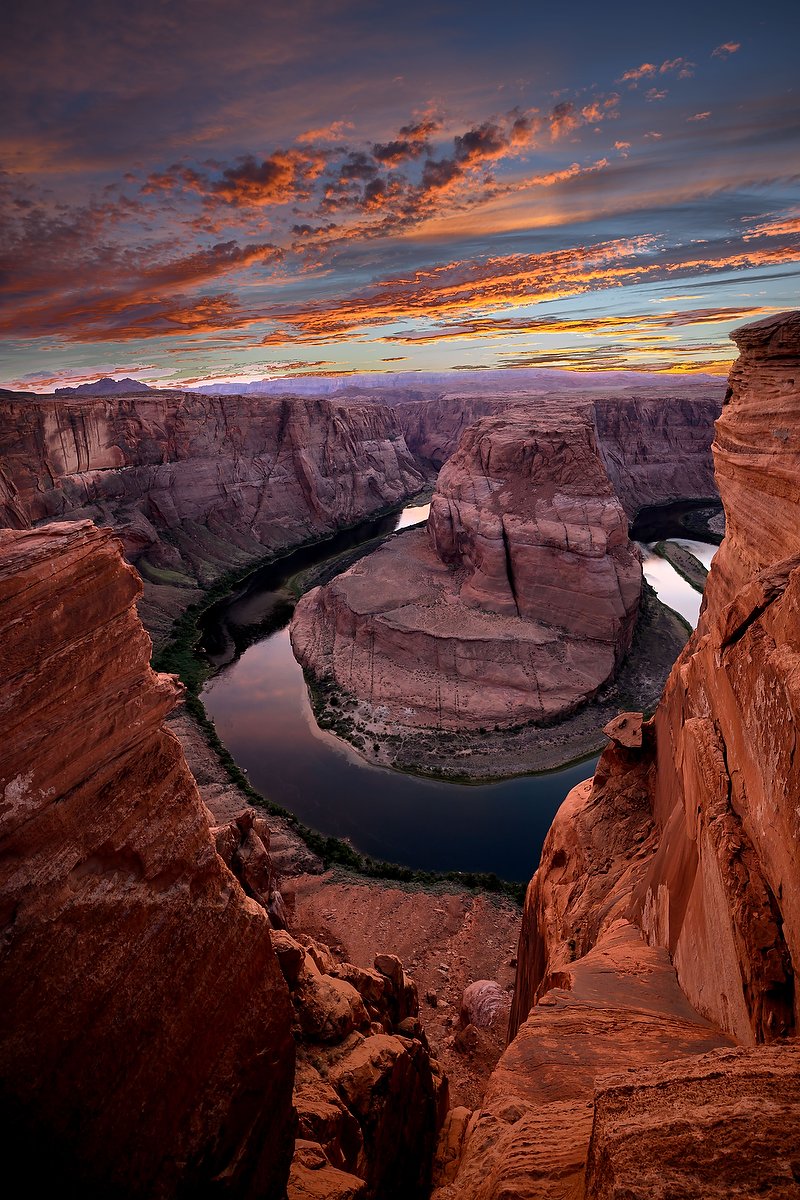
Just what we were hoping for at Horseshoe Bend – a nice sunset. Nikon Z 8, Aperture Priority, Sunny white balance, ISO 100, 1/20 at f/5 in Matrix metering, -2.3 EV, Nikkor Z 14-24mm f/2.8 S lens at 15mm.
Day two, we were up well before sunrise so we could drive to the Toadstools for first light. After spending time there, we headed to Wirepass Trail to visit a slot canyon. After a break for lunch (and naps!), we finished the day among some rock formations near Page.
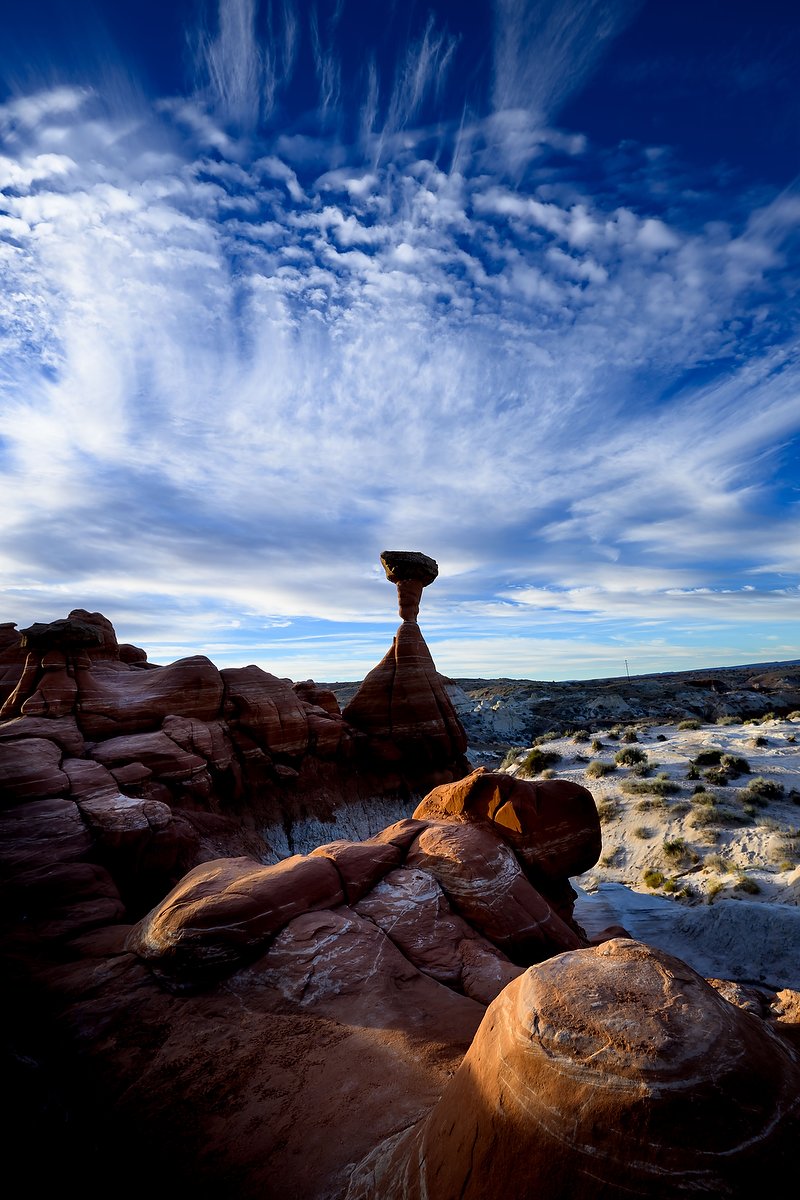
I always remind my students that you need to ask, “what’s unique about where I am right now?” At the Toadstools there are fantastical rock formations, but the sky at sunrise was what made our photos stand out this morning. Nikon Z8, Aperture Priority, Sunny white balance, ISO 64, 1/50 at f/9 in Matrix metering, 0.0 EV, Nikkor Z 14-24mm f/2.8 S lens at 14mm.
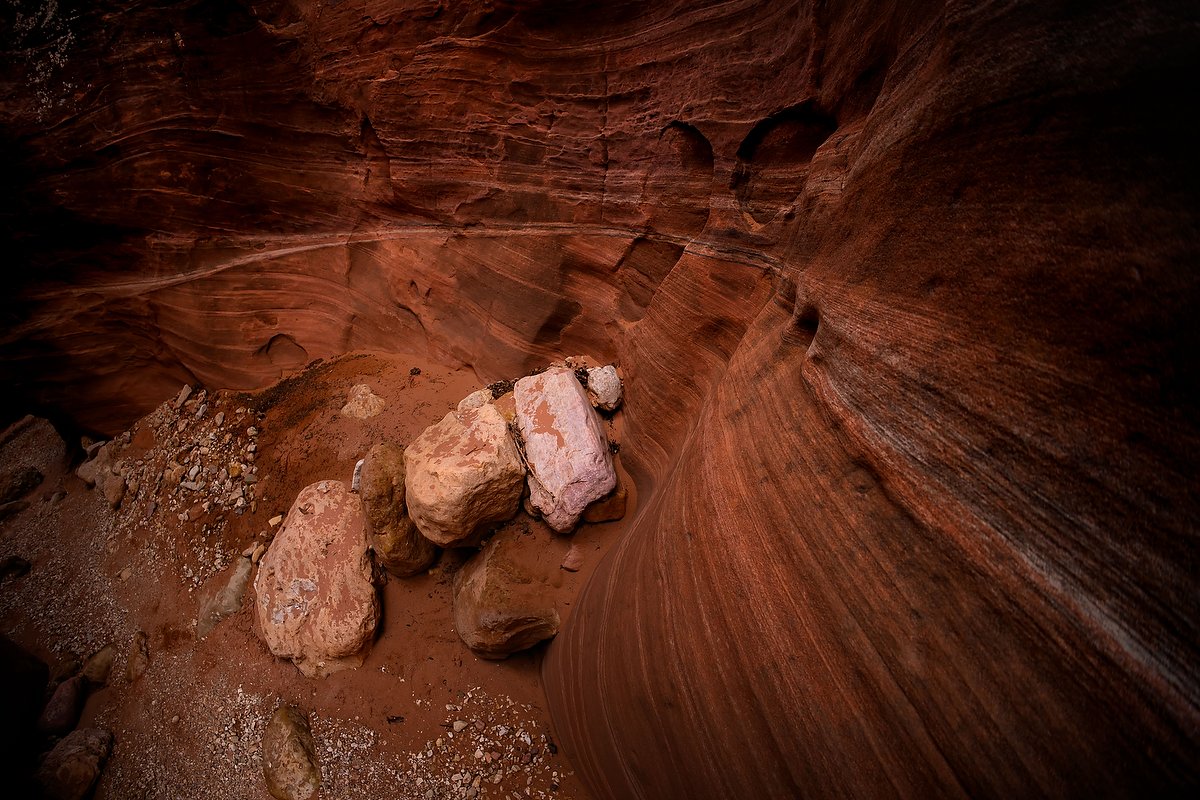
The slot canyon at the end of Wirepass Trail always offers some nice opportunities. Changing our cameras’ white balance setting to “Shady” helped bring out the color. Nikon Z8, Aperture Priority, Shady white balance, ISO 200, 1/30 at f/5.6 in Matrix metering, -1.0 EV, 7Artisans 10mm fisheye lens.
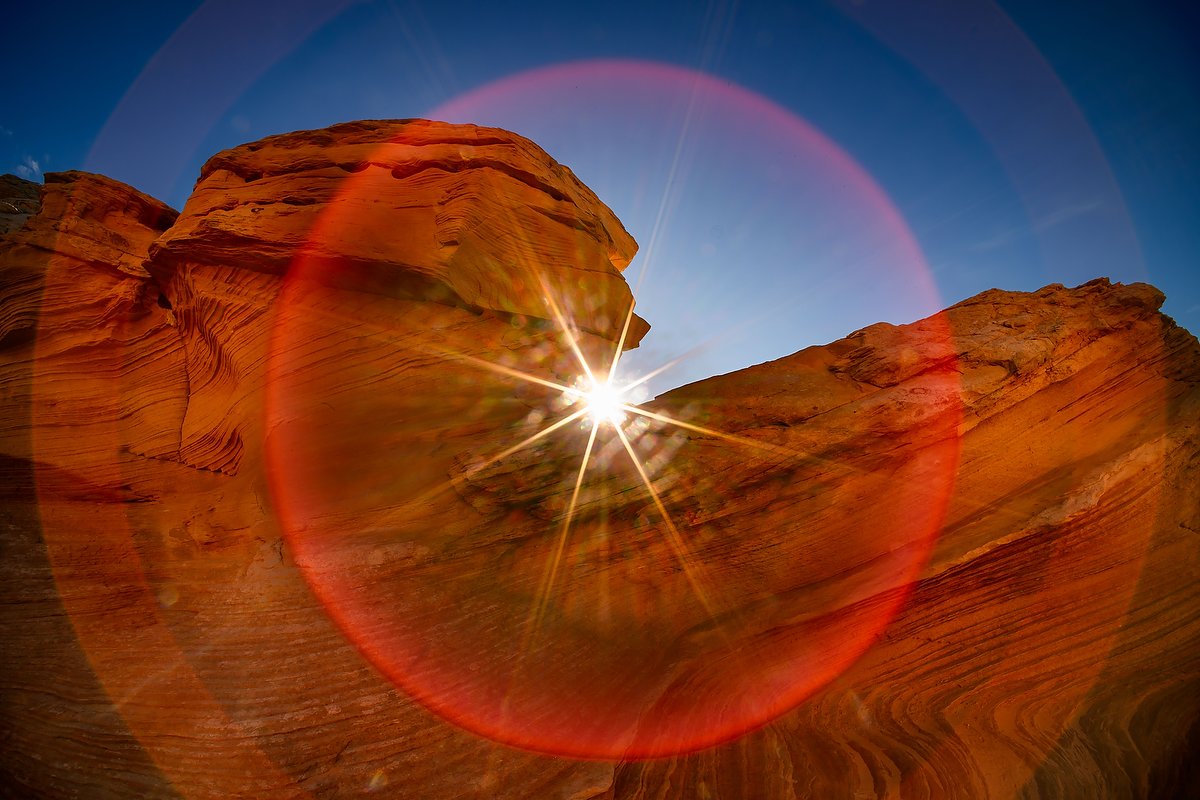
After some internet sleuthing, I found a new area for us to explore near Page. Trying to create a sunstar with my fisheye lens, I got these interesting circular flares as well. Nikon Z8, Aperture Priority, Shady white balance, ISO 125, 1/50 at f/16 in Matrix metering, -0.7 EV, 7Artisans 10mm fisheye lens.
Day three, after breakfast at the hotel, we left Page for Bryce Canyon. Arriving late morning, I introduced everyone to a couple of my favorite areas in the national park before a late lunch and checking into our hotel (just outside the park). After another afternoon break, we returned to the park for sunset and night photography.
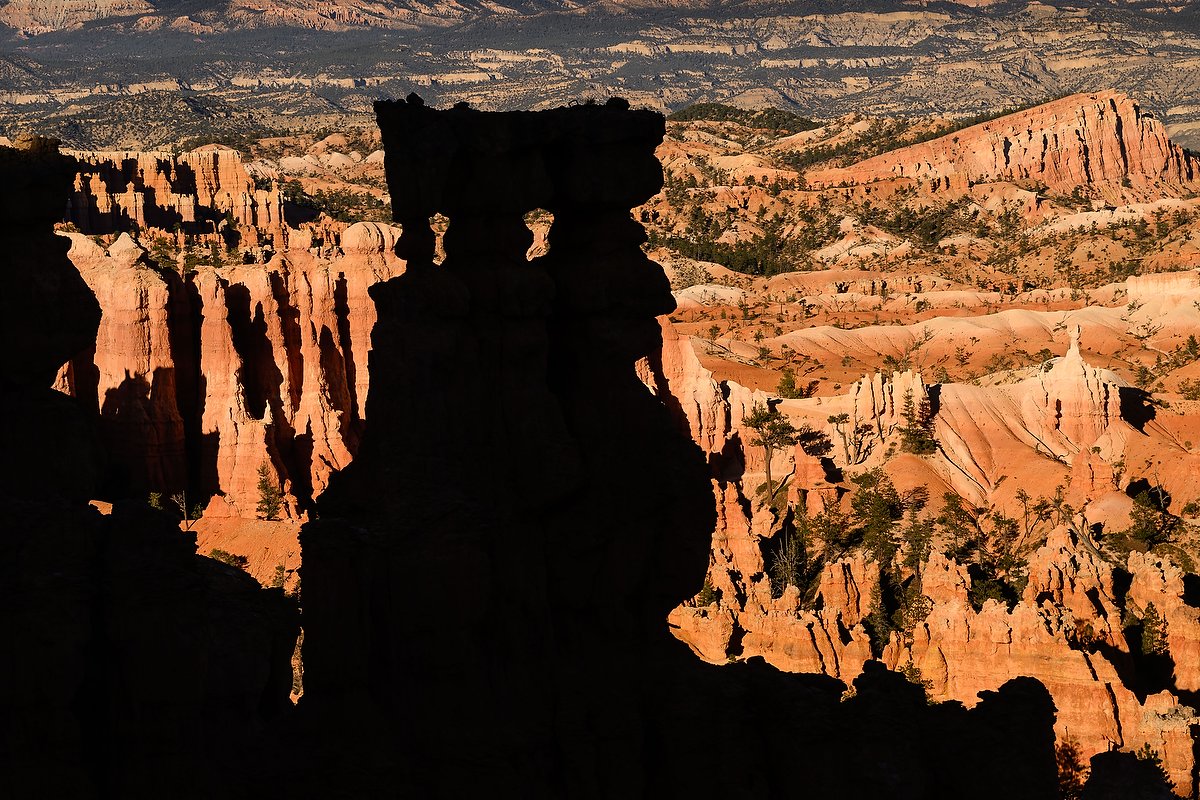
Walking a short distance down the Navajo Trail at Sunset Point allowed me to silhouette some rock features against the mass of hoodoos at Bryce. Nikon Z8, Aperture Priority, Shady white balance, ISO 80, 1/400 at f/10 in Matrix metering, -2.0 EV, Nikkor Z 28-400mm f/4-8 VR lens at 89mm.
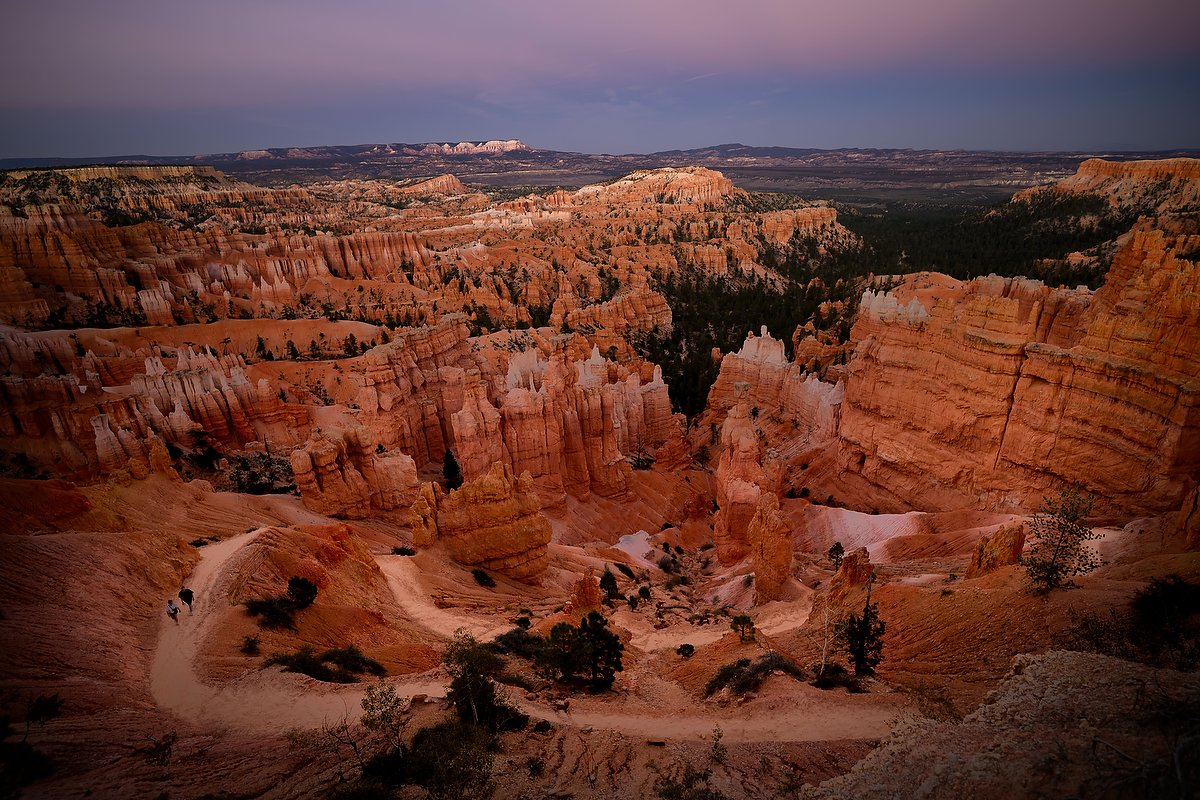
Bryce is beautiful in any light, but I always marvel at how much subtle color and detail comes out after sunset. We ate sandwiches for dinner near Sunset Point so we’d be ready for this. Nikon Z8, Aperture Priority, Shady white balance, ISO 125, 1/20 at f/2.8 in Matrix metering, -1.0 EV, Viltrox 16mm f/1.8 lens.
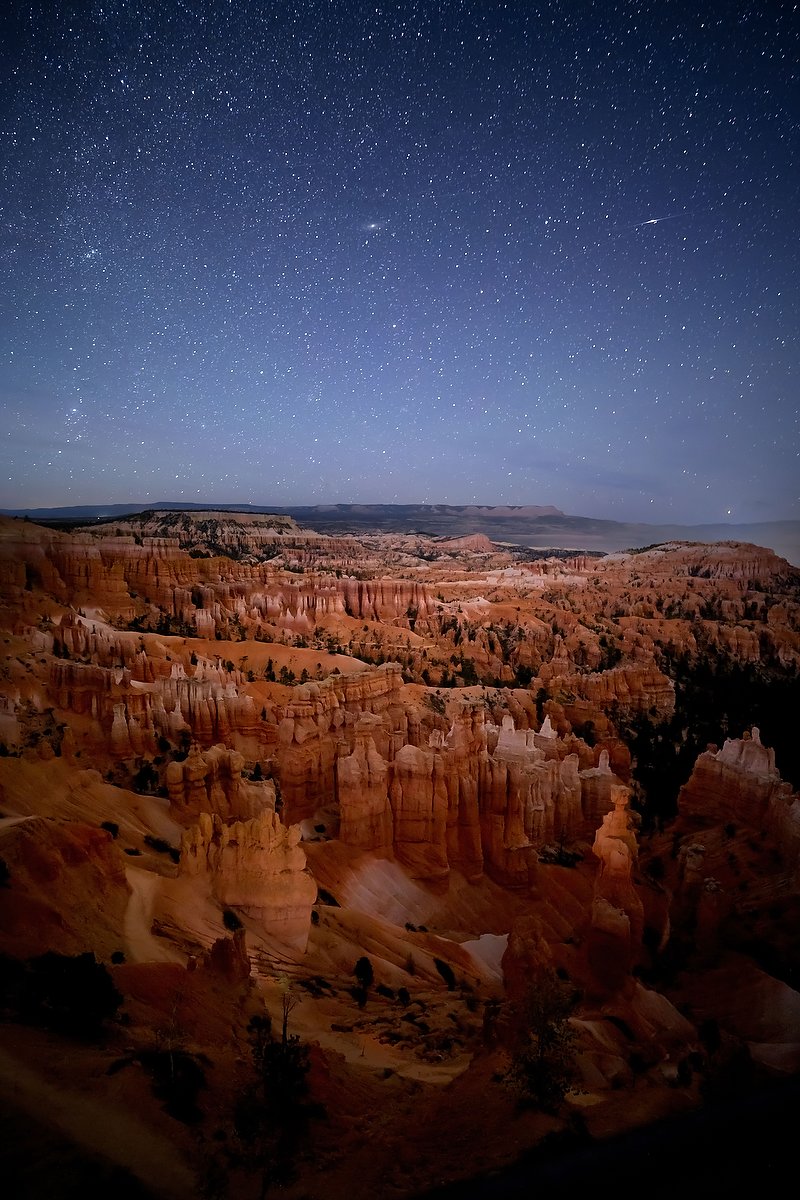
We then stayed well into the evening to use our tripods for some night photography under the moonless sky. Nikon Z8, Manual exposure, Sunny white balance, ISO 5000, 30-seconds at f/1.8 in Matrix metering, Viltrox 16mm f/1.8 lens.
Day four saw us up before sunrise once more, returning to the park for early morning light. From there it was back to the hotel for breakfast, then loading the cars for the four-hour drive to Monument Valley. After lunch we checked into our hotel in Kayenta, then left to photograph some areas outside of Monument Valley. The next day would be a long one, so we wrapped up early to give everyone the opportunity for a good night’s sleep.
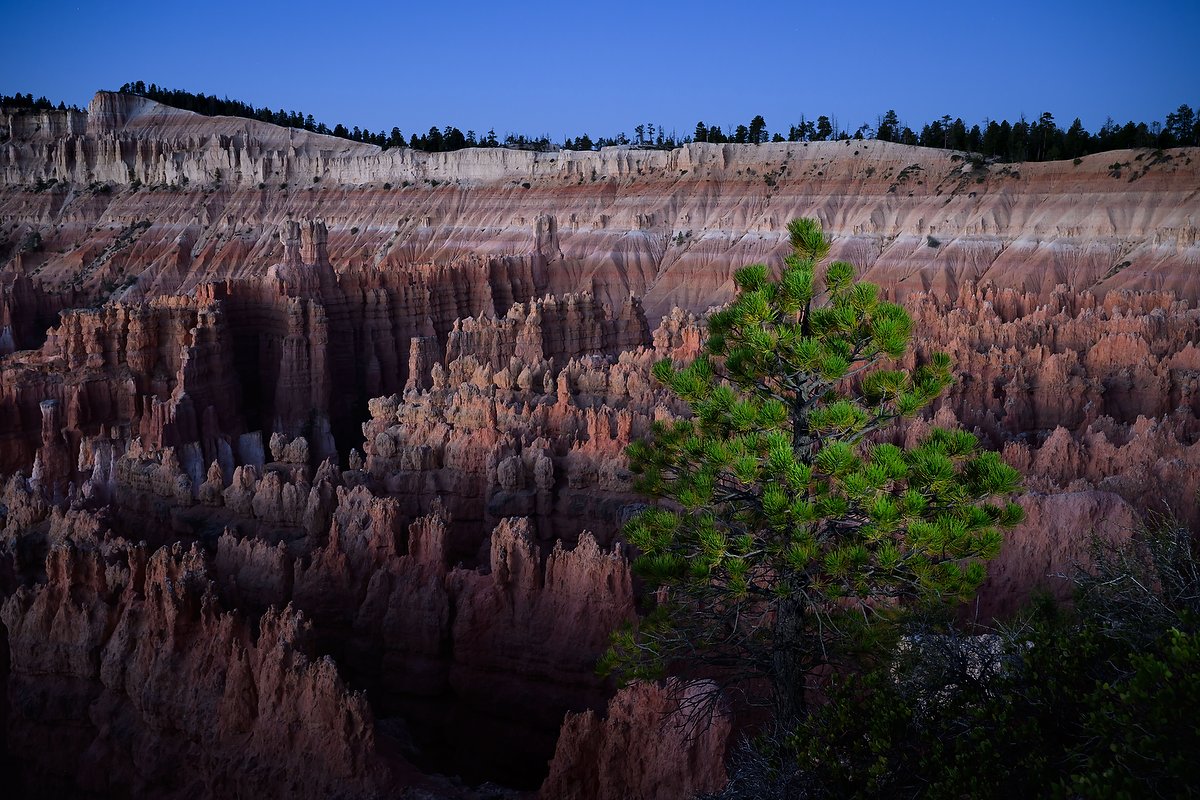
Back at Sunset Point for sunrise, I used the self-timer on my camera, mounted on a tripod, to move off to the right and light this small pine tree with a flashlight. Nikon Z8, Manual exposure, Sunny white balance, ISO 500, 8-seconds at f/5.6, Nikkor Z 24-70mm f/2.8 S lens at 35mm.
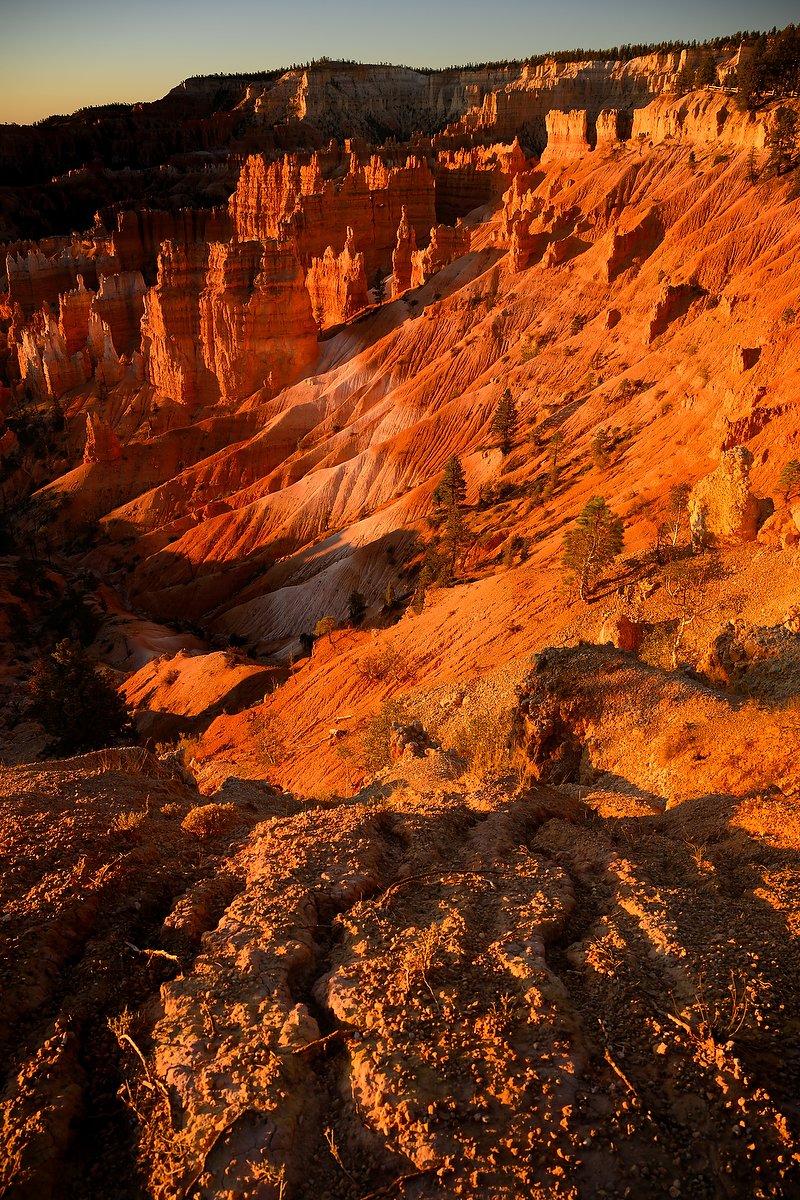
Once the sun was up, that hard, low-angle light created strong shadows to bring out both the texture and color of Bryce. The entire story of Bryce is one of erosion, which is why I chose this spot for its foreground. Nikon Z8, Aperture Priority, Shady white balance, ISO 125, 1/60 at f/8 in Matrix metering, -0.3 EV, Nikkor Z 24-70mm f/2.8 S lens at 24mm.
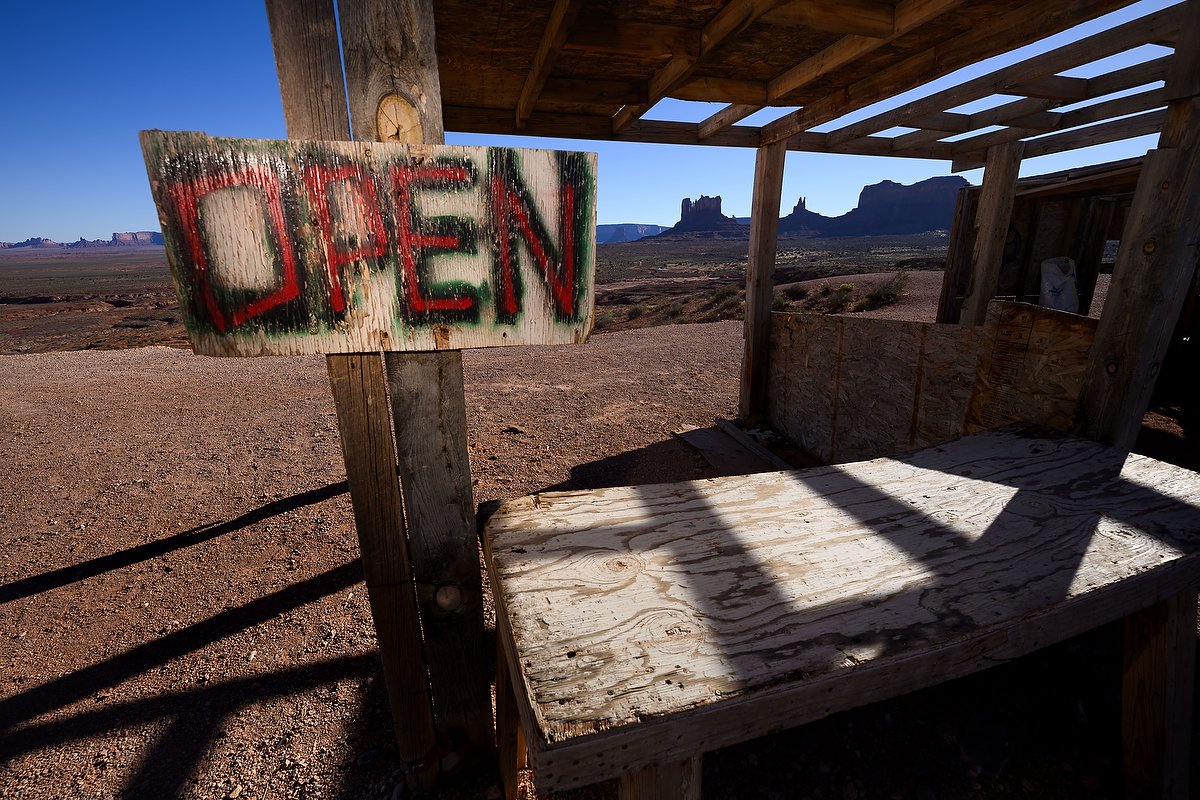
On our way to “Forrest Gump Point,” we stopped at an empty souvenir shack to photograph Monument Valley in the distance. I used a little Godox strobe (I’ll have a blog post about that flash in the future) to light up the sign there. Nikon Z8, Manual exposure, Sunny white balance, ISO 64, 1/160 at f/9, Nikkor Z 14-24mm f/2.8 S lens at 15mm.
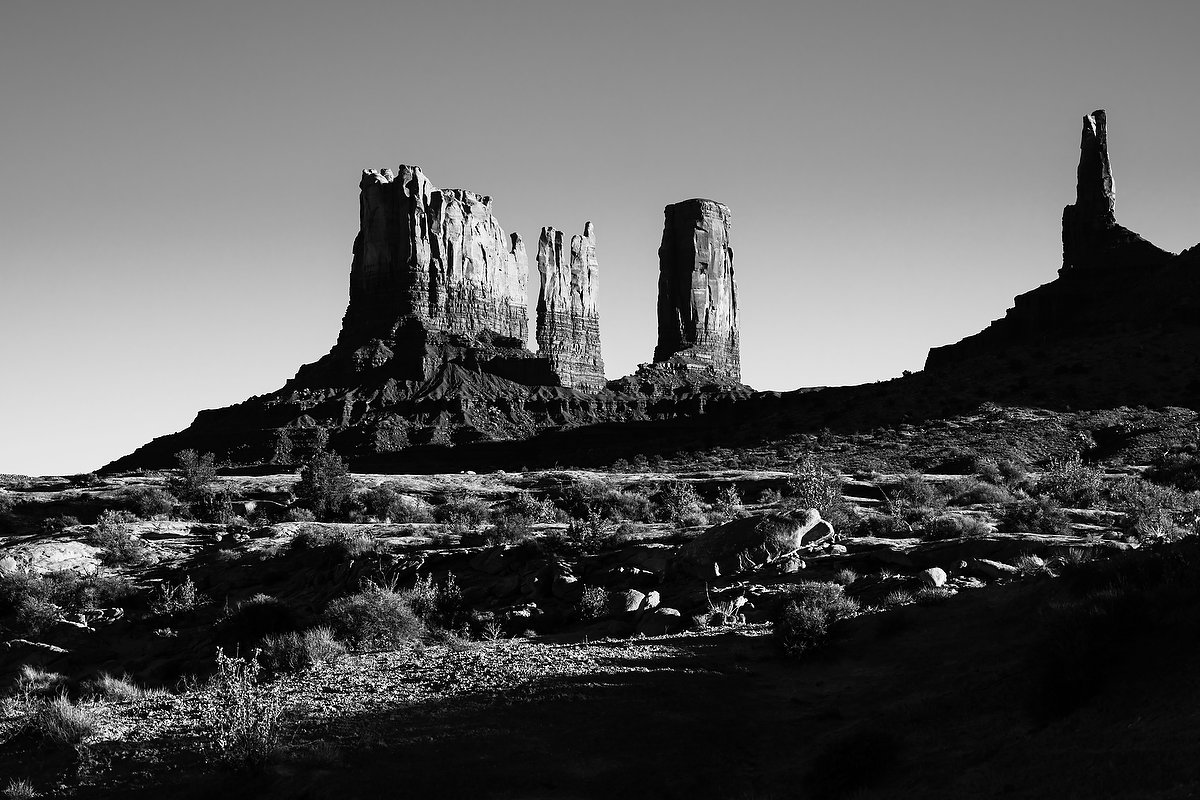
I also remind my group to try the monochrome (black and white) option on their cameras if there’s not much color in some Southwest scenes. The resulting contrast and “old-timey” look works well with these landscapes. Nikon Z8, Aperture Priority, Sunny white balance, ISO 100, 1/125 at f/11 in Matrix metering, -0.7 EV, Nikkor Z 28-400mm f/4-8 VR lens at 89mm.
Day five was our last shooting day, and it was packed! Up once more well before sunrise, we returned to Monument Valley for first light from the overlook near the View Hotel. After that I took the group to Gouldings for breakfast and a little history of the area (the first Hollywood movie filmed in Monument Valley, “Stagecoach,” starring with John Wayne in his debut major role, traces its origins to Gouldings). Returning once more to our hotel, I advised everyone to get some rest, as our longest (and latest) outing of the trip would start that afternoon.
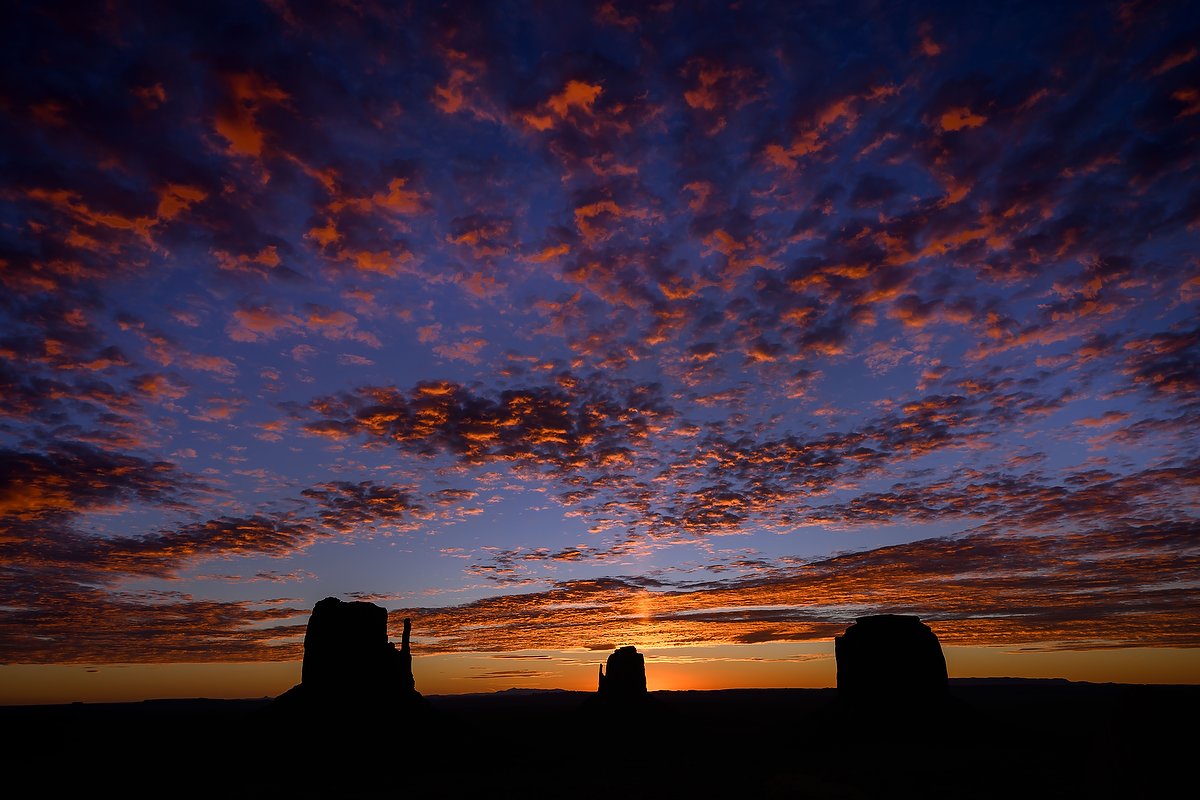
It’s hard to make a bad picture from the overlook near the View Hotel, but when you get a great sunrise, well, wow! Nikon Z8, Aperture Priority, Sunny white balance, ISO 80, 1/400 at f/5 in Matrix metering, -1.3 EV, Nikkor Z 14-24mm f/2.8 S lens at 24mm.
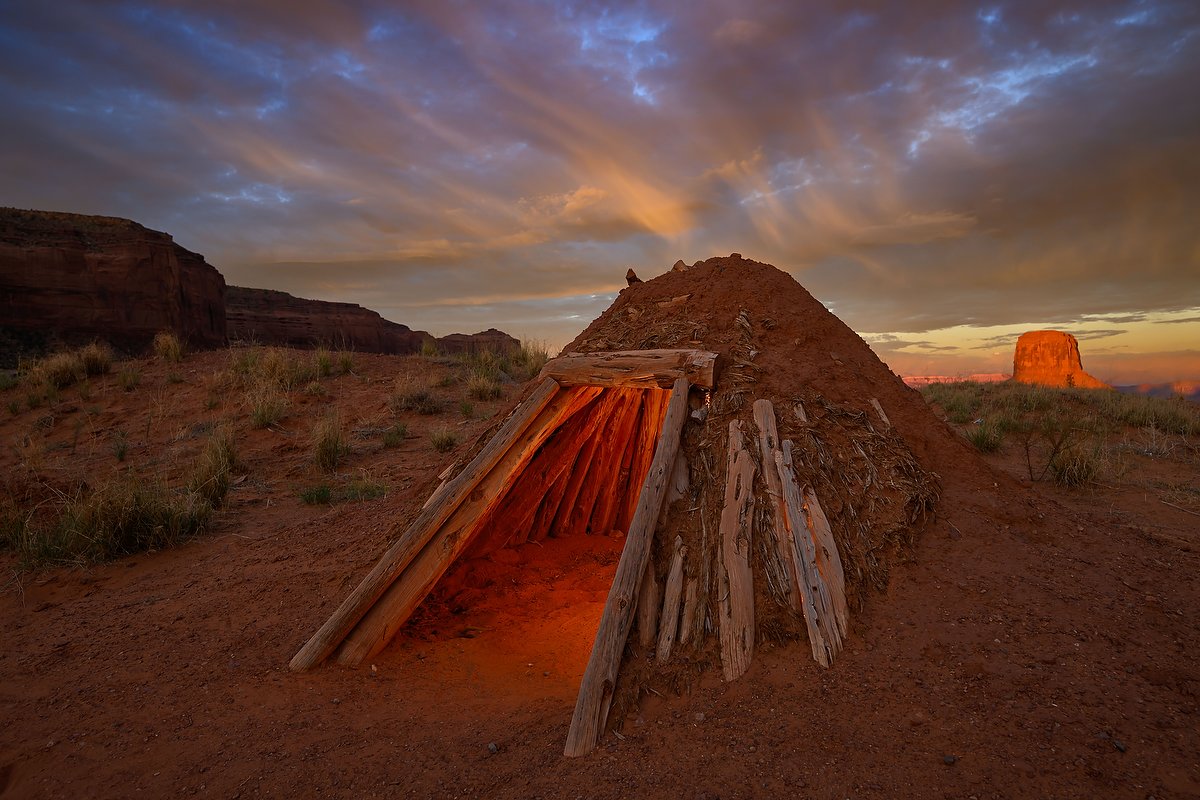
Near the parking lot are some hogans that have been build so people can see traditional Navajo dwellings. I placed that same small strobe inside one to light its interior. Nikon Z8, Manual exposure, Sunny white balance, ISO 160, 1/80 at f/5.6, Nikkor Z 14-24mm f/2.8 S lens at 24mm.
Returning to Monument Valley around 4pm, we began by driving the 17 mile loop road, stopping for photos at various points. Up out of the valley and back to the main overlook before sunset, we had sandwiches for dinner while watching the light fade from the valley.
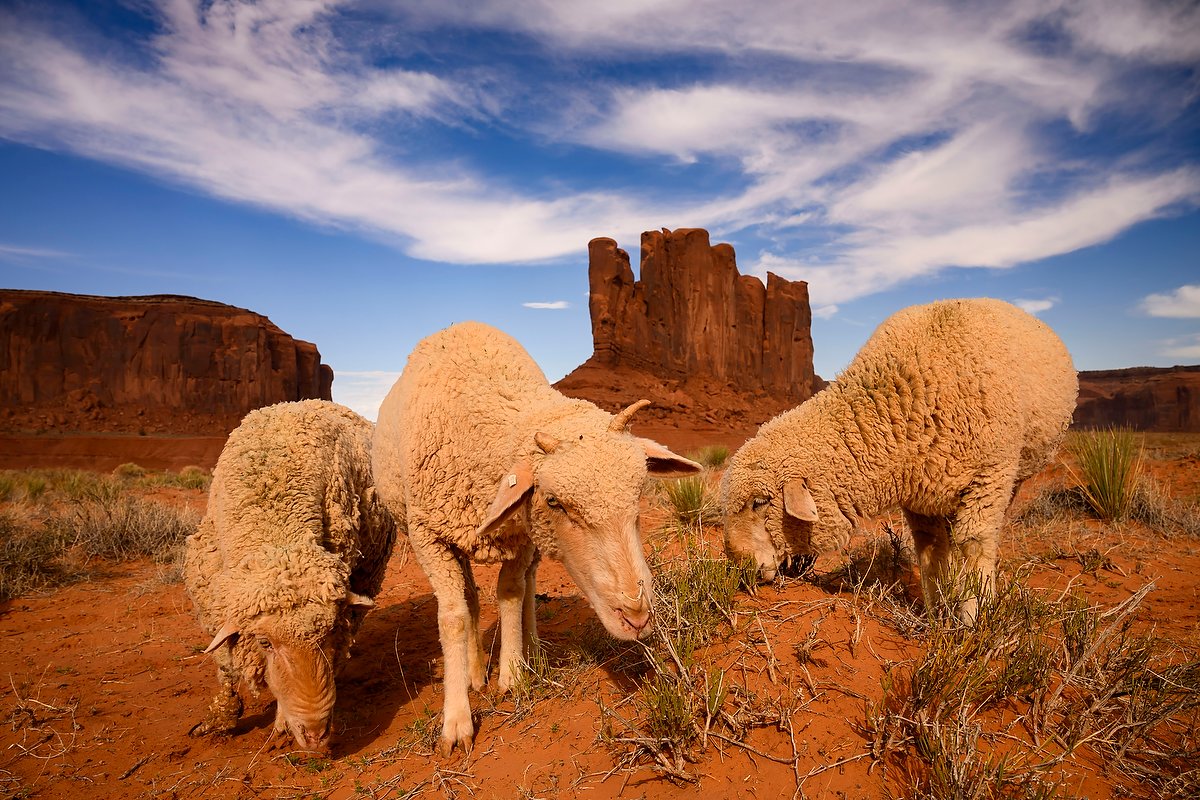
I’d read that the Navajo were a “pastoral” people, with sheep being one of the primary herd animals they raised. So when I saw a number of them near one of our stops, I went out to photograph them. Although they’re not wild, if you simply walk up to them they’ll shy away. So instead, I put myself out in front of where they were headed, crouched down and waited for them to flow past me. Nikon Z8, Aperture Priority, Shady white balance, ISO 200, 1/800 at f/8 in Matrix metering, -0.3 EV, Nikkor Z 24-70mm f/2.8 S lens at 24mm.
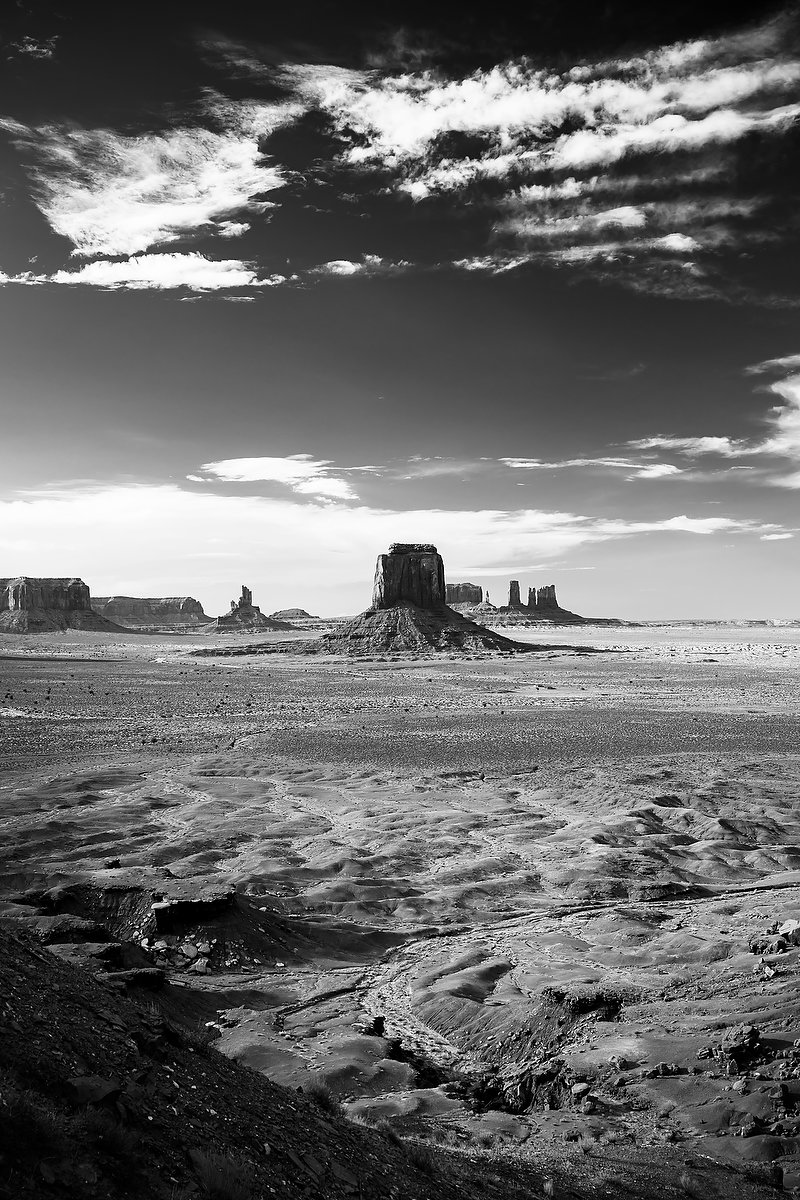
Monochrome again, which works particularly well with a deep blue sky and clouds. Nikon Z8, Aperture Priority, Shady white balance, ISO 125, 1/160 at f/5.6 in Matrix metering, 0.0 EV, Nikkor Z 24-70mm f/2.8 S lens at 32mm.
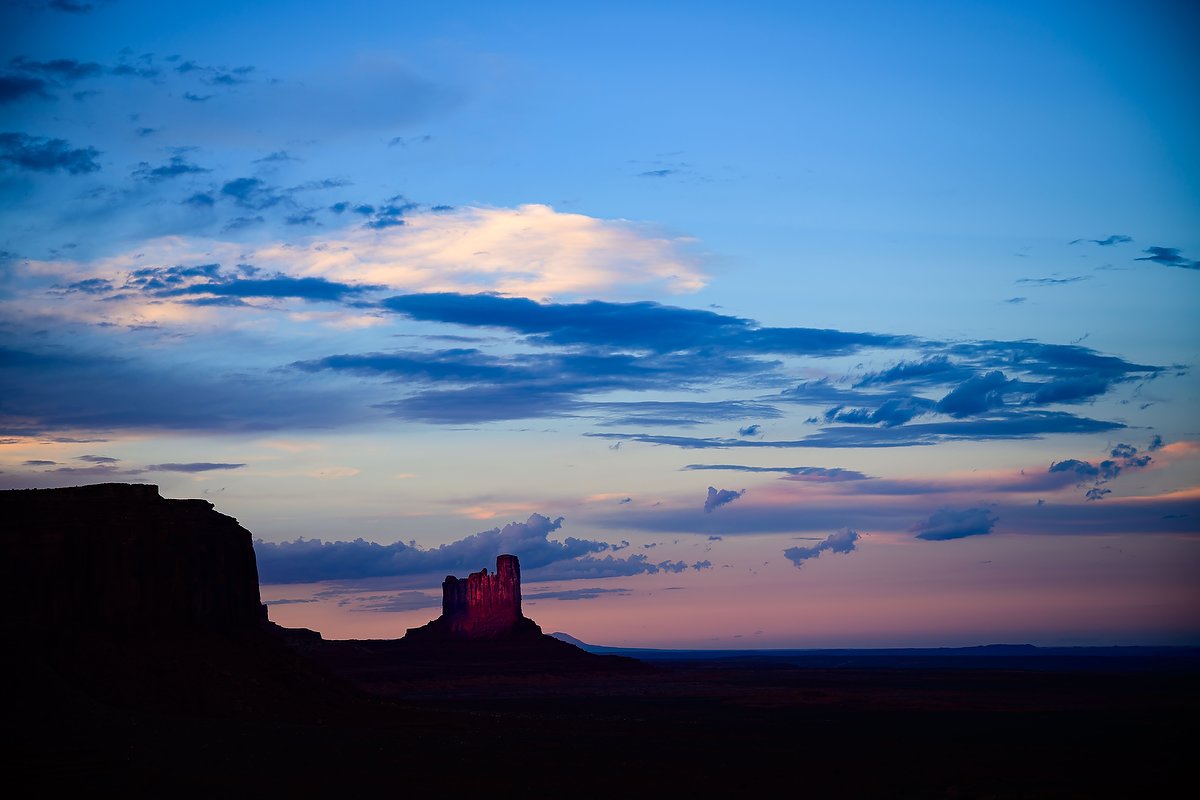
We lost most of the sunlight before it set, but there were brief touches on some of the formations, and a lovely sky. Nikon Z8, Aperture Priority, Shady white balance, ISO 100, 1/100 at f/3.5 in Matrix metering, -0.3 EV, Nikkor Z 24-70mm f/2.8 S lens at 70mm.
About an hour after sunset, the Navajo guides I’d hired (Monument Valley Safari) met us for our night photography session. They took us back down into the valley to visit a few private areas where we photographed the Totem Poles, Ear of the Wind and Big Hogan. We made one more stop to photograph the Mittens on our way out of the valley, making it back to our hotel around 2am.
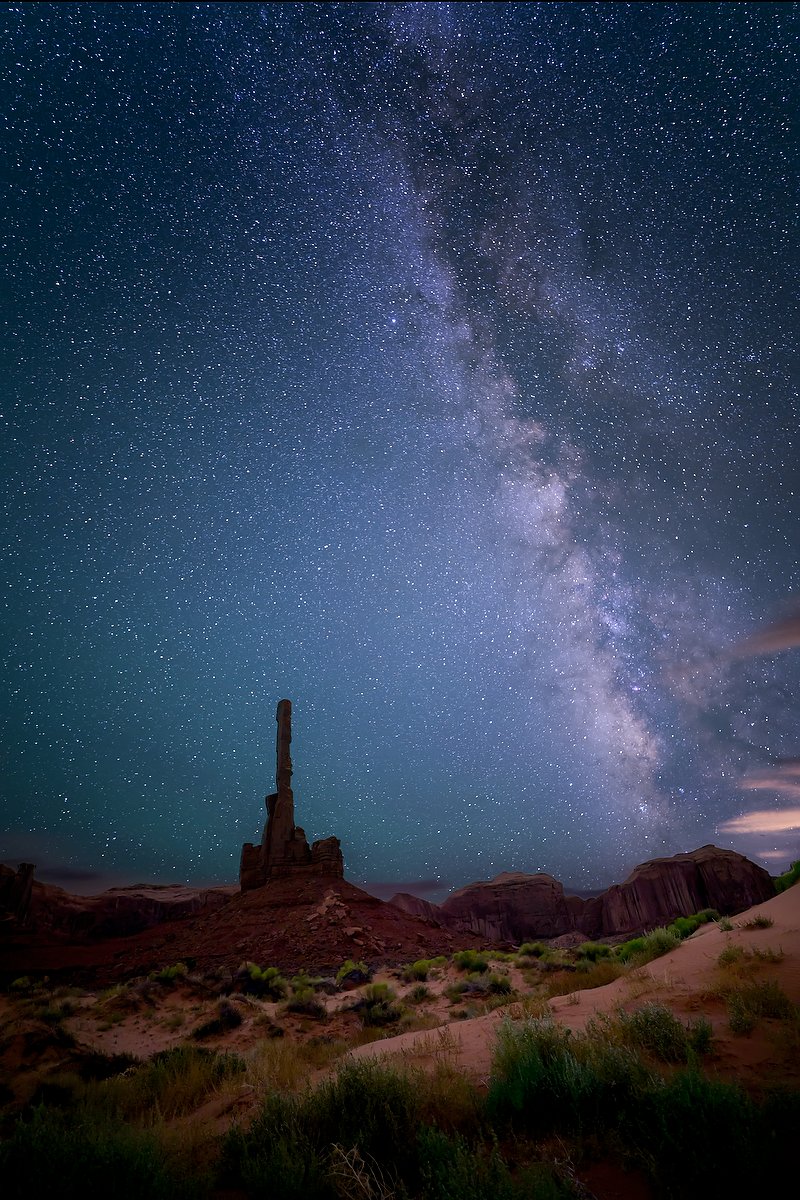
Composite photo of the Totem Pole in Monument Valley shot with a Nikon Z8 and Viltrox 16mm f/1.8 lens. The sky is seven exposures of 20 seconds each at f/1.8, 5000 ISO, combined in Starry Landscape Stacker (it’s for Mac, Sequator is similar software for Windows). I then used Photoshop to layer the sky onto the foreground, which is one exposure of 3 minutes from the same spot, with the same lens, but at f/1.8 and 3200 ISO. With a long enough expsoure, you’d be surprised at how much detail the camera can capture with starlight as the only illumination.
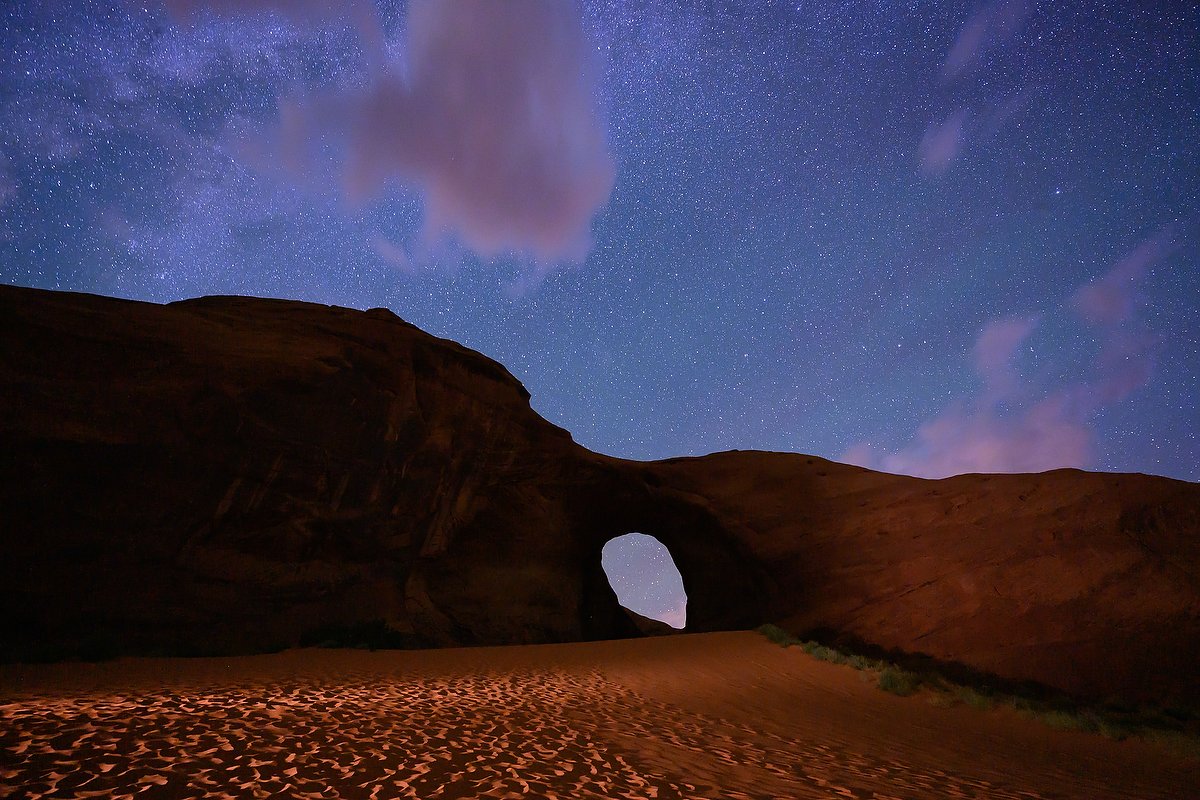
For Ear of the Wind, I set up one Lume Cube at far left, atop a stand with barndoors to control the spread of its light. That let us capture the sand dune in front, as well as some of the texture in the right wall. Nikon Z6III, Manual exposure, 3800 Kelvin, ISO 10,000, 25-seconds at f/2.8, Nikkor Z 14-24mm f/2.8 S lens at 14mm.
That was it for photography on the trip. After a short night’s sleep, we loaded the cars once more for the long drive back to Phoenix so everyone could begin their return travel home.
I hope that now you can understand why this part of the country is one of my favorites for landscape photography. I also lead trips to Sedona and Moab to take advantage of other beautiful areas in the Southwest. If that interests you, please let me know. And, if you’d like to see the rest of my favorite photos from this trip, here’s the gallery.
(If you like this story, please share it with your friends and let them know about the links on photography that I post on my business Facebook page. I’m also on Instagram, @reedhoffmann. And if you’re curious about the workshops I teach, you can find them here. Finally, you can subscribe to this blog on my home page.)
Reed, great commentary and terrific images!