
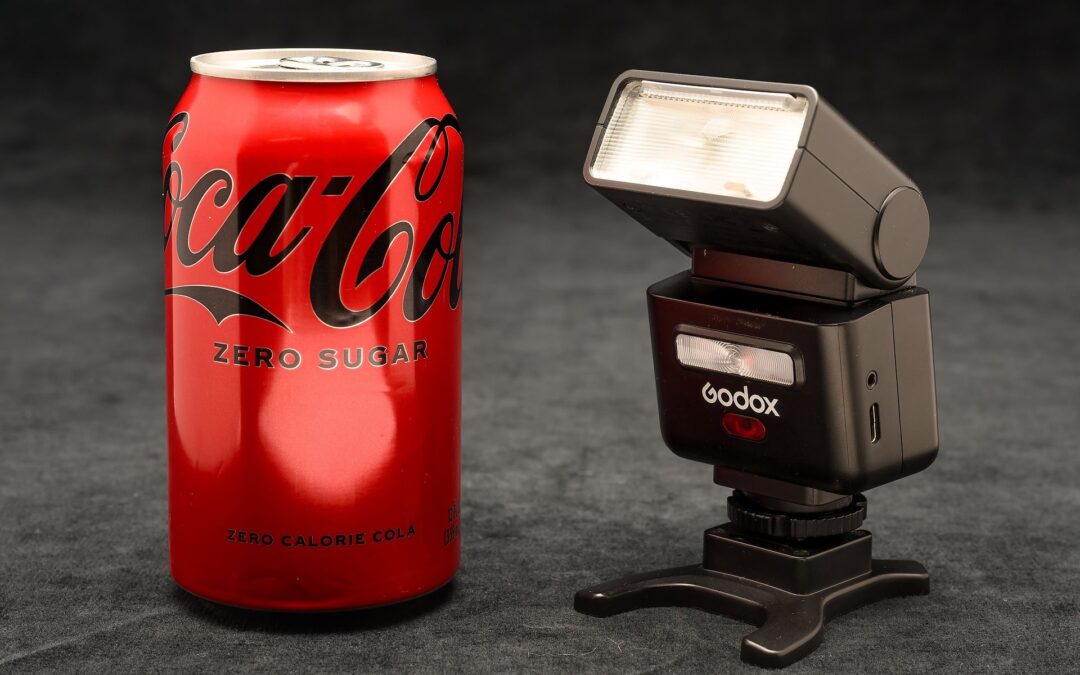
It’s been a long time since I’ve been this excited about a photography accessory, but the tiny Godox iT32 flash has won me over. The ingenious design, iTTL capability, high-speed sync and price are all compelling reasons to add it to your kit. And I haven’t even gotten to the killer feature – it has off-camera radio control capability! Here’s why that’s so important.
The number one rule about flash is to get it off-camera. Sure, putting a flash on top of your camera will light up your subject, but in the most boring way possible. That’s why one of the first rules in photography is to avoid having the sun directly behind you. That kind of light flattens things out. And that’s exactly what a flash mounted on your camera will do. Light from the side, however, creates shadows, which adds depth, texture and shape to your subject. Working in a two dimensional medium like photography means you need to do everything you can to give your photos a feeling of three dimensionality. That’s what shadows do.

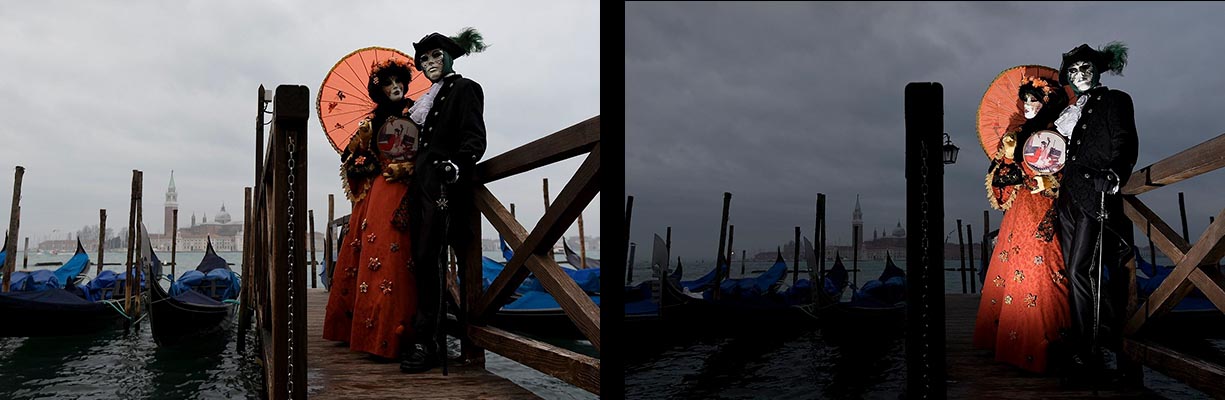
On the left you see the results of direct flash – yes, you have a picture, but the light is not very interesting, and whatever’s closest to the flash gets the most light. The only thing I did differently for the photo on the right is remove the flash from the camera and hold it in my hand off to the left. That small change resulted in a much nicer picture, simply by getting the flash away from the camera.
Once you understand that, you also understand the importance – when using flash – of getting it away from the camera. That’s why I was such a big fan of Nikon’s “Creative Lighting System.” Using the pop-up flash that many of their DSLR’s had, those cameras could control several different models of Nikon flash off-camera (and for Nikon cameras without a pop-up flash, or that capability, you could use an SU-800). That’s why I regularly carried a flash with me, even on landscape and travel photography trips. Being able to easily add light to a dim or shadowed foreground area let me make pictures other people couldn’t.

I was in the Bonneville Salt Flats and found this nice rock covered in salt crystals. However, the sky above was overcast. The photo on the left is what it looked like with that “flat” light. On the right, though, I held a flash up over the rock, lighting it to add contrast and shadows, making a much more interesting photo.
Leading a photography trip to Venice during Carnaval, this couple was posing for photographers on a pier. For the photo on the right, I put a small flash behind a post near them and triggered it with the pop-up flash on my Nikon DSLR. Adding that light, and underexposing the available light, resulted in a much dramatic photo.
However, having a pop-up flash as part of a camera made it tougher to weather-seal the camera, so Nikon did away with the feature on most of their mirrorless cameras (Z series). Now I’d need to bring more gear to be able to use a flash off-camera (a coiled cord or trigger to mount on the camera), so I rarely carried one anymore. And I missed being able to do off-camera flash easily. Enter the Godox iT32.
When a friend first told me about it (thanks Norm!), I didn’t believe him. All the features I listed above, including off-camera radio-control, for around $100? Not possible. I was wrong. What’s ingenious about it is the design. The hot-shoe part of the flash is magnetically attached to the body of the flash. Pulling the two apart leaves the base attached to the camera, which can then control the flash. Compact and weighing less than a half pound, it’s an easy decision to bring along, even while traveling. Being USB-C rechargeable, there’s no need to carry extra batteries (more bulk and weight!). And it comes with a nice set of accessories, including a base that the body of the flash can be attached to so it’s easy to place the flash, or mount it on a stand.
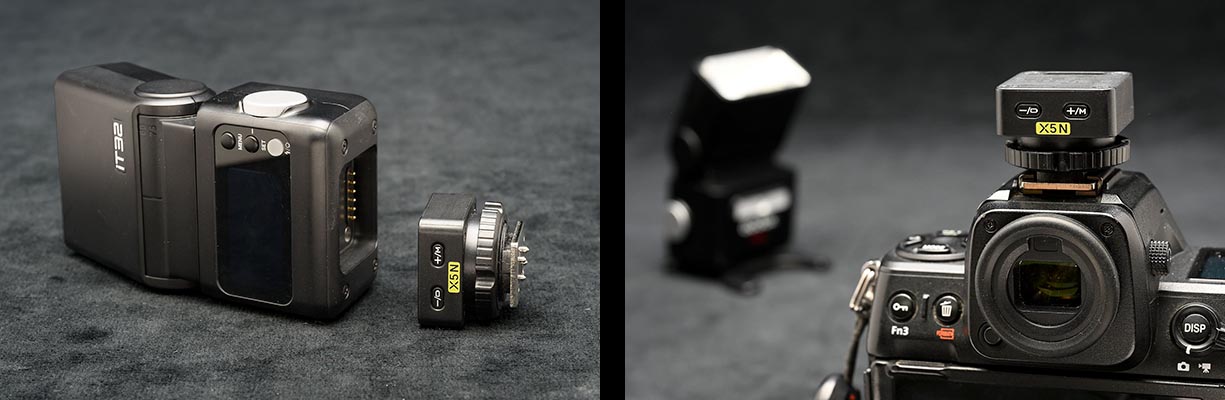
By separating the base of the flash from the body, the base can be used on the hotshoe of your camera to control the flash wirelessly.
For the price, I don’t expect exposures to be bang-on all the time, but as long as they’re close, I won’t complain. However, there is one thing I will complain about – the touchscreen is super sensitive. That means while holding the unit in my hand (which I often do for close work), I almost always end up accidentally changing the settings. I haven’t found a way yet to turn off the touchscreen, but if anyone knows how, please let me know. Finally, there’s one more feature that will be handy for those of you shooting video – it has a built in constant light, with adjustable output.
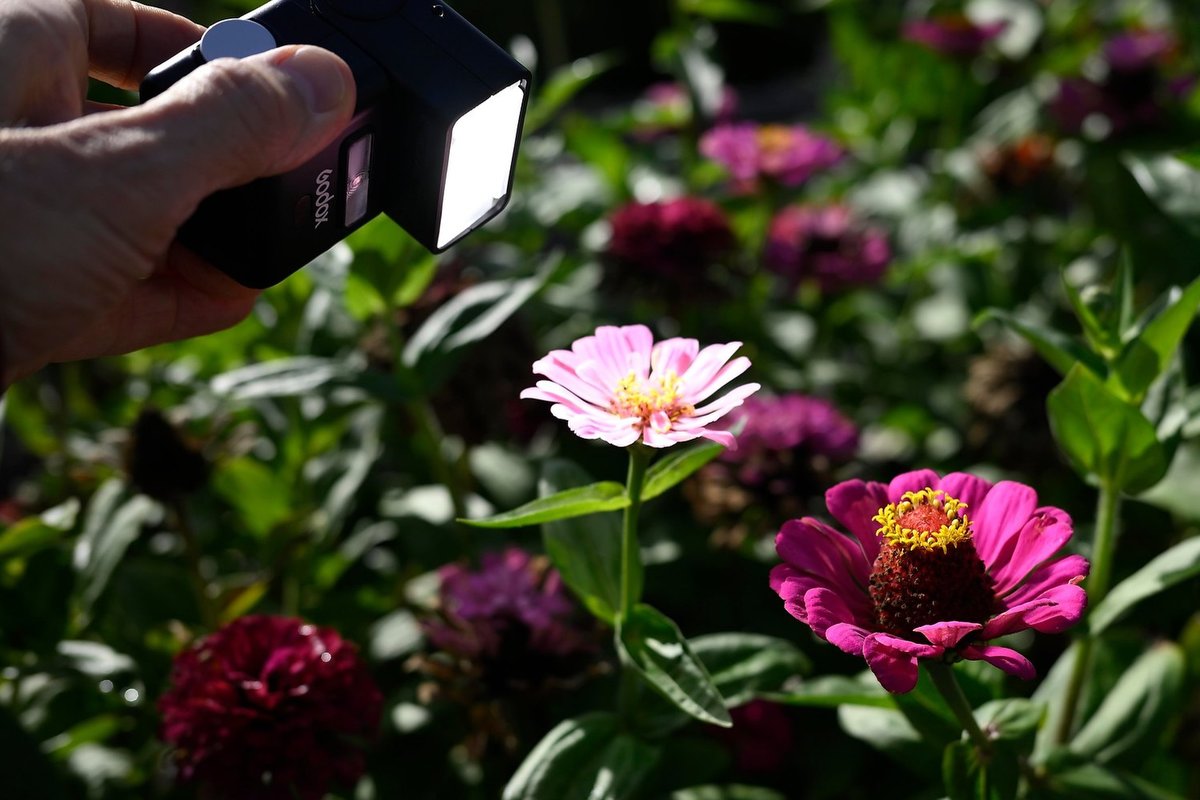
On a photo trip I was leading to France a couple of weeks ago, I used the flash, held in my hand off-camera, to add light to the nearby flower. You can see by my camera settings that the flash has high speed sync capability: Nikon Z8, Manual exposure, Sunny white balance, ISO 200, 1/3200 at f/4 in Matrix metering, -0.7 EV, Nikkor Z 40mm f/2 lens.

Now, with the flash out of the frame, you can see the before (left) and after (right) pictures showing the difference the flash made.
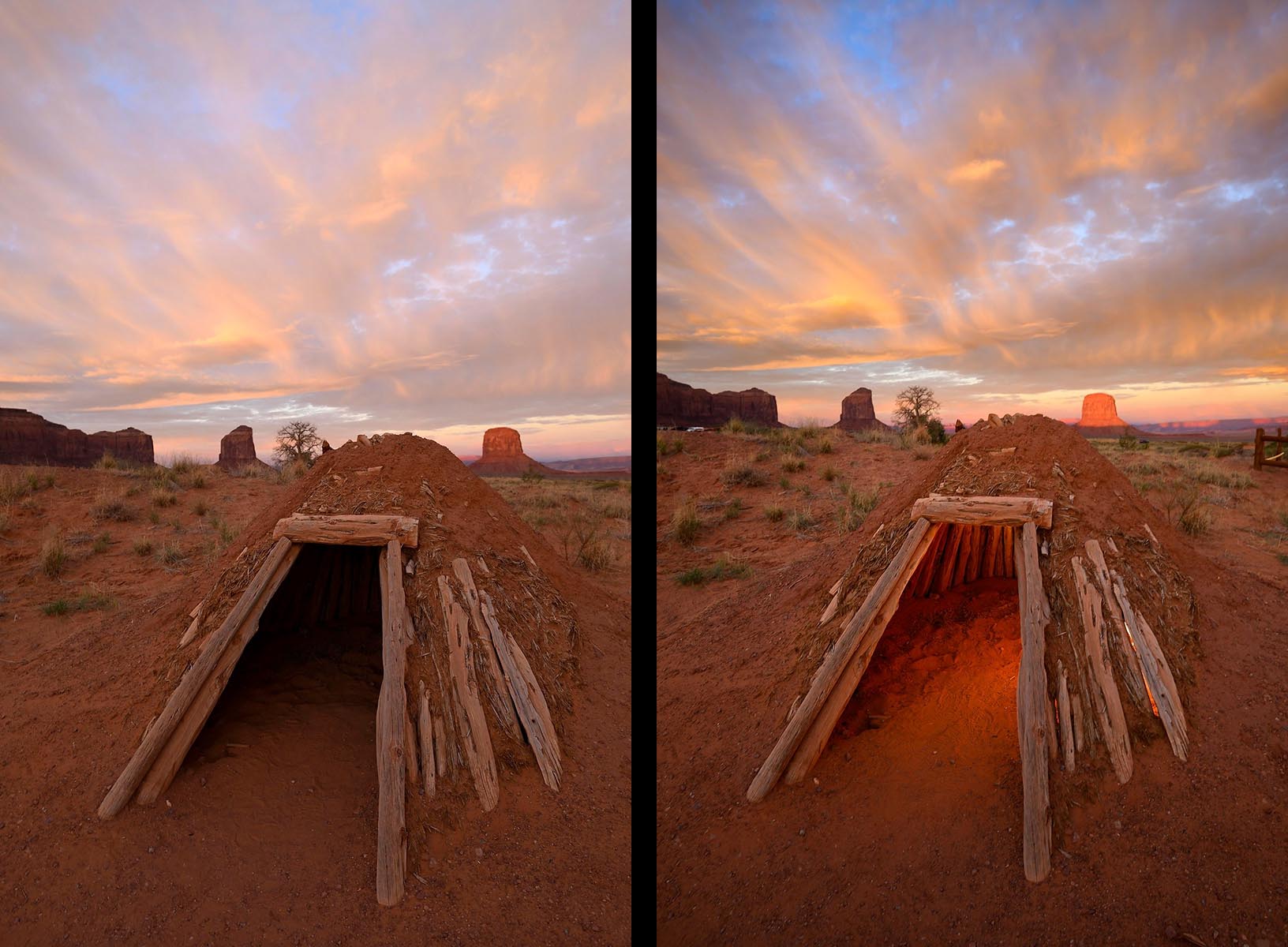
My first time using this flash was on a photo trip I led to the Southwest in early September. On the left is a hogan at Monument Valley at sunrise with available light. On the right, I placed the iT32 inside the hogan, on the stand it comes with, adding a warming gel (also included in the kit). The base, still mounted on the hotshoe of my camera, then fired the flash when I took the picture, resulting in detail and color inside the hogan.
So once again, I’m happily (and easily) carrying a flash along with me most of the time I go out to shoot. And you should too!
NOTE: If you do choose to buy one, make sure you get the right model for your camera. They make them for Canon, Nikon, FUJIFILM, Olympus/Panasonic and Sony cameras.
(If you like this story, please share it with your friends and let them know about the links on photography that I post on my business Facebook page. I’m also on Instagram, @reedhoffmann. And if you’re curious about the workshops I teach, you can find them here. Finally, you can subscribe to this blog on my home page.)